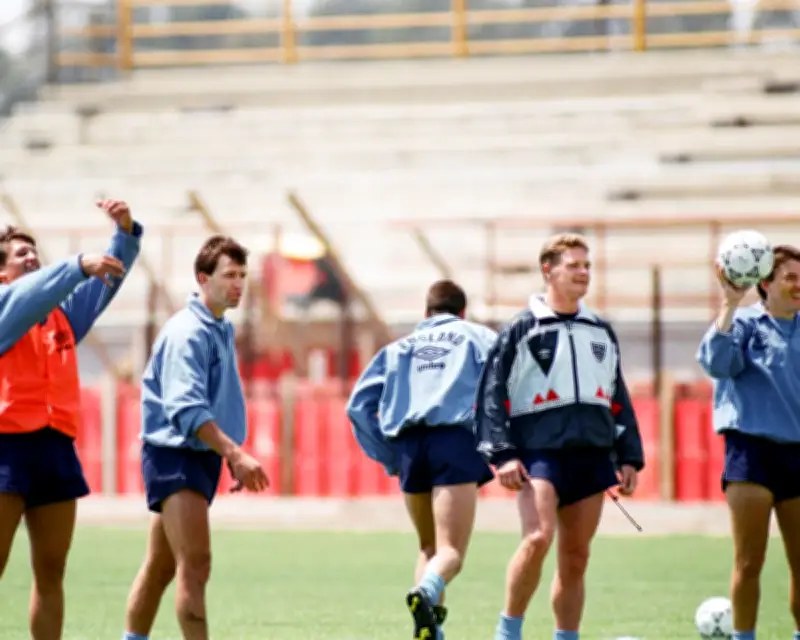
Professor John Brewer, the Football Association's first head of human performance, employed cutting-edge technology to acclimatise Bobby Robson's England squad for the Italian summer of 1990. Using a BBC microcomputer, a dot-matrix printer, and clunky Polar heart-rate monitors, Brewer conducted bleep tests at Lilleshall before departure, upon arrival in Italy, and after a fortnight of training in the hottest part of the day. This data proved to players that they had adapted to the heat and could maintain their high-tempo game.
Early Challenges and Resistance
Brewer faced suspicion from some in the England setup. Before the World Cup opener against Ireland, he was shocked when the chef served swordfish steaks hours before kick-off, despite Brewer's advice for more carbohydrates. The England doctor, John Crane, insisted on giving players what they wanted, reflecting a broader resistance to evolving sports science. Alcohol was also an issue; Robson banned booze two weeks before the tournament but allowed occasional drinks, though a couple of stars broke curfew and drank excessively.
Player Receptiveness
Players with experience abroad, like Chris Waddle and Trevor Steven, were more open to nutritional advice. Surprisingly, Paul Gascoigne was a temporary convert, achieving around 10% body fat. Brewer recalls Gascoigne as fully professional, needing reassurance about his diet but dedicated to football. Gascoigne's body fat percentage was not high compared to the rest of the squad.

Innovative Training Methods
Brewer's background working with Olympic athletes like Seb Coe helped him gain Robson's trust. He introduced warm-ups without the ball to raise body temperature and flexibility, replacing the traditional "knocking the ball about" and sprints. He also had substitutes stretch and warm up regularly during games, and squad players train harder between matches to maintain fitness. This benefited David Platt when he replaced the injured Bryan Robson. Brewer even mixed electrolyte drinks for players on the bus, as they previously drank nothing after training.
Bobby Robson's Leadership
Brewer admired Robson's ability to listen to advice on preparation, fitness, and nutrition while making his own football decisions. This contrasted with FA director Charles Hughes, who pushed for a direct long-ball style based on flawed statistical analysis. Hughes left the FA frustrated, believing his ideas would have won England a World Cup in 1994, 1998, or 2002.
Legacy and Modern Comparison
Now retired, Brewer notes that modern players are fitter and have more support, with super-light wearables tracking blood oxygen, skin temperature, and sleep, plus hyperbaric chambers for recovery. In 1990, Brewer's setup was considered cutting edge but basic compared to today. Clubs now have their own sports science teams, whereas previously they sent players to the FA's human performance centre.