Motorists in the UK and EU should not expect a sharp drop in the cost of electric vehicles despite increased competition among Chinese manufacturers, according to one of the country's biggest electric carmakers.
Quality Over Price
Brian Gu, the vice-chair of manufacturer Xpeng, said that Chinese carmakers could compete on quality to win customers in the EU and UK, rather than unleashing a brutal price war as they have in China. Chinese carmakers have rapidly risen to dominate the global EV industry, helped by massive government subsidies and lower labour costs than the US, Europe, Japan and Korea.
The huge number of competitors in China – 129 last year according to the consultancy AlixPartners – prompted carmakers to slash prices in their home market. China's president, Xi Jinping, intervened last year to tell provincial governments to rein back subsidies in an effort to stem the harm. Faced with such pressure at home, the better-funded Chinese manufacturers, including Xpeng, have turned to Europe to try to make profits.

Xpeng's European Expansion
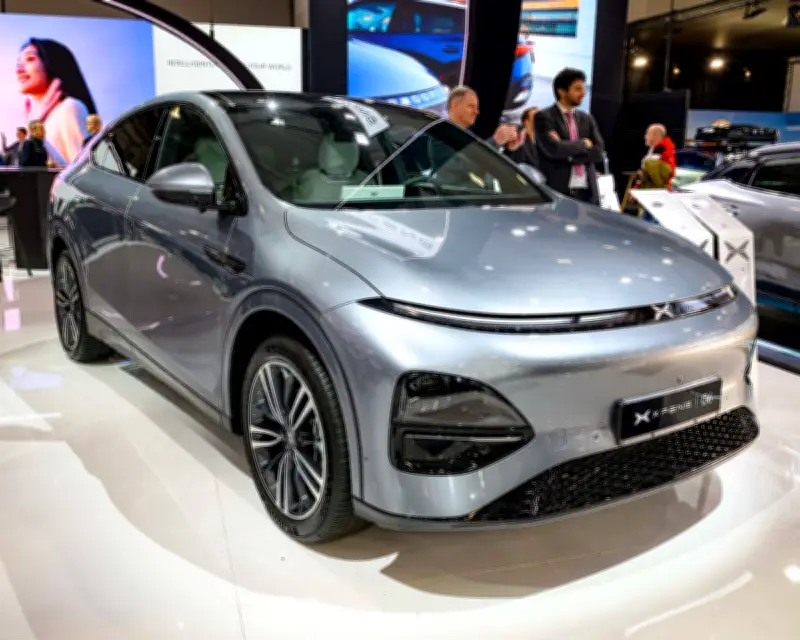
Xpeng, named after its founder, He Xiaopeng, is still loss-making as it spends heavily on research and on expanding sales of its vehicles in Europe, starting with the £39,990 electric G6. It only sold 7,300 cars in Europe in the first three months of 2026, according to analyst Matthias Schmidt. However, it is hoping to pick up the pace and compete against other Chinese companies such as the world's biggest seller of electric cars, BYD, Chery (owner of the Chery, Jaecoo and Omoda brands), Changan, Geely and the MG owner SAIC.
Asked about the possibility of a price war in Europe to match that of China, Gu said: "I don't see it coming." Speaking at an event in London earlier this month, he said that, while some Chinese rivals are "pouring a lot of products" into the UK and Europe, there would not be a race to push down prices. By contrast, Chinese brands in south-east Asia or emerging markets had focused on "just being cheaper".
"I think the customer in Europe, especially customers in the developed markets, I think the focus is on quality and differentiation more than cost," he said.
Differentiation Through Technology
Xpeng has drawn comparisons to Elon Musk's US electric carmaker, Tesla, because of similar minimalist designs and its ambitions to sell humanoid robots. The Chinese company is also developing flying taxis. For its cars, Xpeng is aiming to differentiate itself with more hi-tech features, notably on autonomous driving capabilities. The company's driver assistance features are already widely available, and it is planning to start rolling out robotaxis in its home city of Guangzhou. It could roll out more driverless technology to Europe in the first half of next year if the EU adopts new UN standards.
Gu, a former JP Morgan banker who oversaw Xpeng's 2020 listing on the New York Stock Exchange, said Xpeng would be able to catch up rapidly with companies such as Google's sister company Waymo, the Chinese tech company Baidu and the British startup Wayve. "We can accelerate much faster than some of the robotaxi companies," he said, because the company is unusual in developing cars, computer chips and driverless software at the same time.
Manufacturing in Europe
The company is also evaluating options to build more cars in Europe. It currently has a deal with Magna, an Austrian contract manufacturer, to produce its cars, but it said struggling European carmakers with too much factory space were "coming to us with various projects" to sell plants. Xpeng had previously revealed that Volkswagen – which partnered with the Chinese company in 2023 – had offered a German plant for sale, but another executive last month said it was "a little bit, I would say, old".