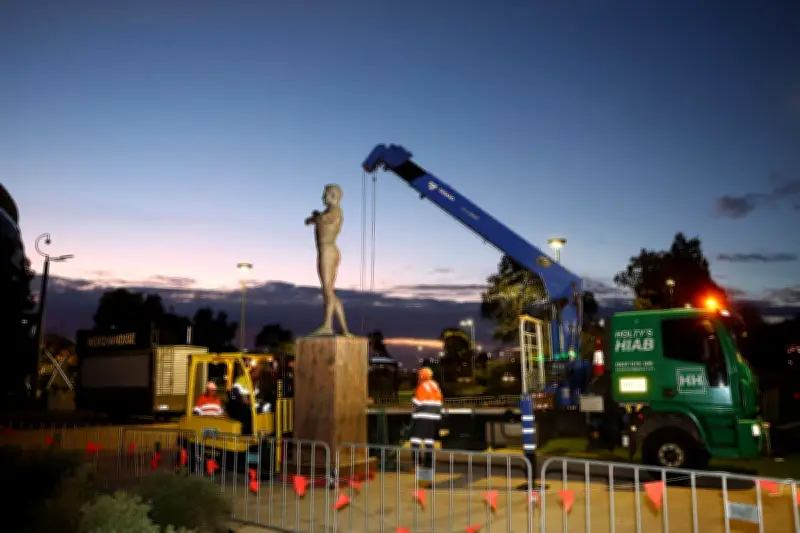
The Nicky Winmar statue, a powerful symbol of Indigenous resilience in Australian rules football, has become the centre of a contentious debate over its future location. Erected in 2019 outside Perth's Optus Stadium, the bronze statue commemorates Winmar's iconic 1993 act of lifting his jumper and pointing to his skin after enduring racial abuse from spectators. Now, the AFL and the local West Coast Eagles club are at odds over whether the statue should be moved to a new site.
Background of the Statue
The statue was commissioned by the AFL and the Western Australian government to honour Winmar's stance against racism. It stands as a landmark at the stadium's main entrance, drawing thousands of visitors annually. However, recent discussions about redeveloping the stadium precinct have prompted calls to relocate the statue to a more prominent location, such as the Perth Cultural Centre or the new Indigenous cultural hub proposed for the city.
According to a spokesperson for the AFL, the league believes the statue should remain at Optus Stadium to maintain its connection to the game and the site of Winmar's historic moment. 'The statue is a permanent reminder of the fight against racism in our sport, and its place at the stadium ensures that every fan who walks through the gates is confronted with that message,' the spokesperson said.

Local Club's Opposition
Conversely, the West Coast Eagles, who play at Optus Stadium, have expressed support for moving the statue. Club CEO Trevor Nisbett argued that the statue's current location is not ideal for its intended purpose. 'While we fully respect what Nicky Winmar did, we feel the statue could have a greater impact in a more public space where it can be seen by a broader audience, not just football fans,' Nisbett said in a statement.
The club's position has drawn criticism from Indigenous leaders and community members. Wally McArthur, a prominent Indigenous rights activist, said moving the statue would be an insult to Winmar's legacy. 'This statue is about standing up to racism, and it belongs where the stand was taken – at the football ground. Moving it to a cultural centre would sanitise its message,' McArthur said.
Community Reactions
The debate has sparked a broader conversation about how Australia commemorates its Indigenous history. A recent survey conducted by the Western Australian government found that 62% of respondents believe the statue should remain at Optus Stadium, while 28% support relocation. The remaining 10% were undecided.
Nicky Winmar himself has remained largely silent on the issue, but his former teammate and close friend, Peter Matera, offered insight. 'Nicky has always said the statue is not about him personally, but about the message it sends. He wants it to be where it can do the most good,' Matera said.
Political Implications
The controversy has also caught the attention of state politicians. Western Australian Premier Roger Cook announced that the government would facilitate a public consultation process to determine the statue's fate. 'This is a decision that should involve the community, particularly Indigenous voices,' Cook said. The consultation is expected to begin in August and will include town hall meetings and online submissions.
The AFL has indicated it will abide by the outcome of the consultation, but some fear the process could be divisive. 'This could set a precedent for how we deal with other statues and monuments across the country,' said historian Dr. Sarah Maddison. 'We need to be careful not to politicise these symbols.'
Ongoing Significance
Regardless of the outcome, the debate underscores the enduring power of Winmar's gesture. In 1993, his act was a watershed moment for Australian sport, forcing the AFL to confront its own racism. Today, the statue serves as a touchstone for ongoing discussions about race and representation.
As the consultation process looms, both sides are digging in. Whether the statue stays or moves, its message remains clear: racism has no place in football or society.