Treasurer Jim Chalmers Dismisses Recession Fears Amid Interest Rate Hike
Treasurer Jim Chalmers has firmly pushed back on growing fears of a recession after the Reserve Bank of Australia delivered a significant interest rate hike. In a statement, Chalmers emphasised that neither the government nor the central bank is currently anticipating an economic downturn, despite mounting global risks that could impact the Australian economy.
Reserve Bank's Decision and Governor's Warning
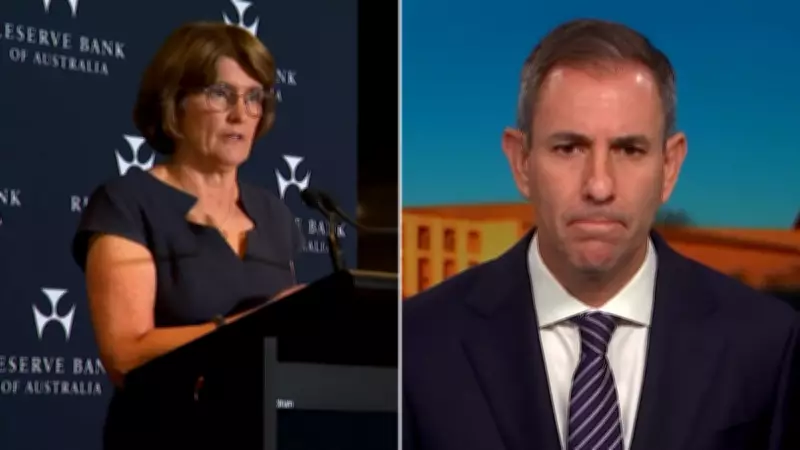
On Tuesday, the Reserve Bank of Australia lifted the official cash rate to 4.1 per cent in a closely split five-to-four decision. RBA Governor Michelle Bullock issued a cautious warning, stating that while a recession is not the intended goal, it may become unavoidable if inflation proves too difficult to bring down under current economic pressures.
"We don't want to have a recession," Bullock said. "But if it's hard to get inflation down, then, you know, we're going to have to deal with that, possibly."

Chalmers' Reassurance on Economic Outlook
Appearing on Sunrise on Wednesday, Chalmers reiterated that no one is expecting a recession, pointing to forecasts and statements from the Reserve Bank. "The point that the governor made yesterday and the point that the Reserve Bank's forecasts make is that they're not anticipating a recession," he said. "Nor is the government."
Chalmers acknowledged there are escalating risks in the global economy, particularly following the recent escalation of conflict in the Middle East, but he asserted that Australia is well positioned to navigate this uncertainty due to its robust economic foundations.
Inflation Challenges and Government Response
The Treasurer highlighted that inflation pressures have been driven by a mix of domestic and global factors, including recent spikes in fuel prices. "Before the escalation of hostilities in the Middle East, we had an inflation challenge," he explained. "Then obviously, in the last couple of weeks, that inflation challenge has gotten harder, particularly at the petrol bowser."
To address these issues, the government is taking proactive steps to ease the burden on households while working to improve the budget position. Chalmers noted key achievements and future plans:
- Delivering a couple of budget surpluses to stabilise finances.
- Finding $114 billion in savings to enhance fiscal responsibility.
- Rolling out cost-of-living relief measures, including additional tax cuts opposed by political opponents.
- Focusing on fuel market interventions to mitigate price impacts.
- Planning more savings in the upcoming May budget to strengthen economic resilience.
Strong Economic Fundamentals Amid Uncertainty
Despite the uncertain outlook, Chalmers emphasised that Australia's economic fundamentals remain strong, providing a solid foundation to confront future challenges. He pointed to several positive indicators:
- Very low unemployment rates supporting workforce stability.
- Faster economic growth compared to other major advanced economies.
- Lower debt levels relative to peer nations, enhancing financial flexibility.
"We won't be immune from what's happening around the world, but we have very solid economic foundations from which to confront this uncertain economic future, which is dialled up by developments in the Middle East," Chalmers concluded.
Household Outlook and Future Considerations
For Australian households, the economic outlook remains uncertain, with further interest rate rises still a possibility as cost-of-living pressures continue to climb. The government's ongoing efforts in economic management and relief measures aim to cushion these impacts while maintaining long-term stability.