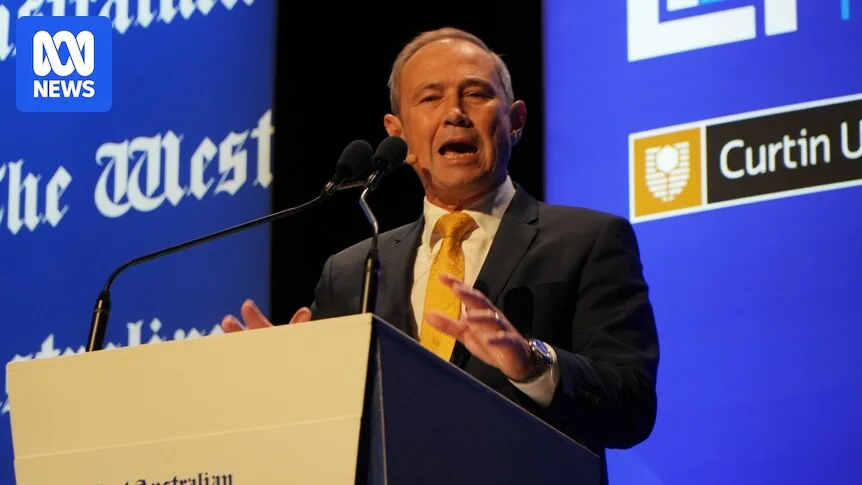
The Western Australian government has announced plans to overhaul the state's development framework with new legislation aimed at fast-tracking priority projects. Premier Roger Cook introduced the State Development Bill on Monday, stating it would make WA the best place in the world to do business by cutting red tape. 'We have to roll out the red carpet for international investment. We need to be able to move nimbly and quickly,' Cook said, adding that the reforms are about improving processes, not lowering standards.
However, economic and sustainability experts have raised concerns about the potential risks. University of Western Australia associate professor Kirsten Martinus warned that the reforms could concentrate too much power in the hands of a few, leaving the government vulnerable to industry influence. 'There's no clear mechanisms for how power is constrained, and being in the hands of such a smaller number of people is a big problem,' she said, noting the lack of transparency in decision-making.
Curtin University sustainability professor Peter Newman echoed these concerns, highlighting the risk that wealthy fossil fuel companies could exert undue influence. 'There's a worry that we could be going down into a back area that will not be right for the future of the state,' Newman said, adding that climate-denying fossil fuel projects would be a serious problem. Martinus also warned that future generations would bear the environmental costs.

Despite these warnings, the resource sector has welcomed the move. David Harrison, chief executive of the Kwinana Industries Council, said the reforms were desperately needed, citing a member company that took nearly six years to get approval for a pipeline repurposing. 'The proof will be in the pudding. But we've seen in other states around Australia that this works,' Harrison said.
The bill has also received tentative support from WA opposition leader Basil Zempilas. 'While we are yet to see the legislation, we support measures that maintain WA's investment attractiveness and help business and industry get on with the job of creating jobs,' Zempilas said. He noted industry frustrations with regulatory delays and pointed to WA's drop from fourth to 17th on the Fraser Institute list of the world's best mining destinations, calling it a 'damning indictment' on the Cook Labor government.