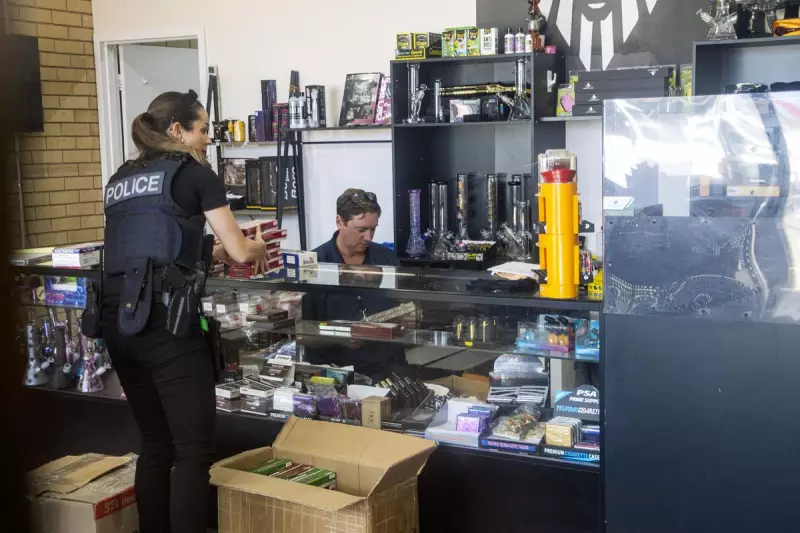
Western Australia is facing a mounting crisis in the fight against illicit tobacco, with experts and authorities warning that organised crime rings are currently outpacing enforcement efforts. The surge in black market cigarettes is fuelling wider criminal activity and draining significant tax revenue from state and federal coffers.
The Scale of the Problem and Law Enforcement's Uphill Battle
Recent data paints a stark picture of the challenge. The Australian Border Force (ABF) reported a staggering 188% increase in the number of illicit tobacco detections at the Australian border in the past financial year. This is not just a national issue but one hitting WA particularly hard. In the 2022-23 period, the ABF made over 140,000 tobacco-related detections nationally, seizing more than 1.1 billion cigarettes and 417 tonnes of loose tobacco.
Despite these large-scale seizures, experts like Professor Terry Goldsworthy from Bond University argue that authorities are merely "scratching the surface." He points out that the high profitability and relatively low risk of prosecution for illicit tobacco make it a magnet for organised crime. The current approach, he suggests, is reactive rather than preventative, allowing sophisticated criminal networks to adapt and flourish.

Organised Crime's Lucrative New Frontier
The illicit tobacco trade has become a primary funding stream for serious criminal enterprises. Australian Criminal Intelligence Commission (ACIC) boss Heather Cook confirmed that profits from these illegal sales are directly funnelled into other harmful activities, including drug trafficking and violent crime. This creates a dangerous feedback loop where the success of the black market for cigarettes strengthens broader criminal networks within the community.
The financial incentive is enormous. With high tobacco excise making legal products expensive, the black market offers cheap alternatives, creating high demand. This price disparity, driven by tax policy, is seen as a root cause of the problem. Criminals exploit this gap, reaping massive profits with a commodity that is easier and less risky to move compared to drugs.
Calls for a Coordinated National Strategy
There is a growing consensus that the current piecemeal efforts are insufficient. Professor Goldsworthy is advocating for the establishment of a dedicated national agency, similar to the Australian Federal Police, specifically tasked with targeting the illicit tobacco supply chain from importation to street-level sales. This would involve greater coordination between federal, state, and territory agencies to disrupt the entire criminal ecosystem, not just intercept shipments.
The government has taken some steps, such as increasing penalties and granting the ABF additional powers to tackle tobacco smuggling at the border. However, critics argue that without addressing the underlying market conditions—primarily the high excise that creates the profit motive—and without a dedicated, intelligence-driven national taskforce, the "tobacco wars" will continue to be an uphill battle that authorities are in danger of losing.
The consequences extend beyond lost tax revenue. The normalisation of a large-scale black market undermines public health objectives, funds violent criminal organisations, and poses a direct challenge to the rule of law in communities across Western Australia and the nation.