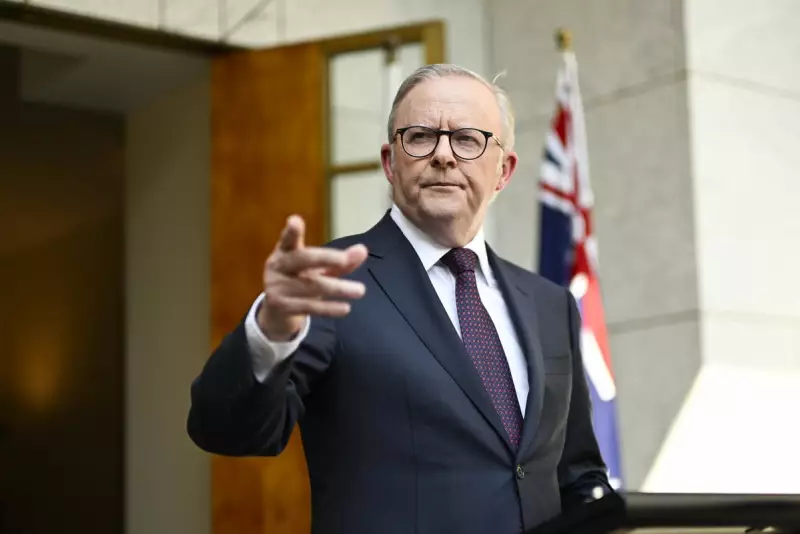
Western Australian Premier Roger Cook's steadfast loyalty to Prime Minister Anthony Albanese could become a significant liability for his own government, according to a stark political analysis. The warning comes as federal Labor's popularity wanes, threatening to drag down state counterparts in the crucial mining state.
The Looming Federal Drag on State Fortunes
Political commentator Joe Spagnolo has sounded the alarm, suggesting Premier Cook's public alignment with a struggling Anthony Albanese is a dangerous game. The core of the issue lies in the divergent political landscapes: while federal Labor grapples with national discontent over issues like cost of living, the WA state government has enjoyed relative popularity, buoyed by strong management of the economy and mining royalties.
The recent Resolve Political Monitor poll paints a grim picture for the federal Labor Party, showing a primary vote of just 28 per cent. This places the party in a precarious position, potentially facing a landslide defeat. Spagnolo argues that Cook's continued, vocal support for Albanese—exemplified by his recent description of the PM as "the right leader for our country"—risks tethering the successful state brand to a sinking federal ship.

A History of Strategic Distance
The analysis draws a sharp contrast with the strategy of Cook's predecessor, Mark McGowan. McGowan masterfully maintained a distinct separation between his immensely popular state government and the federal Labor apparatus. He was not afraid to publicly disagree with federal policies when they were perceived as contrary to WA's interests, most notably on the issue of hard border closures during the pandemic.
This strategic distance allowed WA Labor to build a formidable, locally-focused brand that resonated across traditional political divides. Cook, however, has chosen a path of overt solidarity, even as Albanese's government faces intense criticism over its handling of immigration, energy policy, and economic pressures. The concern is that voters, frustrated with Canberra, may begin to lump the state and federal governments together, punishing Cook for Albanese's perceived failures.
The Stakes for Western Australia
The political calculus is particularly sensitive in Western Australia. The state's economy is powerhouse, driven by the resources sector, and its voters have historically shown a willingness to support different parties at state and federal levels. The federal Labor party already holds a diminished presence in WA, making the state government's standing all the more critical as a beacon for the party brand nationally.
Spagnolo's critique suggests that Premier Cook must urgently reconsider his approach. The path forward may require emulating McGowan's playbook: asserting WA's priorities first and foremost, even if it creates temporary friction with federal colleagues. With the next state election on the horizon, the Premier's challenge is to decouple his government's strong record from the growing voter disillusionment aimed at Canberra. Failure to do so, the analysis concludes, could see the state Labor Party pay a heavy price for a federal leader's woes.
The coming months will test whether Roger Cook can navigate these treacherous political waters and protect his government's standing, or if his loyalty to Anthony Albanese will indeed become the anchor that drags WA Labor down.