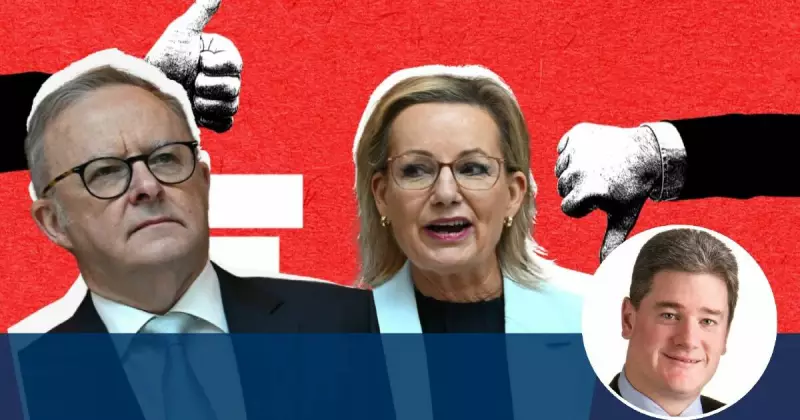
As another turbulent year draws to a close, the political landscape of 2025 has delivered clear victors and vanquished. Prime Minister Anthony Albanese emerges as a definitive winner, his position bolstered not just by a decisive election victory but by an opposition that seemed determined to self-destruct.
A Prime Minister in a Strong Position
Anthony Albanese secured a crushing win at the 2025 federal election, leaving both left and right-wing opponents in disarray. Adding a personal milestone to his political success, the Prime Minister also got married this year. While his primary vote was historically low, the Australian electoral system operates on a two-party preferred basis, not first-past-the-post, ensuring his government's solid mandate.
Labor's experience in managing the challenges posed by minor parties, particularly the Greens, has proven to be a significant asset. Compared to the fractured parties on the right, the Greens appear a model of discipline. However, an asterisk remains beside this win. The appalling scenes of violence witnessed this year, and the government's handling of rising anti-Semitism within parts of its broader base, present an ongoing challenge. While not a fatal wound, it is an issue that demands responsible leadership.

The Coalition's Year of Self-Inflicted Wounds
If Albanese is the year's biggest winner, the Liberal Party stands as the unequivocal loser. Their election campaign was widely criticised, resulting in the loss of numerous seats, including that of the party leader. In the aftermath, the party has been led astray by internal factions, particularly on the critical issue of energy policy.
For over 15 years, the political right has been plagued by incoherent energy policy, marked by fierce internal conflict. This year, the party symbolised its decline by obsessing over a distant, meaningless policy target instead of effectively holding the government to account for current failures. A sensible party would make strategic statements while committing minimal financial risk. Instead, the Coalition proposed raising taxes and using public funds to build unpopular nuclear power plants.
The party has dangerously eroded its traditional advantage as sound economic managers, ceding that ground to a Labor government running substantial budget deficits. With energy policy in tatters, some within the party are now eager to plunge into equally complex debates on immigration and trade, risking further alienation.
Minor Parties Face Mixed Fortunes
The year's reckoning was not confined to the major parties. Despite favourable demographic shifts, the Greens' leader lost his seat, along with most of his lower house colleagues, suggesting a potential limit to the electorate's patience. Conversely, One Nation managed a significant coup by convincing former Nationals leader Barnaby Joyce to join their ranks, a move that will reshape the crossbench.
In politics, fortunes can change in an instant. Today's winners must remain vigilant against the perennial question: "what have you done for me lately?" Meanwhile, those currently on the scrap heap can hope for a reversal in the new year. However, for the Coalition, the path to recovery requires a fundamental shift from internal ideological warfare to pragmatic, disciplined opposition—a lesson it has yet to learn.