Victoria Park Council Votes to Maintain Voluntary Elections and Two-Year Half-Spills
The Town of Victoria Park has firmly rejected proposals to introduce compulsory voting and shift to four-yearly full-spill elections in local government, opting instead to preserve the current voluntary system and biennial half-spill elections. This decision was made during a special council meeting on March 31, where councillors unanimously voted on their official feedback for the WA Local Government Association as part of broader sector discussions on election reforms.
Preserving Institutional Knowledge with Half-Spill Elections
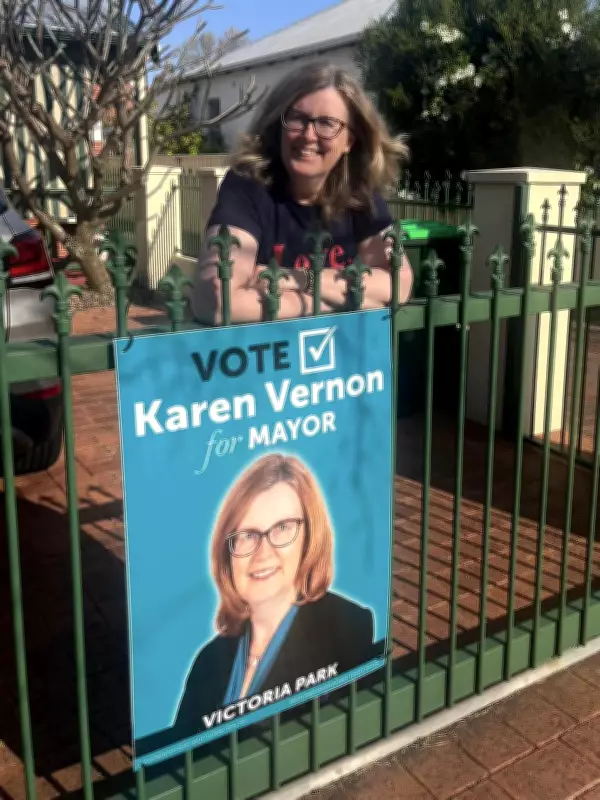
Mayor Karen Vernon strongly advocated for retaining the half-spill elections every two years, emphasizing the importance of maintaining institutional knowledge within the council. "I am aware that there is a prevailing view in the sector that there is merit to be had in there being some retained corporate knowledge by a spill every two years where there will be ongoing councillors to greet incoming councillors," she explained. This approach ensures continuity and stability, allowing experienced councillors to mentor new members and reduce disruption.
Councillor Daniel Minson supported this stance, arguing that half-spill elections strengthen governance and minimize volatility. "I believe that this would reduce the risk of knowledge loss disruption and volatility for councils, which would deliver stronger governance outcomes for the local community and greater consistency for the administration," he stated. The council's unanimous vote reflects a commitment to a governance model that balances renewal with continuity.

Rejecting Compulsory Voting to Safeguard Independence
In a 7–2 vote, the council also rejected the move to compulsory voting, with Mayor Vernon warning of potential unintended consequences. "I've begun to think that compulsory voting may have unintended consequences for local government. I think it would rob local government of its independence," she cautioned. This perspective highlights concerns that mandatory participation could undermine the sector's autonomy and lead to increased political factionalism.
Councillor Minson echoed these concerns, noting that higher turnout does not necessarily equate to better civic engagement. "Compulsory voting while surely would increase voter turnout would not necessarily increase genuine engagement and could well decrease engagement if party politics factionalism and partisan culture were the result of it," he argued. Councillor Scott Ingram added that voting to avoid fines lacks democratic choice, stating, "This is probably the one realm in which voluntary voting makes the most sense."
However, Councillor Sky Croeser dissented, advocating for compulsory voting as a cornerstone of democracy. "The absolute bare minimum for a functioning democracy is that people vote. And so I think that is a very fair thing to ask of our community," she asserted, highlighting the ongoing debate within the council on this issue.
Support for Electronic Voting with Security Precautions
In a forward-looking move, the council voted 7–2 to support the introduction of electronic voting, contingent on a positive feasibility and security assessment. Mayor Vernon expressed enthusiasm for this innovation, suggesting that local government could lead the way in Australia. "Local government could be the test case in Australia, being the first level of government to introduce electronic voting. I think it's very accessible and very inclusive," she said, emphasizing the potential for increased participation and convenience.
Despite this support, Councillor Croeser raised valid concerns about security risks and public trust. "The downsides in terms of security risks and also people's diminished trust in the electoral system are not worth it at this stage unless there are some amazing new technological advancements," she cautioned. This highlights the need for robust safeguards to ensure the integrity of electronic voting systems.

Transitional Arrangements and Future Considerations
The council unanimously endorsed transitional arrangements if four-year full-spill elections are eventually adopted, recommending that any changes not occur before 2029. This measure aims to protect councillors elected in the October 2025 elections from having their terms shortened. Mayor Vernon explained, "If such a full spill were to be instituted in 2027, those elected members would be robbed of the four-year term they were elected to by the electors, which seems fundamentally inequitable and unfair."
Overall, the Town of Victoria Park's decisions reflect a cautious yet progressive approach to election reforms, prioritizing stability, independence, and innovation while addressing practical and ethical considerations. The council's feedback will now contribute to wider discussions within the local government sector, shaping the future of electoral processes in Western Australia.