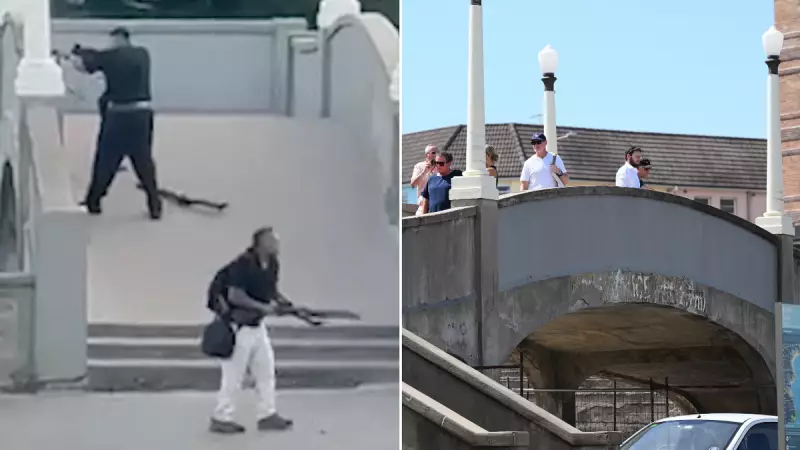
The future of a heritage-listed footbridge at Bondi Beach, a site tragically linked to Australia's worst terror attack, remains uncertain after a heated community meeting failed to reach a definitive conclusion.
Community Clash Over Bridge's Fate
An "extraordinary" meeting convened by Waverley Council on Thursday night saw Bondi locals and members of the broader Jewish community passionately debate whether the pedestrian bridge should be demolished or preserved. The structure gained infamy after the first footage of the shooters, Sajid and Naveed Akram, using it as cover spread across social media during the April attack that killed 15 people and wounded dozens more.
Mayor William Nemesh heard from more than a dozen speakers, revealing a deep division in public sentiment. NSW Premier Chris Minns has previously called for the bridge's demolition, a stance supported by some. However, many at the meeting argued against what they described as a knee-jerk reaction.

"Those bridges are part of our heritage," said Bondi local Alison Bevege. "Please don't punish us for what other people did, it's not the bridge's fault. People just want to seem like they're doing something." Others warned that demolition would give in to the "ghoulishness" of the attackers.
Proposals for Restoration and Memorial
Instead of demolition, several speakers proposed the bridge should be restored and integrated into a permanent memorial for the victims. Locals Adrienne Kern and Carolyn Saul stated, "We see the bridge as being integral to the Bondi landscape. We want the bridge to remain."
They suggested a restoration project that could incorporate a community-led memorial, potentially including the thousands of white pebbles that replaced floral tributes a week after the attack. Nicolette Boaz, speaking for the Friends of Bondi Pavilion, urged ongoing consultation, stating, "We cannot allow for the violence to stand in the way of a memorial."
She proposed creating a separate place of "healing and pacifism" in a more secluded area of Bondi, similar to memorials for the Bali bombings at Coogee Beach and the Port Arthur massacre site.
Council Opts for Deliberation Over Speed
Despite the strong community feedback, the council decided to postpone a final decision. Deputy Mayor Keri Spooner dismissed calls for a sudden reaction, emphasising that the "only thing we should be focusing on is the tragedy."
"It will take time, deliberation and consultation," Spooner said. "The council will be listening to everyone in our community, and nothing will be happening until an appropriate time." The council is awaiting estimates for the cost, timetable, and approval processes for both replacing and restoring the bridges, which will critically inform their ultimate verdict.
The meeting also heard powerful calls for the nature of a permanent memorial. Rabbi Shua Solomon advocated for a "public display of Jewish pride and Jewish life," suggesting a menorah as a fitting symbol of resilience and light. This sentiment was echoed by several speakers throughout the evening.
The profound human cost of the attack was underscored by emotional testimonies, including that of survivor Arsen Ostrovsky, who suffered a bullet wound to the head. He told councillors he is a "survivor of a day that will be seared into our memories," adding that doctors considered his survival a "miracle."