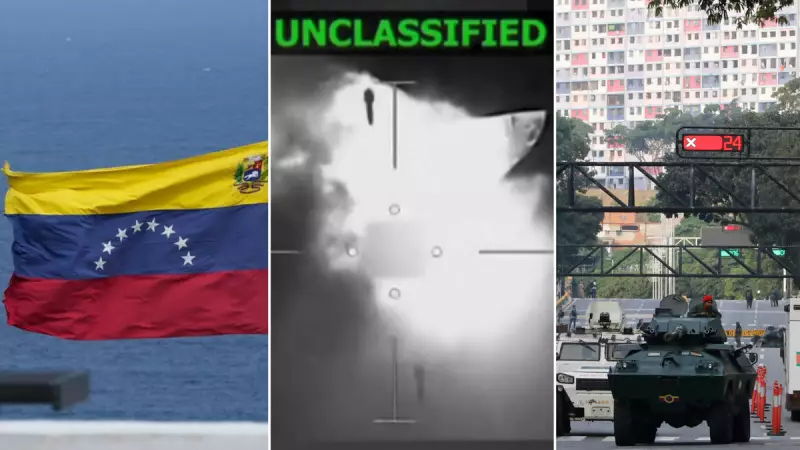
In a dramatic escalation of a year-long confrontation, the United States has conducted a large-scale military strike on Venezuela's capital, Caracas, resulting in the capture of President Nicolas Maduro. The operation, confirmed by US President Donald Trump, marks a pivotal moment in a conflict centred on allegations of state-sponsored drug trafficking.
A Year of Escalating Tensions Culminates in Direct Strike
The roots of Saturday's attack stretch back throughout 2025. Following his second inauguration and the disputed re-election of Nicolas Maduro in July 2024, President Trump ramped up pressure on the Caracas regime. Key actions included labelling the Venezuelan gang Tren de Aragua a foreign terrorist organisation and accusing Maduro himself of leading the 'Cartel de los Soles', an alleged drug trafficking and money laundering network.
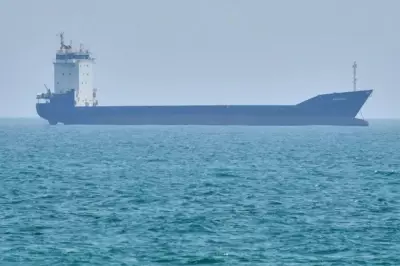
By mid-December, US forces had destroyed at least 30 vessels in the Caribbean and eastern Pacific, claiming they were drug smuggling boats, with over 100 fatalities. The US also imposed a 'total blockade' on sanctioned oil tankers and, in a significant precedent, the CIA conducted a drone strike on a Venezuelan port facility in December.

Trump had publicly signalled that ground actions were imminent, stating on December 12 that Washington "will not allow drug traffickers to destroy American youth." Saturday's operation represents the fulfilment of that threat.
The Attack on Caracas and Immediate Aftermath
The strike, involving missiles and rockets, impacted urban areas across Venezuela. Residents in Caracas reported explosions and aircraft, with sites like La Carlota airport among those hit. Venezuelan Defence Minister Vladimir Padrino López condemned the action as an "invasion" and "the greatest outrage the country has suffered."
Vice President Delcy Rodríguez confirmed the government did not know the whereabouts of Maduro or First Lady Cilia Flores, demanding proof of life from the US. She stated the attack killed officials, military personnel, and civilians. According to a Republican senator briefed by US Secretary of State Marco Rubio, Maduro was arrested to stand trial in the US on narco-terrorism charges.
What Comes Next for Venezuela?
The political future of Venezuela is now deeply uncertain. The constitution dictates that in the president's "absolute absence," executive power passes to Vice President Delcy Rodríguez, who must call an election within 30 days.
However, the opposition, both within Venezuela and abroad, sees a critical opportunity. The opposition's recognised president, exiled diplomat Edmundo González Urrutia in Spain, is a likely candidate. He is supported by Nobel Peace Prize laureate María Corina Machado, who said in December that her movement was preparing for an "orderly and peaceful transition."
Another scenario is a military takeover, though Defence Minister Padrino has vowed to resist foreign troops. The strength of Venezuela's armed forces, once a regional power bolstered by Russian equipment like Sukhoi jets and S-300 missile systems, has been degraded by years of economic crisis.
International Alliances and Regional Stance
Venezuela's key allies are Cuba and Nicaragua, with more distant ties to leftist governments in Brazil and Colombia. While Caracas has strengthened relations with global powers like China and Russia, analysts consider direct military involvement by these nations in the conflict to be remote.
Regional neighbours have expressed alarm. Colombia has shared Venezuela's position that recent US maritime operations are illegal and destabilising. The attack places Australia and other nations in a delicate diplomatic position as global tensions rise.
The capture of Nicolas Maduro by US forces is an unprecedented event in modern hemispheric relations, setting a volatile and uncertain new chapter for Venezuela and its people.