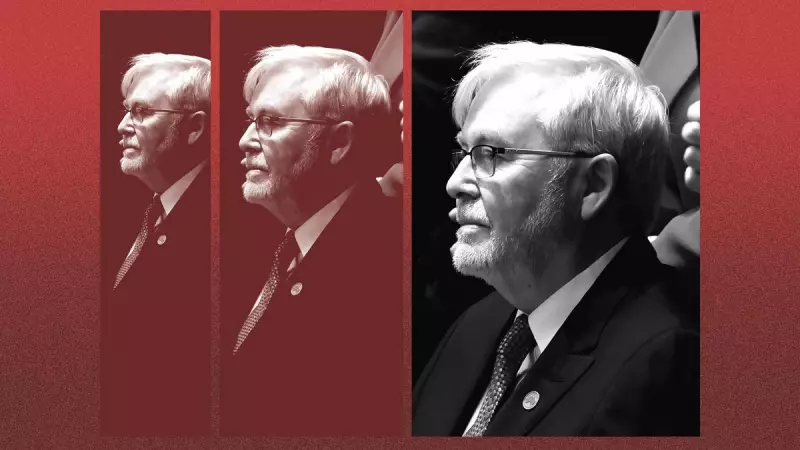
The impending departure of Kevin Rudd as Australia's ambassador to the United States marks a significant juncture for the nation's foreign policy. His exit from the prestigious Washington post provides the Albanese government with a rare and valuable opportunity to recalibrate this vital diplomatic relationship.
A High-Profile Tenure Concludes
Kevin Rudd, the former Labor Prime Minister, was appointed to the role by Prime Minister Anthony Albanese in March 2023. His three-year term was notable for its high-profile nature, leveraging his deep political experience and established networks within American circles. Rudd's tenure focused on navigating a complex geopolitical landscape, reinforcing the ANZUS alliance, and managing challenges such as the AUKUS security pact and strategic competition with China.
His departure, while not entirely unexpected as ambassadorial terms often align with political cycles, creates a key vacancy at a critical time. The Australia-United States relationship remains the cornerstone of Australia's foreign and defence policy, making the appointment of his successor a decision of paramount importance.

The Case for a Strategic 'Mulligan'
This transition period allows the federal government a chance for what might be termed a diplomatic 'mulligan' – a fresh shot at defining the role and objectives of the ambassadorship. While Mr Rudd brought considerable stature to the position, his successor could be chosen with a focus on different, perhaps more technocratic or quietly influential, skills.
The government now has the space to consider what blend of attributes will best serve Australian interests in the coming years. Should the next ambassador be a seasoned career diplomat with decades of experience in bilateral negotiations? Or would a political appointee with direct access to the Prime Minister's office be more effective? This is a chance to strategically match the person to the evolving demands of the role, which include:
- Steering the implementation of the AUKUS agreement, a multi-decade undertaking.
- Advancing trade and economic partnerships amidst global instability.
- Fostering alignment on climate action and clean energy transition.
- Managing alliance dynamics through a potentially volatile US election period.
The choice will send a clear signal about the Albanese government's priorities and its approach to the most powerful nation on Earth.
Implications for the Future of the Alliance
The significance of this appointment cannot be overstated. The ambassador in Washington is Australia's primary advocate and channel to the US administration and Congress. In an era of strategic uncertainty, having the right person in that role is more crucial than ever.
This moment allows for a thorough evaluation of what worked during Rudd's tenure and where new approaches might yield better outcomes. It is an opportunity to ensure the diplomatic team in Washington is perfectly aligned with Canberra's long-term vision for the alliance, which must adapt to new technological, military, and economic realities.
The government must act deliberately. A rushed or politically convenient appointment would squander this chance for a strategic reset. The focus should be squarely on appointing an individual with the expertise, temperament, and credibility to deepen trust and deliver tangible results for Australia over the next critical phase of the relationship.
Ultimately, Kevin Rudd's exit is not just about filling a vacancy. It is a pivotal moment for the Albanese government to shape the future trajectory of Australia's most important international partnership. The decision made in the coming months will resonate for years to come.