Australian ISIS Families' Release from Syrian Camp Halted Mid-Journey
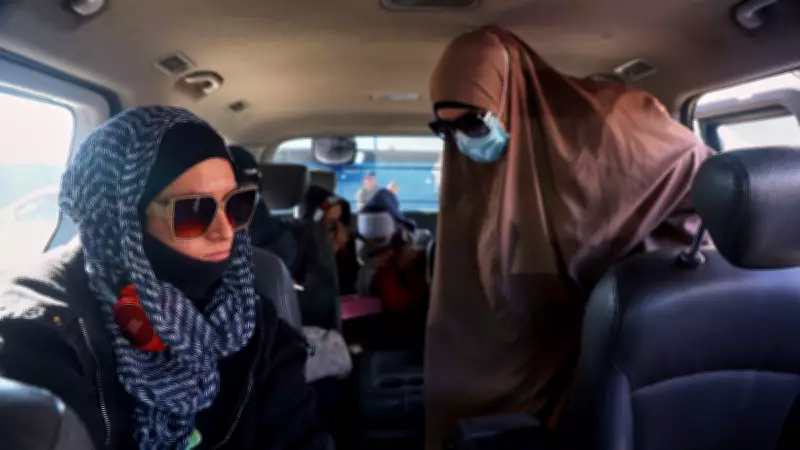
A planned departure of 34 Australians from a Syrian detention camp unravelled on Monday when their convoy was halted and ordered to return, dashing hopes of freedom after nearly seven years in detention. The group, including women and children linked to Islamic State, had left the Roj camp under military escort, bound for Damascus, in what initially appeared to be a significant breakthrough.
Convoy Stopped and Turned Back
About 50 kilometres into the journey, the convoy was stopped and forced to retreat to the camp. Kurdish authorities had earlier announced the release, stating the group was being transferred toward Damascus before travelling on to Beirut to seek assistance from the Australian embassy. Syrian officials described the reversal as being due to "technical reasons" and procedural issues involving the Damascus government.
"It's purely a procedural issue to be resolved," one Syrian official said. Officials suggested the issue may have involved travel permissions between Kurdish-controlled territory and areas overseen by the Syrian government, highlighting the complex political landscape in northern Syria.

Who Are the 'ISIS Brides'?
The term "ISIS brides" refers to foreign women who travelled to Syria and Iraq between 2014 and 2019 to live under Islamic State rule. Many Australians who made the journey were young women who married ISIS fighters once there, while others travelled with husbands who later joined the extremist group. When the Islamic State collapsed in March 2019, Kurdish-led forces captured thousands of foreign women and children, placing them in sprawling detention camps like Roj and the larger al-Hol camp.
The Australians still held in Roj are believed to be the partners or widows of jailed or killed ISIS members. Many of the children are Australian citizens, with some born in Australia before their parents left and others born in Syria during the conflict. Roj camp currently holds more than 2000 people from about 40 countries, the majority being women and children.
Why Hasn't Australia Brought Them Home?
After the fall of ISIS, countries worldwide faced the contentious question of whether to repatriate their citizens. Australia has adopted a cautious and politically sensitive approach, with successive Coalition and Labor governments arguing it is too dangerous to send officials into unstable parts of Syria for repatriations. Instead, the federal government maintains it will not organise returns but is legally obliged to provide passports if citizens reach an embassy.
In 2019, the Morrison government repatriated eight orphaned children and a newborn baby, followed by the Albanese government bringing back four women and 13 children in October 2022. Since then, the remaining group has largely stayed in detention, with two women and four children reportedly paying smugglers to escape al-Hol camp last year and making their own way to Australia.
The Albanese government has reiterated it is not facilitating the operation, stating: "Our security agencies have been monitoring — and continue to monitor — the situation in Syria to ensure they are prepared for any Australians seeking to return to Australia." The government has warned that any adult who committed offences would face the "full force of the law" upon return.
The debate over repatriating ISIS-linked Australians remains heated. The US has urged countries to bring citizens home, warning camps can become "incubators for radicalisation", while Canberra prioritises "the safety of Australians and the protection of Australia's national interests".
Why Is Leaving Syria So Difficult?
Northern Syria is politically fragmented, with Kurdish-led authorities controlling the camps but travel toward Damascus requiring co-ordination with the Syrian government. Earlier this year, Syrian government forces seized territory from Kurdish-led forces before a ceasefire on January 29, adding to the volatility. Any cross-territory transfer necessitates approvals from multiple authorities, and this shifting control likely contributed to the convoy being turned back.

The region remains unstable, exemplified by the US military recently transferring 5700 adult male ISIS detainees from Syria to Iraq. For the 34 Australians, what briefly seemed like the end of years in detention has become another delay, with it unclear when, or if, they will attempt the journey again.