The federal government has refused to confirm or deny whether it played a role in blocking four ISIS brides and their children from returning to Australia, following reports that the group was turned away at Damascus airport.
Syrian authorities claim the group was prevented from boarding flights because Australia refused to receive them. However, the Australian government insists it is not involved in any repatriation efforts.
Government's Stance on Repatriation
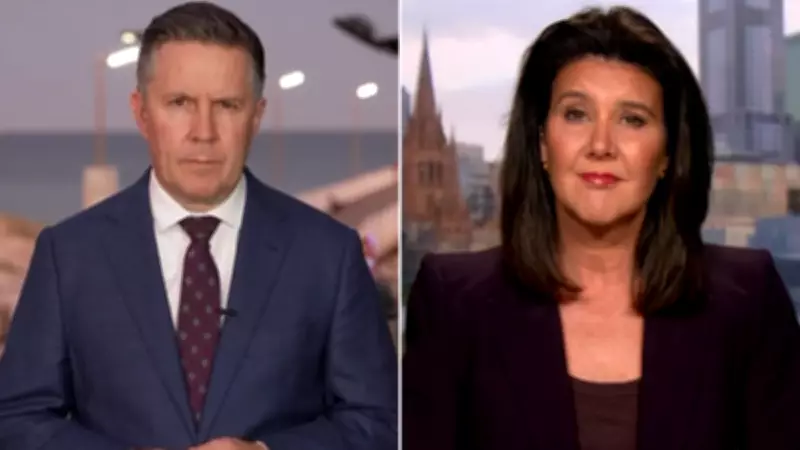
Health Minister Mark Butler told Sunrise that the government's position has been "crystal clear," asserting that Australia will not assist in bringing back those who chose to support ISIS.

"We're not participating with Syrian authorities," he said. "Our position has been crystal clear right through the course of this story: we're not going to provide any assistance to repatriate these people who chose to go overseas and provide their support. In some cases, their partners chose to fight for a death cult ISIS that is opposed to every one of the Australian values that I can think about."
The group consists of four Australian women and nine children. They had reportedly been issued passports and had flights arranged before being stopped by Syrian officials. This marks the second failed attempt to leave the Al-Roj detention camp, where they have been held since the collapse of ISIS.
Government Denies Knowledge of Airport Incident
Despite claims from Syrian officials, Butler said he could not speak to what occurred at Damascus International Airport on Thursday. "The prime minister said yesterday quite clearly that we're not engaged with Syrian authorities about this matter," he stated. "We're not across the detail of what these people are trying to do because we're not providing any assistance."
The government has maintained that it will not help facilitate returns but has frequently acknowledged it is bound by law when it comes to issuing passports. "There are elements of Australian law that we need to comply with as a law-abiding government," Butler explained. "If they seek a passport, we're required by law to give it to them, but we've also been clear with them that if they come back to Australia, if they've committed any offences, they'll be met with the full force of the law by Australian authorities. Our position could not have been clearer ... we're not providing any assistance to these families."
Home Affairs Minister Tony Burke has not directly addressed whether Australia intervened but suggested that some in the group may be reconsidering their return.
Opposition Criticises Government's Approach
The Opposition seized on the government's refusal to clarify its role, accusing it of mixed messaging. Deputy Opposition Leader Jane Hume told Sunrise that the government's approach was "entirely inconsistent."
"Mark says that the government's been unequivocal but, at the same time, they have issued passports, they haven't issued temporary exclusion orders and, at the same time, they've allowed third parties to take control over the situation," she said. "These people should not return to Australia."
International pressure has been mounting on Australia to accept the group, with the United States pushing for detainees to be cleared from the camp. Hume thanked the US for the advice but said ultimately the decision must fall on the Australian government. "We should be in charge of who it is that comes to our country. We're responsible for our borders and the security of our citizens. It's up to the Australian government now to make sure that they are doing everything in their power to keep Australians safe."
The Coalition has proposed new laws to prevent third parties from facilitating the return of individuals it says could pose a security risk. Despite the setbacks, family members reportedly remain confident that the women and children will eventually make it back to Australia.