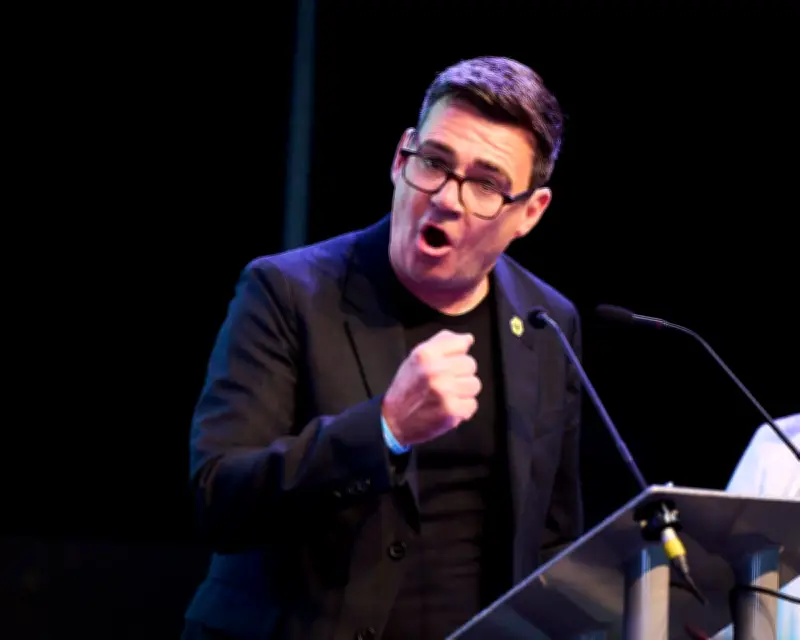
Andy Burnham is set to return to the House of Commons following a commanding victory in the Makerfield byelection, putting Keir Starmer's leadership on notice and giving Reform UK food for thought. The former mayor of Greater Manchester described the contest as the "most consequential byelection of our lives" and vowed to change not only the constituency but the country, touting his win as a "turning point."
How the Night Unfolded
As counting began late Thursday, no party appeared overly confident, according to the Guardian's north of England correspondent Hannah Al-Othman. However, a turnout of 58.75%—up from 52.5% at the 2024 general election and the highest for a byelection in seven years—was an early positive sign for Burnham. When results were announced just after 3am, Burnham had secured a thumping victory, winning 24,927 votes (55%) for Labour and increasing the party's vote share by nearly 10 percentage points. Robert Kenyon of Reform UK garnered 15,696 votes (35%), while Rebecca Shepherd of Restore Britain trailed with 3,111 votes (6.84%).
There was much speculation that Restore might aid Burnham's victory, but Al-Othman noted that "Burnham won without them," securing 6,100 more votes than Reform and Restore combined. This will add momentum to any leadership bid. Burnham appears to have united the progressive vote, with evidence of tactical voting: the Liberal Democrats received only 163 votes and the Greens 308.

Polling expert John Curtice cautioned against interpreting a wider surge for Labour, telling the BBC that much of Burnham's success lay in "his appeal to those who wanted to see the back of Keir Starmer." Despite the scale of victory, Al-Othman observed that there was no "party atmosphere" at the count, with the mood instead focused on "What's next?"
What Happens Next?
Burnham now appears unstoppable. Louise Haigh, former transport minister and a key figure in Burnham's campaign, has suggested that Starmer should agree to an "orderly and managed" handover of power. After a week in which Starmer doubled down on his vow to remain prime minister despite over 100 backbenchers calling for his departure, speculation mounted that a wave of cabinet resignations could occur within 72 hours.
However, political editor Pippa Crerar reports that Team Burnham is keen to avoid the chaos of a Boris Johnson-style collapse. Senior campaign figures have told her that Starmer should be given space to set a timetable for his departure. Energy secretary and Burnham ally Ed Miliband dismissed mischief-making about his own position on Thursday afternoon. On Friday morning, Starmer loyalist and home office minister Mike Tapp told the BBC that a handover would not be realistic because Burnham "hasn't laid out his political agenda."
The timing largely depends on whether Starmer chooses to step aside in the coming days. Starmer congratulated Burnham just after 6am, posting on social media that voters "chose Labour's campaign of hope and optimism over division and hate." Wes Streeting, another potential leadership rival, has stated he is prepared to initiate a contest early next week, raising the question: should Labour go for a coronation with Burnham or a contest with a wider range of contenders? Some argue that the scale of Burnham's victory makes the former more likely.
Who Is Andy Burnham?
Often dubbed Britain's most popular politician, Burnham has the eyelashes of Betty Boop and the wardrobe of a Haçienda dad. To some, he is a plain-speaking visionary who will remodel the state for the people; to others, he is a careerist shapeshifter who has twice run for the Labour leadership and missed both times. His political philosophy, Manchesterism, goes beyond networked transport—though the bright yellow Bee Network has become a symbol of the city's revival under his leadership. It encompasses a more interventionist economic approach, public takeover of essential assets, and expanded devolution.
During the campaign, Burnham set out big ideas, including a decade-long project to bring water and energy into public control, and an overhaul of property tax and social care. However, critics warn that he has not addressed immediate challenges, particularly foreign policy, which is considered a weakness.

The campaign trail saw several policy "re-alignments." Having previously called for scrapping the "no recourse to public funds" rule, Burnham distanced himself from that stance. He also backed controversial changes to the immigration system pushed by home secretary Shabana Mahmood, including an end to permanent refugee status. Some worry his flip-flopping on issues such as EU membership, bond markets, and single-sex spaces suggests he could be pulled to the right by Reform, repeating Starmer's mistakes—especially as Burnham has been touted as the party's "soft left" candidate.
What Does the Result Mean for Reform UK?
This was a bad night for Reform. The party needs to win left-behind, Leave-voting seats like Makerfield easily to have any hope of victory in a general election. Despite polling 10-plus percentage points ahead of Labour nationally, Makerfield marks Reform's second consecutive byelection loss this year, and the first in which it faced competition from Restore Britain, a new hardline party advocating mass deportations and the reintroduction of the death penalty.
Although Reform shifted focus to local issues like fly-tipping, candidate Robert Kenyon struggled after sexist and homophobic online posts from a former X account were unearthed. Restore's candidate Rebecca Shepherd targeted right-leaning women on Facebook. Nigel Farage warned voters on the eve of the byelection that a vote for Restore was essentially a vote for Labour, but previous polls suggested Restore supporters were less likely to vote tactically than progressives considering Burnham to fend off Reform.
Professor Rob Ford of the University of Manchester said Restore's message—that Reform, with its Conservative defectors, had become part of the same establishment that Makerfield voters believe does not serve them—resonated.
What Happened in Scotland?
The Labour drama was a distant echo in two other byelection contests in Scotland, necessitated after two SNP MPs were voted into the Holyrood parliament last month. The safe SNP seat of Arbroath and Broughty Ferry remained so, while farther north, the nationalists lost to the Tories in Aberdeen South after a contest dominated by energy policy. This morale-boost for Kemi Badenoch, who visited the constituency repeatedly, suggests that the conviction of former SNP chief executive Peter Murrell for embezzlement has further dented voter confidence in Scotland's governing party.