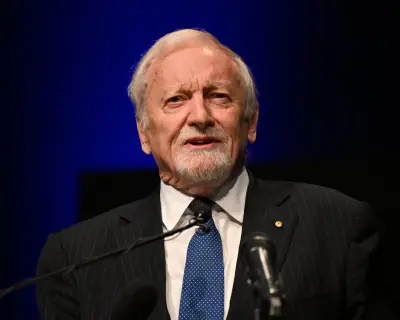
Liberal Senator Jonno Duniam's decision to leave politics has not only further depleted the Liberal Party's ranks but also cost the parliament a politician of considerable calibre. Duniam, who performed strongly on policy and political strategy, often sought compromises within his party and was an effective negotiator in the Senate. At 43, he had a long career ahead, even as the Coalition's electoral prospects appeared bleak. So why did he jump ship, especially with no job lined up?
Duniam cited family reasons—three young sons—but also admitted he was “exhausted.” He described the February leadership change as a “catalysing” factor, offering a rare glimpse into the intense pressures of political life. “When you take a job seriously, you give it everything. You get up every day, you go hard, you do your best. You try not to let anyone down and you try and cover the field. In opposition, you’ve got to be everywhere, talking to everyone, doing as much as you can or else you’ll get completely missed. The leadership change was an exhausting process. It was a difficult one. I mean we’d come off the back of dealing with net zero, again internally as our party grappled with that issue. That personally was very exhausting. I’d only just taken on the home affairs portfolio. We had our response to Bondi, again a deeply exhausting process, one that I put a lot of effort into, supported by others of course. But, when the leadership change came along, it started to really wear on me. It was less about direction and more about my personal energy levels. And to that end, that is why I made that decision.”
The Relentless Demands of Modern Politics
While particular circumstances—especially party dramas when leading players are under intense heat internally and externally—pile on stress, Duniam's description prompts wider questions about how politics operates today. Of course, politicians should be busy, and demands on them should be high. Given public cynicism, they won't get much sympathy. People will say, “they are not conscripts,” “they get plenty of money and perks,” “I wish I had it as good.” All true. But also true is that contemporary political life has become crazy, thanks to the hyper-professionalisation of politics and the 24-hour news cycle.

If you are the government or opposition, the news cycle must be filled constantly, or the other side will do it. Major parties deploy their troops with military precision onto the media battlefield on all fronts: morning programs, during the day, into the night, through the weekends. The troops come supplied with “talking points”—weaponry that allows even the Minister for Nothing Much to sprout an answer to a complex question like “how will Jim Chalmers’ changes to capital gains tax work for a business in such-and-such circumstances?” without, this synthetic crutch, they likely wouldn't have a clue. In earlier times, when ministers appeared less frequently and mostly talked about their own remit, they could stick to small but significant issues in their department.
The Uniform of the Day
For many “on-site” news conferences held by government and opposition frontbenchers, a dress code is mandatory. Hi-vis gear and hard hats have become de rigueur (can anyone recall when this happened?), even if the closest falling object is likely to be voters' wrath. Anthony Albanese and Clare O'Neil on Monday were at a future housing site appropriately dressed in bright lemon jackets and white helmets.
The “weekend” disappeared a long time ago for many workers, and it certainly has for politicians on the frontline. Not only do they have traditional electorate functions, but senior members are rostered to Saturday or Sunday news conferences, including the prime minister and the opposition leader, if he doesn't want pesky questions along the lines of “so where the bloody hell are you?” There probably once was a time when audiences wouldn't have appreciated politicians seeking attention live on TV on Sunday mornings. Now, these appearances are strategised as carefully by the parties as by the programs.

The Toll of Constant Travel and Permanent Campaigning
While both sides must meet constant media requests, it's harder for the opposition, with its fewer numbers and resources. Then there is constant travelling. Paradoxically, the easier and faster travel has become, the more demanding it can be for politicians because they are having (or choosing) to do more of it. This puts particular strains on ministers, who have thinking work they need to attend to, preferably when they are not worn out. The “permanent election campaign” means frontbenchers are on the move throughout a parliamentary term, rather than just when elections are drawing near.
Other disincentives—such as intrusions into personal lives and often horrific personal attacks via social media—deter good people from entering politics. But the sheer relentless nature of it all, highlighted by Duniam, sends a discouraging message about the state of Australian political life.