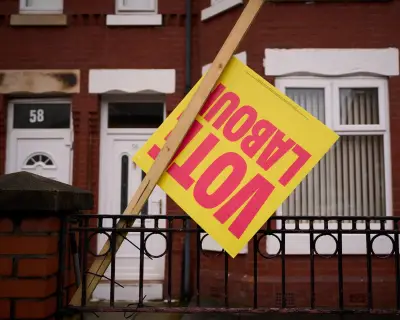
Andy Burnham has signaled that overhauling England’s social care system would be a top priority if he becomes prime minister, marking his clearest indication yet of key objectives. While work under Keir Starmer is already underway to update the system, Burnham has indicated a desire for more radical and urgent change.
What is wrong with social care in England?
The adult social care sector in England has been in crisis for decades. Local authorities struggle with rising costs and a permanent staffing shortage, making it difficult to meet growing demand. In 2024/25, there were 2 million new requests for publicly funded social care, up from 1.8 million in 2015/16. Notably, requests from working-age adults increased by 31%, rather than from elderly individuals.
Local authorities are legally required to provide care, but funding cuts from central government over the past decade have squeezed budgets, leaving many struggling to keep up. Successive governments over the last 30 years have agreed the system needs a complete overhaul, with proposals ranging from a lifetime cap on care costs to integrating social care into the NHS. However, the political and financial cost has resulted in little actual change.

Who pays for it?
The core issue is who pays. Social care is not part of the NHS; it is administered by councils. Alongside care for elderly people, a significant portion of budgets goes to younger adults with learning disabilities, physical disabilities, or mental health conditions.
Access to publicly funded care is means- and needs-tested. People with assets must pay for their own care, sometimes selling their homes and using life savings. With councils struggling to fund care homes, private companies have stepped in, but a two-tier market has emerged where self-funders are overcharged to subsidize local authority rates.
Unpaid carers, providing care worth £184 billion a year—described as the equivalent to a second NHS—bear the highest cost from failures to reform the system.
What is the government doing?
Labour promised a national care service in its manifesto and has asked cross-bench peer Louise Casey to lead an independent review. The Casey commission is phased, with a first report due this year, full review expected by 2028, and implementation estimated by 2036. Charities and social care directors have criticized this timeline as too long, not reflecting the urgency.
In a March 2026 speech, Lady Casey described the system as held together by “add-ons, workarounds, sticking plasters and glue.” She warned of a “moment of reckoning” over failures to meet the needs of an ageing population and rising numbers of people with chronic conditions like dementia and Alzheimer’s.
How much will it cost?
The government spends about £32 billion annually on adult social care through local authorities, which are overspending and cutting elsewhere. Thinktanks estimate billions are needed just to stabilize basics. The government is introducing a fair pay agreement for care workers to set minimum pay, sick pay, and conditions, aiming to solve staffing shortages and fill over 100,000 vacancies. This is backed by £500 million, but the Local Government Association says this is insufficient, likely straining council budgets further.
Full structural reform—such as capping individual care costs or creating an NHS-style model where most care is free (like in Scotland)—would cost much more. Estimates vary, but the Institute for Public Policy Research suggests it could cost £36 billion a year by 2030. This would likely require higher national insurance contributions or other taxes, which may be politically contentious.