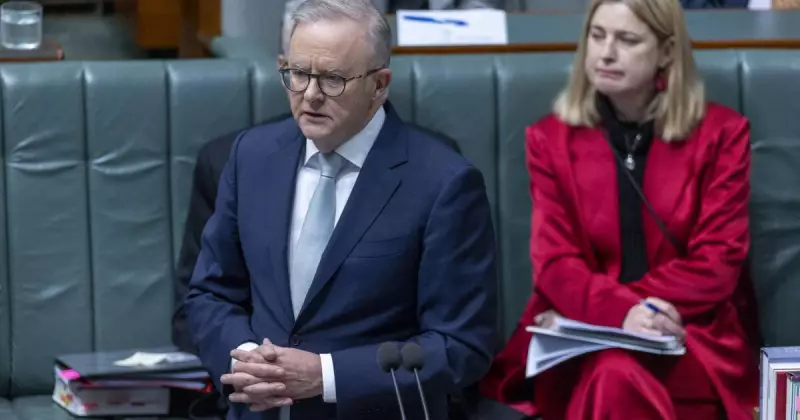
Prime Minister Anthony Albanese's decision to finally call for a Royal Commission has left his staunch defenders exposed, according to a wave of correspondence published by The Canberra Times. The letters, dated January 15, 2026, capture a nation grappling with political accountability, climate change, and rising social tensions as federal politicians prepare to return to Parliament.
Political Backlash and Climate Concerns
One correspondent from Weston, Ian Pilsner, pointedly questioned how the Prime Minister's supporters would rationalise his belated royal commission call, suggesting he had bowed to public pressure. Pilsner criticised "the usual suspects" for blindly defending the government's initial inaction, drawing a parallel to their past support of Labor causes.
The letter also turned to environmental policy, noting the recent return of severe fire conditions to the ACT after five milder summers. Pilsner referenced the first total fire ban in six years and questioned whether the government would be held responsible for catastrophic fires, just as former Prime Minister Scott Morrison faced criticism during past disasters.

Antisemitism and Cultural Debates Intensify
The proposed Royal Commission into antisemitism dominated the readers' forum. Thomas Wassermann from Woollahra strongly objected to what he saw as attempts to downplay the seriousness of antisemitism in Australia since October 2023. He defended the International Holocaust Remembrance Alliance (IHRA) definition, arguing that denying Jewish people the right to self-determination is a clear form of prejudice.
Another writer, Alex Mattea from Kingston, called for the commission to investigate the Adelaide Writers' Festival's communications concerning author Randa Abdel-Fattah. Mattea suggested examining potential patterns of political and cultural intimidation, drawing a comparison to the documented case involving the ABC and Antoinette Lattouf.
Global Affairs and Local Grievances
Foreign policy also sparked fierce debate. Margaret Lee from Hawker expressed deep concern over recent US actions in Venezuela, drawing a stark comparison to the 2003 invasion of Iraq. Lee described a scenario where assertions were made without evidence and questioned the stability of a "rules-based" international order.
Closer to home, community issues were front of mind. Sue Theron from Goulburn wrote in support of action groups combating the Indian Myna bird plague, arguing that human intervention is morally necessary to protect native species. Meanwhile, other letters touched on transport planning, aquatic centre consultations, and even SBS's scheduling decisions, which one reader felt prioritised sport over substantive international news.
A Society Seeking Balance
The collection of letters paints a picture of a society wrestling with complex questions of blame, responsibility, and historical precedent. G Williams from Gowrie pleaded for balance, juxtaposing warnings about rising antisemitism in 2025 with ignored warnings about the catastrophic 2019-20 fire season. The writer highlighted a perceived inconsistency in how political leaders are held accountable for crises.
As the nation awaits the formal proceedings of the Royal Commission, the public discourse, as reflected in these pages, remains deeply divided, scrutinising every government action and its echoes in history.