Australian politics has been rocked by a seismic shift in voter sentiment, with the first Newspoll of the year revealing a dramatic surge for Pauline Hanson's One Nation party. The minor party has leapfrogged the Liberal-National Coalition to become the nation's second most popular political force, underscoring a profound and growing disillusionment with the major parties.
Poll Numbers Paint a Picture of Discontent
The latest survey delivers stark figures that will alarm the traditional powerbrokers in Canberra. Labor's primary vote has fallen four points to sit at 32 per cent. Meanwhile, in the most startling result, One Nation's primary support has jumped a massive seven points to reach 22 per cent. This surge has pushed them past the Coalition, which slipped three points to 21 per cent. The Greens recorded a slight dip of one point to 12 per cent.
These numbers mean that for the first time, combined primary support for Labor and the Coalition has plummeted to a historic low of just 53 per cent. In the preferred prime minister stakes, Anthony Albanese remains in front at 51 per cent, though his support dropped three points. Opposition Leader Sussan Ley saw a four-point lift to 31 per cent.

Sunrise Clash Highlights Key Battlegrounds
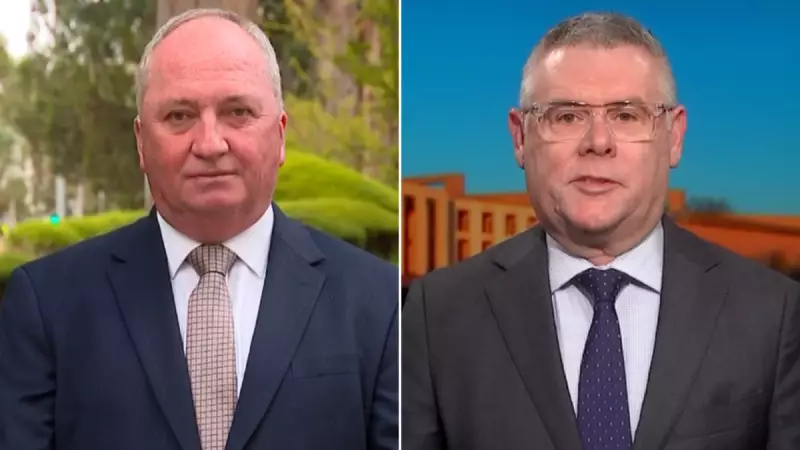
The shocking poll results ignited a fiery televised debate on Sunrise between One Nation MP Barnaby Joyce and Labor's Environment Minister Murray Watt. The former Nationals leader, who recently defected to One Nation, said the party was "very humbled" by the result but urged caution, viewing it as an indicator of mood rather than a firm prediction.
"What One Nation has done is given people licence for an alternative," Joyce declared. He dismissed suggestions of a "Barnaby Bump" driving the rise, arguing that frustration with mainstream politics was widespread. "People are concerned that politics these days is about looking after fringe groups at the expense of the Australian population in general," he said.
Minister Watt turned the focus onto the Coalition's internal strife, congratulating Joyce sarcastically on becoming the "effective Opposition leader." "They've overtaken the Coalition, and I think this explains why you're seeing so much division in the Coalition," Watt stated. He argued that fear of One Nation's growth was dragging the Coalition further to the political right.
Immigration and Cost of Living at the Forefront
The debate quickly intensified around the hot-button issue of immigration. Joyce accused the Labor government of being all talk and no action on making tough decisions about who enters Australia. "I don't think you'll see the Labor Party making those decisions because they're scared of being decisive," he claimed.
Watt hit back, pointing to legislation before Parliament this week aimed at strengthening the immigration minister's powers to cancel visas and remove individuals for hate speech. "We're already on track to set the target we set last year," Watt said, referencing the government's goal to slash net overseas migration to around 240,000, down from post-pandemic peaks.
Despite the political storm, Watt insisted the government's focus would remain on delivering cost-of-living relief for Australians. "Our focus is going to remain on assisting Australians with their cost-of-living pressures, delivering more homes, delivering cheaper Medicare, cheaper medicines," he affirmed.
The unprecedented poll result serves as a clear warning to the established political order. With One Nation now commanding greater direct voter support than the official Opposition, the landscape for the next federal election has become significantly more volatile and unpredictable.