Australia's long-held strategic assumption that its geographic isolation guarantees security is looking increasingly fragile in today's complex world. According to former defence intelligence officer Professor Clive Williams, the shrinking global security environment, strained alliances, and new forms of military power projection mean distance alone no longer protects the nation.
Top Security Flashpoints and Strategic Shifts
Drawing on his experience within the Defence Intelligence Organisation (DIO), Williams has projected ten key defence and security developments that could significantly affect Australia in 2026. He notes that while five-year projections have historically been accurate, unforeseen events like the 2008 Global Financial Crisis or the 2019 Covid pandemic can always emerge.
The intensifying rivalry between the United States and China sits at the top of concerns. This entrenched competition spans technology, military access, alliances, and influence across the Indo-Pacific. For Australia, it creates sustained pressure to align closely with Washington while desperately trying to preserve the economically critical trade relationship with Beijing.

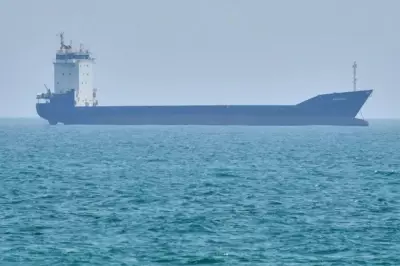
The Taiwan Strait remains a potent flashpoint. Even without open conflict, increased military exercises, harassment, and cyber operations raise the risk of dangerous miscalculation. Any serious crisis would disrupt Asian shipping, insurance, and trade. Australia would face immediate expectations from the US to provide diplomatic, logistical, or military support.
Furthermore, Russia is emerging as a permanently militarised state, closely aligned with China, Iran, and North Korea. This hardens global blocs and diverts Western resources. Under a potential second Trump presidency, great-power cooperation may be unpredictable and US military support for allies cannot be guaranteed.
The New Normal of Hybrid Threats and Regional Instability
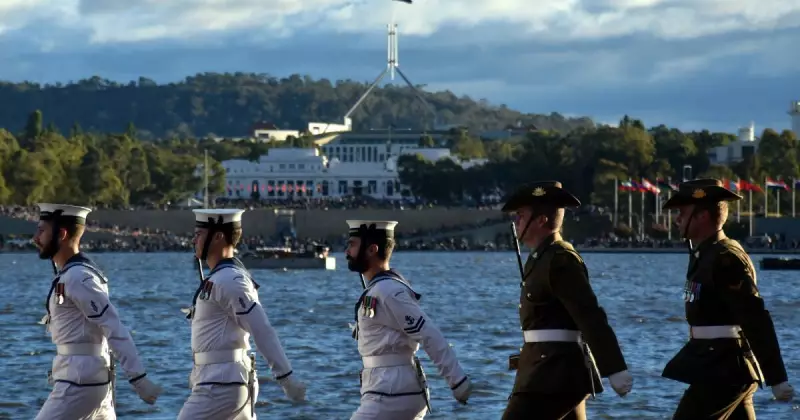
A defining feature of modern conflict is the normalisation of 'grey zone' activities. These include cyber attacks, disinformation, economic coercion, and sabotage of critical infrastructure like undersea cables and satellites. As a digitally connected, trade-dependent nation, Australia is highly exposed. Defence in 2026 is as much about societal resilience and intelligence as it is about warships and fighter jets.
This is compounded by a significant Indo-Pacific arms build-up. Regional militaries are rapidly modernising with submarines, long-range missiles, and drones. While this may strengthen deterrence, it also increases the risks of accidents and dangerous misjudgements.
Closer to home, the AUKUS pact will move from abstract concept to concrete commitment. Decisions on nuclear-powered submarines, workforce development, shipyards, and massive budgets will begin to bite. This extravagant program will shape Australia's defence posture for decades and attract sharp scrutiny from neighbours uneasy about heightened strategic competition in their region.
Global Pressures and Non-Traditional Security Challenges
Instability far from Australian shores continues to pose direct threats. Conflict in the Middle East, involving an expansionist Israel, radical Iran, or their proxies, could disrupt global energy markets and shipping lanes. Australia may again face calls to deploy naval assets or provide intelligence support, testing both military capacity and public patience.
Meanwhile, North Korea's paranoia drives it to regularly test missiles and enhance its nuclear capability. While Australia is not a direct target, these actions place greater strain on US and South Korean forces and cause significant regional concern.
Increasingly, climate change is a core defence and security issue. As former Chief of the Defence Force Chris Barrie has highlighted, rising sea levels, extreme weather, and humanitarian crises in the Pacific will increasingly draw on Australian Defence Force resources for disaster response and regional assistance.

Finally, there is a worrying erosion of global arms control and the rules-based international order. Military technology, from autonomous weapons to AI-enabled systems, is advancing faster than the rules governing it. Major powers, including the US, Russia, and Israel, are seen to regularly breach international laws, from the UN Charter to the Geneva Conventions.
The uncomfortable reality for Australia is that geography no longer guarantees security. The paramount political challenge for 2026 and beyond will be safeguarding national interests without being drawn into conflicts that run counter to them.
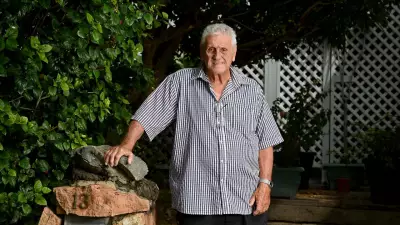
Professor Clive Williams MG is a former Australian Army and Defence intelligence officer.