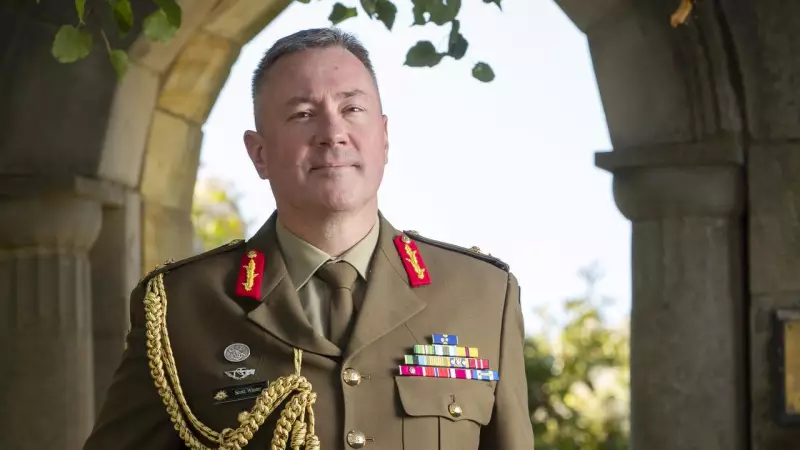
In a significant move for Australian defence diplomacy, a senior Australian Army officer has been appointed to a pivotal role within the United Nations Command. Lieutenant General Scott Winter, a highly decorated officer with extensive command experience, will now serve as the Deputy Commander of the multinational military force.
A Strategic Appointment for Global Security
The United Nations Command (UNC) announced the appointment this week, highlighting the strategic importance of the position. Lieutenant General Winter will be based at the UNC headquarters in the Republic of Korea, a key location for maintaining stability in the region. His role will involve overseeing the day-to-day military operations and coordination of the UNC, which comprises forces from various member nations dedicated to upholding the Korean Armistice Agreement.
This appointment is not just a personal achievement for General Winter but a strong signal of Australia's ongoing and deepening commitment to international security frameworks. The Australian Defence Force's contribution to the UNC has been longstanding, and this elevation to a senior leadership position underscores the high regard in which Australian military expertise is held by its allies and the United Nations.

The Distinguished Career of Lieutenant General Winter
Lieutenant General Scott Winter brings a formidable record to this new challenge. His career in the Australian Army spans several decades, marked by a series of high-profile command and staff appointments. He is a graduate of the Royal Military College, Duntroon, and has served in various operational and strategic roles both within Australia and on international deployments.
Most recently, he served as the Chief of Joint Capabilities, where he was responsible for integrating critical defence support functions. His previous commands include leadership of the 1st Brigade and key positions within Army Headquarters. His operational experience and deep understanding of joint force operations make him exceptionally well-suited for the complex, multinational environment of the United Nations Command.
What This Means for Australia and the Region
The appointment of an Australian officer to such a senior role within the UNC carries substantial strategic weight. It places Australia at the heart of decision-making for one of the world's most enduring and sensitive peacekeeping missions. The UNC's primary mission is to maintain the armistice on the Korean Peninsula, a task of critical importance to regional and global security.
For Australia, this move reinforces its status as a reliable security partner that is willing to shoulder significant responsibility in upholding the international rules-based order. It provides a direct channel for Australian influence and perspective at the highest levels of the UNC's military structure. Furthermore, it offers invaluable experience for the ADF in multinational command and crisis management within a highly strategic context.
The role of Deputy Commander is crucial for ensuring the smooth functioning and readiness of the UNC forces. Lieutenant General Winter's responsibilities will include liaising with South Korean and United States military authorities, as well as other contributing nations, to ensure a unified and effective command posture.
This appointment is seen by defence analysts as a natural progression of Australia's active role in Indo-Pacific security and its unwavering support for the United Nations' charter. It follows a consistent pattern of Australian leadership in international military affairs and sets a precedent for future high-level contributions to global security institutions.