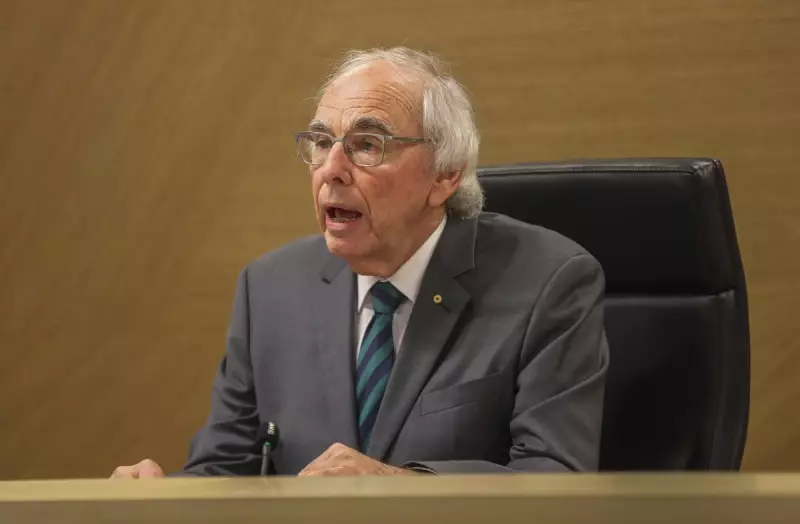
In a powerful intervention, a former Western Australian Supreme Court judge and esteemed royal commissioner has declared a national inquiry into the Bondi Junction massacre is not only warranted but a compelling necessity. Neville Owen, who led the landmark royal commission into the collapse of HIH Insurance, has added his significant legal weight to growing calls for a thorough, independent investigation into the April 13 tragedy.
A Call for Clarity and Accountability
Mr. Owen, speaking publicly on the matter, stressed that the horrific events at Westfield Bondi Junction, where six people were murdered and many others injured by attacker Joel Cauchi, demand the highest level of scrutiny. He argues that while police and coronial investigations have their roles, they cannot match the broad scope and coercive powers of a royal commission.
"I think there is a compelling need for a royal commission," Mr. Owen stated unequivocally. He highlighted that such an inquiry could comprehensively examine the complex web of issues surrounding the attack. This includes, but is not limited to, mental health service interactions, law enforcement protocols, and security measures in public spaces like shopping centres.

The former commissioner pointed out a critical limitation of the ongoing NSW coronial inquest: its primary focus is on determining the cause and circumstances of the deaths. A royal commission, by contrast, could delve deeper into systemic failures and make forward-looking recommendations for national policy reform.
Why a Royal Commission is Deemed Essential
Mr. Owen's advocacy is rooted in his firsthand experience with the unique capabilities of a royal commission. He outlined several key advantages this form of inquiry holds over other investigations:
- Nationwide Scope: The attack, while occurring in Sydney, raises issues of national significance concerning mental health, community safety, and emergency response. A royal commission can cross state borders and examine federal and state responsibilities.
- Coercive Powers: Commissioners have the authority to summon witnesses and compel the production of documents, ensuring full transparency and access to all relevant evidence.
- Holistic Examination: It can look at the entire sequence of events and systems involved, from Cauchi's known history with mental health services and his movements from Queensland to the security response on the day.
- Public Confidence: A transparent, independent commission can help rebuild public trust and provide answers to a grieving community and nation.
Mr. Owen emphasised that the goal is not to assign blame to individuals but to understand the systemic gaps that may have contributed to the tragedy and to ensure such an event is never repeated.
Momentum Builds for a National Probe
The call from Neville Owen significantly amplifies the voices of victims' families and community advocates who have been seeking a more extensive investigation. His legal stature and experience give substantial credibility to the argument that a coronial inquest alone is insufficient for an event of this magnitude and complexity.
The debate now places increased pressure on both the NSW and Federal Governments to consider establishing a joint royal commission. Proponents argue that the intersecting issues of health, policing, and security require a coordinated national response that only a commission can orchestrate.
As Australia continues to mourn the lives lost at Bondi Junction, the push for a royal commission, led by figures like Neville Owen, is fundamentally about seeking the fullest possible understanding. It is a pursuit aimed at honouring the victims through meaningful change, ensuring that lessons are learned and embedded into the nation's framework for protecting its citizens.