For court reporters, the daily rhythm involves patient observation, careful listening, and waiting for the crucial details that transform a legal proceeding into a public story. While the most sensational elements make the news, the nuanced, behind-the-scenes dynamics of Canberra's courtrooms often go unseen. As 2025 draws to a close, we take a unique look at some of the year's most significant and revealing cases in the Australian Capital Territory.
Dramatic Chases, High-Stakes Heists, and National Security
One case provided a uniquely Canberra perspective on the dangers of police pursuits. Dramatic footage showed a man, alleged to be John Warren Westaway, driving a ute with a trailer through city streets, mounting bike and pedestrian paths. The chase ended with the driver abandoning the vehicle and leaping into Lake Burley Griffin. Authorities noted it was fortunate no one was killed.
In a case ripped from a Hollywood script, four French nationals faced court accused of travelling to a Canberra home to steal luxury items valued at a staggering $10 million. The haul included handbags, jewellery, and a watch worth $5.8 million. The case raised pressing questions about how the thieves knew the items were there, with police remaining tight-lipped to protect the victims' identities.

National security also featured prominently. A permanent Australian resident and Chinese national faced charges of acting as a spy, allegedly collecting information on a Canberra organisation for the Chinese government. The case attracted such intense media interest that an initial hearing had to be moved to a larger courtroom. Suppression orders surrounding the defendant's identity and involved police officers have consumed significant court time.
Community Shock and Legal Precedents
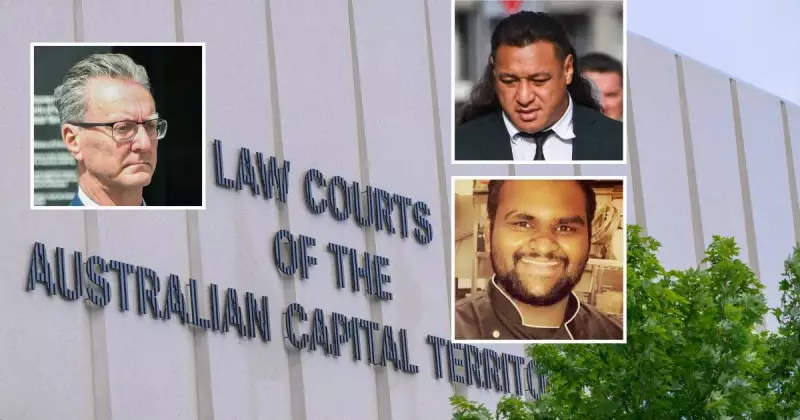
The ACT community was rocked when former Attorney-General Gordon Ramsay was charged with grooming a teenager. Ramsay, who has pleaded not guilty, was subsequently suspended from his role as CEO of the Cultural Facilities Corporation. Details of the allegation are yet to be fully aired in court.
In a rare legal outcome, a case against Canberra Raiders veteran Josh Papali'i was permanently stayed in November 2025. Chief Magistrate Lorraine Walker found that police officers' use of an encrypted messaging app that automatically deleted messages amounted to "an intentional practice of the destruction of evidence." The decision set a high bar for the dismissal of cases.
The community was also shaken by a hit-and-run on March 28, where two boys from St Edmund's College were seriously injured by a stolen car. The driver, Tayler Christian Hazell, told the court the next day he did not seek bail, stating, "I just want to go to the prison and have a sleep." He was commended by tradies who apprehended him at the scene.
Violence, Tragedy, and the Search for Justice
The ACT courts grappled with profound cases of violence. Alex Leonard Ophel, who stabbed two students and attacked others at the Australian National University in 2023, was found not guilty by reason of mental impairment but given a nominated jail sentence of life. His imposing physical presence in court contrasted sharply with his typically blank demeanour.
In a harrowing sentencing, Chief Justice Lucy McCallum described the final moments of National Zoo and Aquarium chef Tshewang Choden, murdered by her colleague Jude Luckshan Wijesinghe. Wijesinghe was sentenced in December 2025 to 30 years' jail, with a non-parole period of 20 years, after pleading guilty.
Gasps filled a courtroom when Shakira Adams received a maximum penalty of 14 years' jail, with a nine-year non-parole period, for the drug-driving death of Matthew McLuckie. The 20-year-old victim's family attended every hearing, a constant reminder of the life lost.

Disturbing terrorism cases involved two Canberra teenagers. A 17-year-old boy allegedly had plans for shootings and bombings, with his views linked to far-right ideology. Police found chemicals, military clothing, and texts about Nazism in his bedroom. Separately, a 16-year-old was sentenced for possessing Islamic State material, though by September 2025 he had renounced the terrorist group's legitimacy.
These cases, from the bizarre to the tragic, paint a complex picture of a year in Canberra's justice system, highlighting the human stories behind the legal headlines and the ongoing pursuit of accountability and safety in the community.