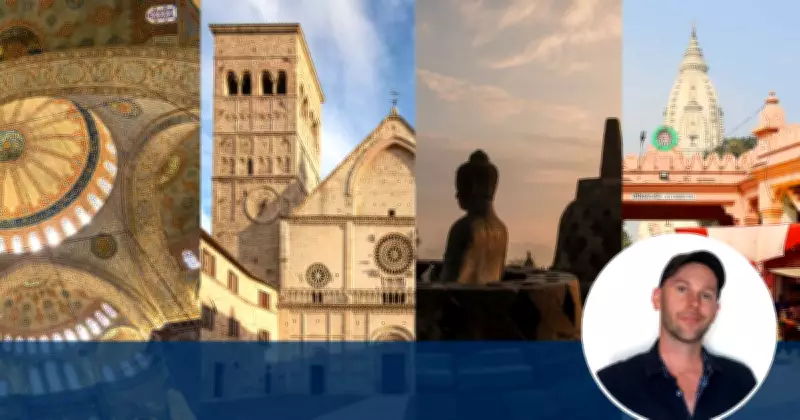
Discover the World's Most Breathtaking Sacred Sites
As Easter approaches, it's the perfect time to explore the world's most breathtaking sacred sites. These destinations offer not only spiritual enrichment but also profound cultural experiences that stay with travelers long after they return home. From ancient rituals to architectural marvels, let's delve into some of the most memorable spiritual getaways across the globe.
A Moving Easter Tradition in Assisi
Imagine standing in the historic Italian town of Assisi as all the lights gradually turn off—streetlamps, shops, and even the moon hidden behind thick clouds. In this profound darkness, crowds gather silently along the main pedestrian thoroughfare, waiting. Suddenly, the beat of a drum echoes from the hill near the Cathedral of San Rufino, dedicated to St Rufinus, followed by another, forming a slow rhythm. Dark figures emerge from the shadows in a solemn procession, with worshippers walking barefoot on cobblestones, holding flaming torches and dragging wooden crosses. This moving local tradition during Easter is just one of many spiritual moments that can transform your travels.
Although not everyone considers themselves religious, there's often something truly breathtaking about visiting the world's best sacred sites. In 2026, Assisi marks the 800th anniversary of St Francis's death, while the Vatican's St Peter's Basilica celebrates its 400th anniversary with a year-long program of new art, special access, and cultural events. Inside, you'll be struck by the opulence, akin to one of the world's finest art galleries, featuring masterpieces like Michelangelo's marble sculpture Pieta.

Christian and Buddhist Sacred Destinations
For a less decadent but equally faith-filled experience, visit St Catherine's Monastery in Egypt. Founded in the sixth century on what's believed to be the site of the Bible's burning bush, it's one of the world's oldest monasteries still in use. Located at the foot of Mount Sinai, visitors often combine exploring the ancient stone monastery with witnessing a breathtaking sunrise from the summit.
In Indonesia, near Yogyakarta, lies Borobudur, the world's largest Buddhist temple. Hidden by jungle for centuries until its rediscovery in 1814, its scale is astounding—nine levels of terraces connected by staircases, adorned with over 500 Buddha statues and thousands of intricate stone carvings. To see where Buddhism began, head to Lumbini in Nepal, the birthplace of Buddha. This region offers archaeological evidence of the royal city where Prince Siddhartha grew up in the 6th century BC, with expansive gardens and monasteries built by dozens of countries in their national styles.
Islamic, Hindu, and Ancient Spiritual Sites
Among the three most important Islamic sites globally, non-Muslims can get up close to al-Aqsa in Jerusalem, though current events may present challenges. This hilltop complex, said to be the location of Prophet Mohammad's Night Journey, includes an ancient prayer hall and the iconic Dome of the Rock with its intricate tilework and golden roof. In Istanbul, Turkey, the Blue Mosque dazzles with more than 20,000 handmade ceramic tiles and stained glass windows, while the Hagia Sophia mosque retains touches from its 6th-century cathedral origins, featuring marble columns and gold-leaf mosaics.
For Hindu spirituality, Varanasi on the banks of the Ganges River is considered the earthly abode of Lord Shiva. Pilgrims flock here for elaborate sunset rituals with priests chanting rhythmically while holding massive brass lamps and incense. Alternatively, Batu Caves near Kuala Lumpur offers a more accessible option for Australian travelers, with a colorful staircase leading to naturally formed caves transformed into a Hindu temple, complete with a 42-meter-high statue of Lord Murugan and playful monkeys.
Not all sacred sites are active places of worship. Stonehenge in England, for instance, is a prehistoric marvel that leaves tourists in awe, wondering about its purpose and construction four millennia ago. Even older is the Ggantija Temple in Malta, built from 3600 BC with enormous rough stones in a clover-leaf shape, now an archaeological site that hints at Neolithic ceremonies.

Indigenous and Natural Spiritual Experiences
Spirituality can also be found in nature. Uluru in Australia's Northern Territory exudes an incredible energy, with the Anangu people sharing stories that intertwine with the landscape, reminding us of ancient faiths. Similarly, Devils Tower in Wyoming, USA, stands 386 meters tall and is considered sacred by over 20 Indigenous nations. Hearing their perspectives offers a deeper appreciation of this natural marvel, which resembles a petrified tree stump formed from cooled magma millions of years ago.
These sacred sites across religions and faiths provide unique travel opportunities that blend history, culture, and personal reflection. Whether you're seeking quiet contemplation or vibrant rituals, they offer a window into the spiritual heart of our world.