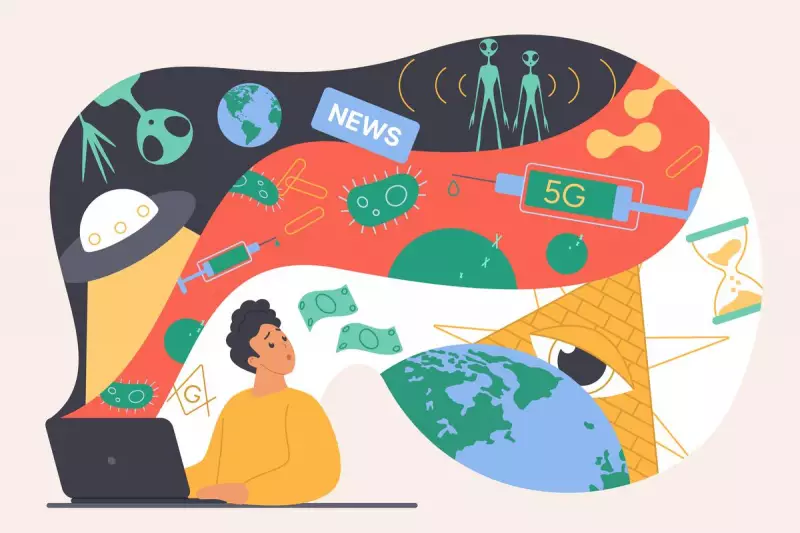
New psychological research has delivered a sobering insight into the modern infodemic, revealing that individuals with narcissistic personality traits are significantly more likely to believe in conspiracy theories. This susceptibility persists regardless of their level of formal education, challenging the assumption that learning alone can inoculate against misinformation.
The Unwavering Link Between Narcissism and Conspiracy Thinking
The study, led by researcher Tyler Cosgrove from the University of Otago, investigated the psychological underpinnings of conspiracy belief. It found a strong and consistent correlation between subclinical narcissism—everyday traits of grandiosity and entitlement—and an inclination to endorse conspiratorial worldviews.
This connection held firm even when accounting for educational attainment. A university degree did not diminish the effect, indicating that the driver is rooted in personality, not intellect or knowledge. The research suggests that for narcissistic individuals, conspiracy theories offer a narrative that aligns with their self-view: they are the special few who can see the hidden truth that the ignorant masses cannot.

Why Education Alone Is Not a Shield
The findings disrupt a common societal presumption. "We often think that if we just educate people more, they'll be less likely to believe in conspiracy theories," the research implies. However, this study shows that personality factors can override the critical thinking skills that education aims to foster.
For someone high in narcissism, a conspiracy theory can serve several psychological needs. It can provide a simple explanation for complex events, reinforce a sense of superiority over others, and create a clear 'us versus them' dynamic where the believer is part of the enlightened in-group.
Key traits associated with this susceptibility include:
- Grandiosity: An inflated sense of self-importance and unique abilities.
- Entitlement: The expectation of special treatment and admiration.
- Exploitativeness: A willingness to use others to achieve personal goals.
Implications for Public Discourse and Misinformation
This research has profound implications for how societies address the spread of dangerous falsehoods, from anti-vaccination myths to election fraud claims. It suggests that fact-checking and information campaigns may be ineffective when targeting individuals whose beliefs are fuelled by deep-seated personality needs rather than a simple lack of facts.
Combating misinformation, therefore, may require more nuanced strategies. Approaches might need to focus on addressing the underlying psychological motivations—such as feelings of alienation or a need for significance—that make conspiracy narratives appealing in the first place. Building community trust and reducing social exclusion could be as important as promoting scientific literacy.
The work of Tyler Cosgrove and colleagues adds a critical layer to our understanding of the post-truth era. It moves the conversation beyond demographics and education, highlighting that the battle against conspiracy theories is not just about informing minds, but also about understanding the complex psychological landscapes of those who cling to them most fiercely.