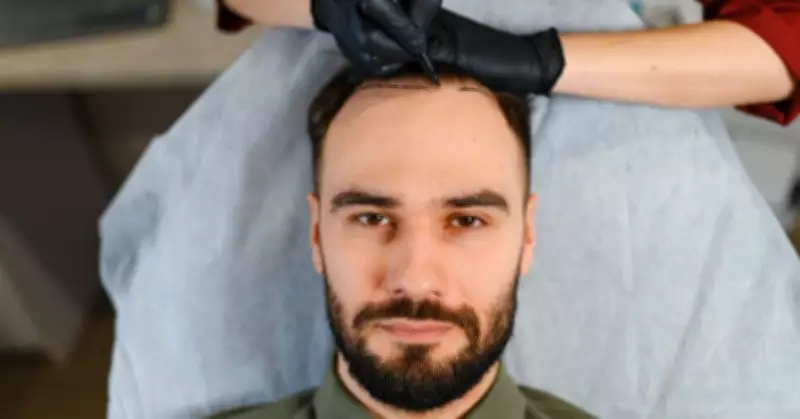
Turkey's Hair Transplant Sector Embraces Formalised Hairline Symmetry Benchmarks
In the bustling hub of medical tourism, Turkey continues to lead as a premier destination for hair restoration procedures, with Istanbul-based clinics increasingly focusing on refining treatment planning processes. Smile Hair Clinic has recently formalised hairline symmetry benchmarks within its workflow, aiming to standardise pre-procedure planning and improve patient explanations. This move reflects a broader industry shift towards enhanced consistency and transparency in a high-demand market.
Symmetry Evolves from Aesthetic Ideal to Structured Planning Component
Hairline symmetry, while easily described, poses significant challenges in execution due to its visibility in photographs and direct lighting. Clinicians often navigate the delicate balance between achieving clean alignment and incorporating subtle irregularities to mimic natural growth patterns. Smile Hair Clinic's educational materials emphasise this equilibrium, particularly in temple-point work, where symmetry planning involves mirroring sides while allowing for slight asymmetry.
The clinic's adoption of "benchmarks" refers to defined reference points in the design workflow, not guarantees of outcomes. These benchmarks aim to make planning more traceable by documenting measurements, choices, and rationales, thereby supporting structured decision-making.

Defining Benchmarks in Hairline Symmetry Planning
In treatment planning, benchmarks serve as reference points to guide consistency. Smile Hair Clinic bases its hairline design on facial proportions, angles, and deliberate placements, especially in the frontal zone. Key symmetry benchmarks include establishing and verifying a midline, mapping temple points and front corners, comparing left and right contours across facial reference points, and assigning angles for believable hair flow.
Patients frequently arrive with preferred hairline photos, requiring clinicians to adapt these to donor capacity, hair characteristics, and hair loss progression. A benchmarked process structures this translation, facilitating clearer documentation and patient discussions.
Temple Points: Critical Zones for Symmetry Visibility
Temple points are small yet high-impact areas that connect the frontal hairline to sideburns, significantly influencing facial framing. Smile Hair Clinic's approach involves matching angles and directions to surrounding hair, treating symmetry as foundational while permitting natural asymmetry. Due to their delicacy and visibility, planning in these zones is conservative and detail-oriented, often necessitating plain-language explanations for patients regarding realistic outcomes and density.
Planning Precision Gains Importance in Turkey's Booming Medical Tourism Economy
Turkey's hair transplant sector operates within a larger medical travel economy, generating billions in annual revenue. Official figures from the Turkish Statistical Institute report 1,506,442 health visitors in 2024 and 1,398,580 in 2025, with corresponding incomes of approximately 3.02 billion USD each year. This scale drives a shift towards comparing clinics on organisation, transparency, and continuity of care, beyond just pricing.
While patient preferences vary—some prioritise conservative hairlines for aging, others focus on frontal density—structured planning reduces informal expectation-setting and assumptions, enhancing overall care quality.
Technique Commonality Highlights Planning Approach Variations
Globally, follicular unit extraction (FUE) is prevalent, with the International Society of Hair Restoration Surgery reporting it as the most common method in male surgical procedures at 75.4% in 2022. In a market where many clinics offer similar techniques, differentiation often lies in planning approaches, including donor assessment, graft distribution, and hairline blueprint documentation. Smile Hair Clinic positions its symmetry benchmarks as part of the blueprint phase, preceding extraction and implantation details.

Enhancing Patient Communication Through Documented Planning
Cross-border care introduces timing challenges, as international patients have compressed schedules in Istanbul for consultation, planning, procedure, and aftercare. Benchmarked workflows support clearer documentation, particularly for irreversible hairline choices. Smile Hair Clinic formalises how it explains design decisions—such as hairline height, contour, density, and direction—providing written or documented plans that align with discussions.
For prospective patients researching "hair transplant Turkey," practical questions include whether clinics offer documented plans matching consultations, ensuring transparency and alignment.
Frequently Asked Questions on Hairline Symmetry and Planning
- What does "hairline symmetry" mean in treatment planning? It refers to mapping left and right sides using facial reference points while allowing natural variation to avoid overly uniform appearances.
- Why use benchmarks for symmetry? Benchmarks serve as checkpoints to maintain planning consistency and document measurements and decisions.
- Is perfect symmetry always the goal? No, clinicians aim for balanced alignment with realism, acknowledging natural irregularities.
- Which areas make symmetry most noticeable? The frontal hairline and temple points are highly visible, framing the face in photos and light.
- How does face shape affect hairline design? It influences contour, curve, and placement height, with Smile Hair Clinic's guide discussing proportional approaches.
- Does technique choice determine balanced appearance? Technique matters, but planning and placement strategy are equally crucial, with FUE being widely used globally.
- What should patients ask to verify planning quality? Inquire about design personnel, symmetry measurement methods, donor limits, plan documentation, and aftercare structures.
It is essential to verify the credentials, experience, and regulatory standing of medical professionals, both in Australia and abroad, and consider all risks, including travel and aftercare, before undergoing procedures. This content is provided by a third party and does not necessarily reflect the publisher's views.