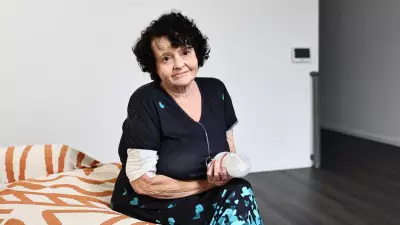
Hannah's House Offers Lifeline for Honey Battling Ultra-Rare Disease
For many children, a cherished blanket or toy provides comfort, but for two-year-old Honey Goebel, her constant companion is a bag housing a feeding pump that sustains her life. Born with cardiofaciocutaneous (CFC) syndrome, an ultra-rare genetic disorder affecting only about 400 people globally, Honey faces severe health challenges, including fluid on the brain, heart defects, swallowing difficulties, airway collapse, and developmental delays.
Daily Struggles and Medical Interventions
Honey's condition has necessitated multiple medical procedures, including two lumbar punctures to reduce brain fluid, with another surgery recently scheduled. Attached to her small intestine 23 hours a day, a feeding pump—nearly her size—delivers milk directly, preventing dangerous drops in blood sugar levels. Her parents, Kimese and Jarek, must vigilantly monitor her to avoid tangling in tubes, even during sleep, significantly limiting family mobility and daily activities.
"Life has been pretty rough for her," Kimese explains. "The pump restricts how far she can move, requiring constant supervision to prevent tube entanglement. This relentless care, combined with frequent appointments at Perth Children's Hospital and community health workers, pushed me close to breaking point."

Respite Care from Hannah's House
In-home support from Hannah's House, a Western Australian not-for-profit and Telethon beneficiary, has transformed the Goebel family's experience. Through a pro bono program, the organization provided respite care before National Disability Insurance Scheme funding was secured, allowing Kimese and Jarek to focus on parenting rather than full-time caregiving.
"Hannah's House has been a lifesaver," Kimese says. "With five other school-aged children, managing sports, household chores, and advocacy was overwhelming. Now, I can function better, knowing we have support workers to help."
Honey also benefits from the Hannah's House Playtime Program, where children with complex needs can simply enjoy being kids, fostering social interaction and joy.
Optimism Amid Uncertainty
Despite the unpredictable nature of CFC syndrome, Kimese remains hopeful about Honey's progress. "Her cells don't function normally, so there's no standard progression, but with support, she's almost thriving," she notes. Honey is taking her first steps with a walker and learning sign language to communicate with her family.
Critical Role of Community Support
Jonine Collins, chief executive of Hannah's House, emphasizes the importance of respite care for families. "Burnout is a massive issue for carers of children with complex health needs," she states. "Without breaks, it can impact safe care, increase stress, and harm parental health. Thanks to Telethon grants over 10 years, we offer free respite care, easing strain on families and reducing pressure on WA's hospital system."
Collins adds, "We worry that without community support, families like Honey's might slip through the cracks. Our goal is to provide a safety net, ensuring they receive the help they desperately need."