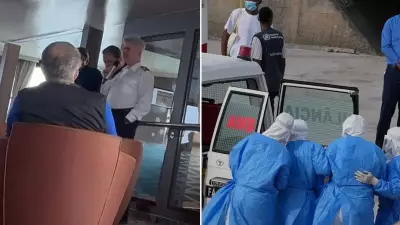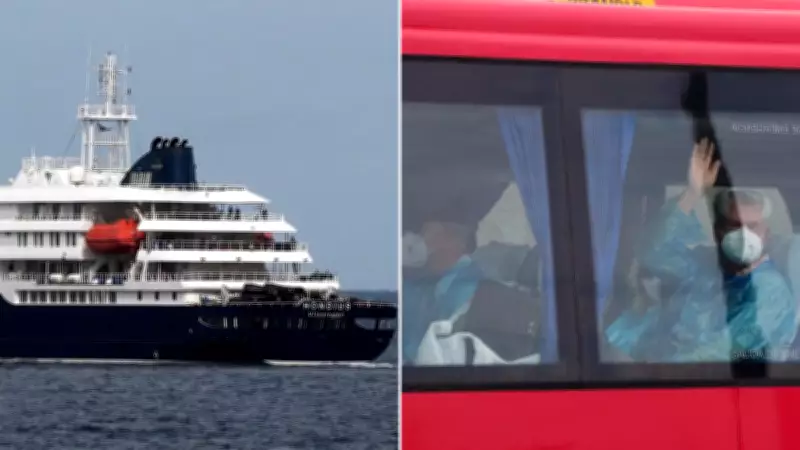
Four Australians stranded aboard the deadly hantavirus-hit MV Hondius are set to become the final passengers evacuated from the vessel, before facing a lengthy 45-day quarantine back in Australia.
The four Australian citizens, along with one permanent resident and a New Zealand national, are expected to depart Tenerife on an Australian government-supported charter flight at around 3 am Tuesday AEST.
Medical staff will accompany the Perth-bound flight, with the passengers from NSW and Queensland to be placed into quarantine on arrival despite currently showing no symptoms.

Quarantine measures
The group will face a strict quarantine period, with health authorities preparing for up to 45 days of monitoring because hantavirus can incubate for weeks before symptoms appear.
Hantavirus is usually spread through contact with infected rodent urine, saliva, or droppings, though the Andes strain linked to the outbreak can also spread through prolonged close human contact in rare cases.
Professor Peter Collignon told Sunrise on Monday the lengthy quarantine window had been selected out of caution, noting the incubation period can range from one week to eight weeks.
“They want to make sure the people in quarantine don’t develop the symptoms within the time period that the virus we know can cause disease,” he said.
Three people have died during the outbreak, while eight others have been infected aboard the vessel, which is now anchored offshore near Tenerife in Spain’s Canary Islands.
Australians remain in isolation at sea
The Australians on board will be the last passengers permitted to leave the ship, with authorities not allowing disembarkation until repatriation flights are on the tarmac and are ready to depart.
Infectious diseases expert Professor Paul Griffin told Sunrise the evacuation operation was being handled under strict protocols to minimise any risk of transmission.
“These people are being kept separate. They’re being brought off that ship in small boats, getting onto buses straight to the airport, only allowed to disembark from that ship when their flight is ready, and then flying home to their respective countries,” he said.
“Most people have a period of intense assessment and quarantine before being allowed to isolate with probably daily checks to make sure they don’t have any symptoms.”
Griffin said the remaining Australians were considered close contacts, but the overall transmission risk remained relatively low.
“The risk now would be much lower, and we know that this virus requires really intense close contact to be able to be transmitted, such as sharing a cabin, for example,” he said.
Collignon said the repatriation effort itself was a major logistical challenge.
“Australia is probably as far as you can get from West Africa.... the logistics of getting a plane over there with appropriate staff to help anybody who gets sick on the flight, is quite an effort by the Australian government,” he said.
‘This is not another COVID’
The arrival of the infected ship sparked concerns among locals, with protests erupting over fears the outbreak could spread into the community.
WHO chief Tedros Adhanom Ghebreyesus sought to reassure Tenerife residents amid growing concern over the outbreak.
“This is not another COVID. And the risk to the public is low. So they shouldn’t be scared, and they shouldn’t panic,” he said.
Expat Andrew Knight, who lives in Tenerife, said the concerns had eased as authorities tightened safety measures.
“At first, there was an awful lot of concern. A lot of people were questioning why Tenerife, why us, small little islands off the coast of Africa,” Knight said.
“With the island relying heavily on tourism, flashbacks to what happened during 2020 with COVID, there was a lot of concern, a lot of protest.”
Knight said passengers were being transferred under heavily controlled conditions with the ship anchored offshore rather than docked at port, and teams travelling by small boats to assess passengers.

“Everyone coming off hasn’t got any symptoms. So that is confirmed. They’re then put on a small boat into the coaches, which are all PPE protected, full protocol, and then driven straight to the airport about 20 minutes down the road, straight onto their repatriation flight to their relevant country, and that’s it, no contact with people, they’re not joining people in security at the airport etc, it’s been very strict,” he said.
“It’s been handled very professionally and exquisitely so far, smooth as anything.”
Spanish and French passengers have already been evacuated, and Australians will be repatriated in the early hours of Tuesday morning AEST.