A Family's Heartbreaking Journey with Childhood Dementia
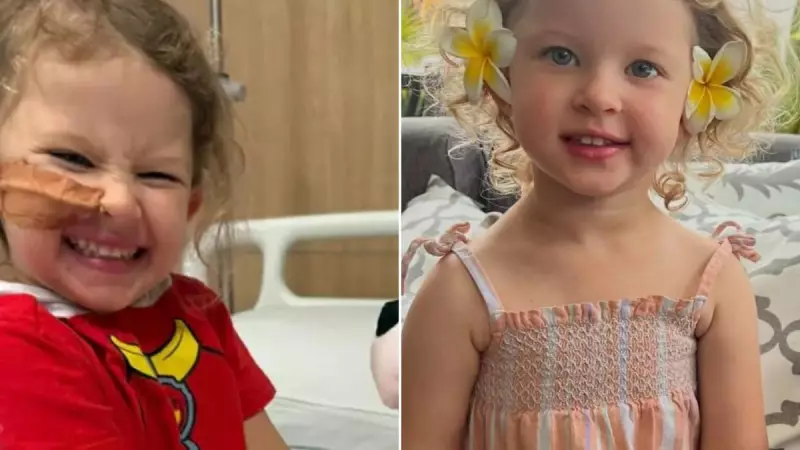
Charlotte Jameson was once a typical three-year-old girl, living a wonderfully uncomplicated life. She was sweet, curious, happy, and healthy. Then, one day, she started having seizures, which initially led doctors to suspect Epilepsy.
"You start googling the types of Epilepsy, and you think, 'oh my gosh, my daughter is never going to be able to drive a car, or swim in a pool'," her mother Sarah Jameson explains. "You think that's the worst thing that could happen, she will never live a normal life."
A Devastating Diagnosis
Heartbreakingly, the prognosis was much worse. When Charlotte wasn't responding to Epilepsy medication, she underwent a series of tests that revealed this bright and bubbly three-year-old actually has Childhood Dementia. When you hear the word Dementia, you rarely think of young children. It's unfair at any age, but for a three-year-old?

"She'll lose the ability to walk at six or seven," explains Sarah. "She'll go blind by the time she's about seven. She'll stop talking, which is already occurring. By the time they're ten, they're usually bed bound." Charlotte has just turned five. Doctors have told her family it's unlikely she'll live beyond the age of fourteen.
"It was soul crushing. It's hard to hear your child is going to die. You don't know these things even exist."
Understanding Batten Disease CLN2
Childhood Dementia comes in many forms. For Charlotte, it is Batten Disease CLN2, a fatal genetic disorder that develops around the age of two to four, causing a devastating decline, and zero chance of survival.
"It's an extremely rare neurodegenerative condition in early childhood," says Professor Susan Maloney, Director of Paediatrics from Gold Coast University Hospital. "There are only a handful of children in Australia with it. When you have this disease, you're missing a gene that codes for some of the protein and carbohydrates in your brain. You don't form brain material properly, and there's degeneration of the brain over time."
Treatment and Quality of Life
Charlotte has a full schedule of treatment, including fortnightly brain infusions at the Gold Coast University Hospital, to slow down the disease and buy precious time. But for sufferers of this cruel disease, there is no cure.
"The time will come where we need to measure up quality of life versus sustaining life," Sarah says. "My husband and I have sat down and signed a piece of paper, for when we know we get to the point when we will no longer be offering the treatment for Charlotte, and we just let the disease take its course."
Raising Awareness and Seeking Support
Charlotte's family want to share her story to help us all understand more about Childhood Dementia. "It's hard when she does have a meltdown in public, and people are like, what's wrong? I can't explain her mental cognitive ability is that of an 18-month-old. She's still having two-year-old tantrums, because that's all she understands," Sarah explains.
"The biggest thing I want people to know about Batten Disease and Childhood Dementia, is that there are more cases out there than you're aware of. Whenever I mention my daughter has dementia, and I point to my 5 year-old daughter, they're like, I thought that was something only older people get. That's not the case, and there are so many different forms of it."
Sarah Jameson says even she didn't know Childhood Dementia existed before Charlotte was diagnosed. "There is the same amount of cases of Childhood Dementia as there is for Childhood Cancer, but childhood Dementia is 100 per cent terminal."
Focusing on Happiness and Family
Charlotte is a sweet girl, who loves animals, Bluey and Emma Memma - all the normal 5 year-old things. The family's focus is on giving her the life she deserves, filling her days with happiness and time with her family, her big sister, and her twin sister.

They were reluctant to ask for any help, but many people will want to. A GoFundMe page has been set up for Charlotte, to collect contributions to tick off her bucket list. "And I'd just like people to learn more about childhood dementia," says Sarah. "These are the cards we've been dealt, and we are trying to make the most of the time we have."