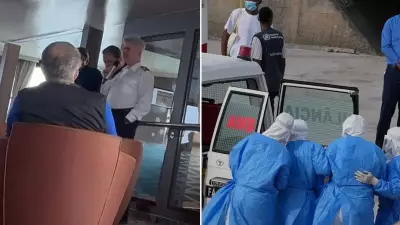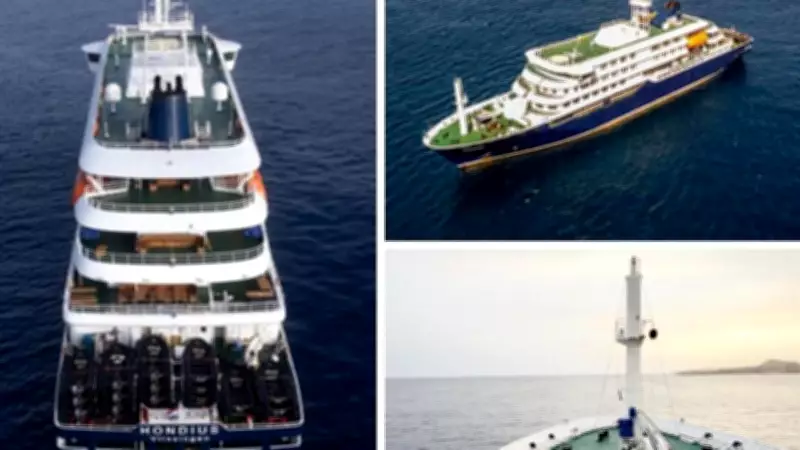
A group of Australians and a New Zealander stranded on the MV Hondius cruise ship, which was hit by a deadly hantavirus outbreak, will finally fly home after a complex repatriation mission. The virus has killed three people and infected several others on board.
The six passengers are expected to depart Tenerife in the Canary Islands on a flight chartered by the federal government at 3.20am AEST on Tuesday and arrive in Western Australia later this week. The flight distance and refuel requirements had to adhere to strict health advice, making the mission complex.
The passengers will transit through the Netherlands and continue their journey to Australia within 48 hours under strict conditions. Medical staff will be on the flights to monitor and assist the passengers. The passengers are expected to arrive at RAAF Base Pearce, in Perth’s northeast, later this week.

The passengers and flight crew will be transported next door to the Bullsbrook Centre for National Resilience to quarantine. None of the repatriated passengers are displaying symptoms of the virus, but personnel will be on-board the flight to monitor their conditions.
Quarantine details
Minister for Health Mark Butler said three NSW residents, two Queensland residents and a New Zealand resident would be quarantined at the Bullsbrook Centre for National Resilience in Perth’s northeast for at least three weeks. The quarantine facility was built next to the RAAF Base in Pearce during the pandemic for Covid purposes but was never used.
Mr Butler said a flight being arranged by the Department of Foreign Affairs and Trade to repatriate the Australians and New Zealander would land at the RAAF air base. He said the six people on-board the flight would be transferred immediately to the quarantine facility next door.
“People might recall this is one of the quarantine facilities, or the centres for national resilience that were set up at the back end of the last pandemic,” he said. “It is still there. It is able to operate. It is currently owned by the Commonwealth government, and will be operated in partnership with WA Health.”
“This period of three weeks quarantine will obviously only cover part of the 42-day quarantine period, or potential incubation period that is understood to be relevant to this particular virus. As we move into that three-week period, we’ll be seeking further advice from the chief health officers, through the AHPC about what arrangements should take place beyond that initial three weeks.”
Health monitoring
Mr Butler said the virus was very rare and cases of human to human transmission historically had been rarer still. He said the quarantined passengers would be subjected to testing during quarantine and measures would be put in place when they returned home to NSW and Queensland.
He said Australia also had a responsibility to bring those passengers home and to protect them from any risk, no matter how small, of potentially transmitting the virus without knowing it. “That is why we’ve decided to take this precautionary approach to activate the Centre for National Resilience, which was set up precisely for this purpose to keep our community safe and we’ll be monitoring those arrangements over the coming days,” he said.
Those suspected to have been infected had been evacuated from the vessel prior to repatriation efforts. Meanwhile, one of five French people being flown back to France is symptomatic, with French Prime Minister Sebastien Lecornu confirming all five passengers are receiving medical treatment and would be placed “in strict isolation until further notice.”
State responsibilities
The Australians, including the permanent resident, who are being repatriated live in NSW and Queensland. Responsibility for health monitoring, quarantine, and testing arrangements will shift to the relevant state governments upon the cohort’s arrival. A federal government spokesman said Department of Foreign Affairs and Trade consular officers on the ground in Tenerife and in Canberra had been co-ordinating response efforts.
“The Australian government is working closely with state authorities to co-ordinate arrival, health and transport arrangements. Quarantine and health arrangements are managed by states in accordance with their public health requirements.”

DFAT’s Smartraveller service also issued updated advice on Monday for travellers heading to Argentina, saying hantavirus remains a risk in the country as well as “in and around Buenos Aires and northern Patagonia”. “Avoid contact with live or dead rodents, nests, burrows and droppings,” the advice said.
NewsWire understands there are measures in place to ensure the group does not come into contact with the general population. They will be transferred directly from their charter flight to the transportation that will take them to their quarantine locations. The cohort’s departure from Tenerife is part of the final set of evacuations from the MV Hondius. The vessel is then due to return back to the Netherlands. The three MV Hondius passengers who died were a German woman and two Dutch nationals.