The Aircraft Interiors Expo in Hamburg, Germany, showcased a range of cutting-edge cabin concepts that promise to transform the flying experience. Among the highlights were voice-controlled seats, immersive displays, and private pods for phone calls.
Voice-Controlled Seats and Immersive Displays
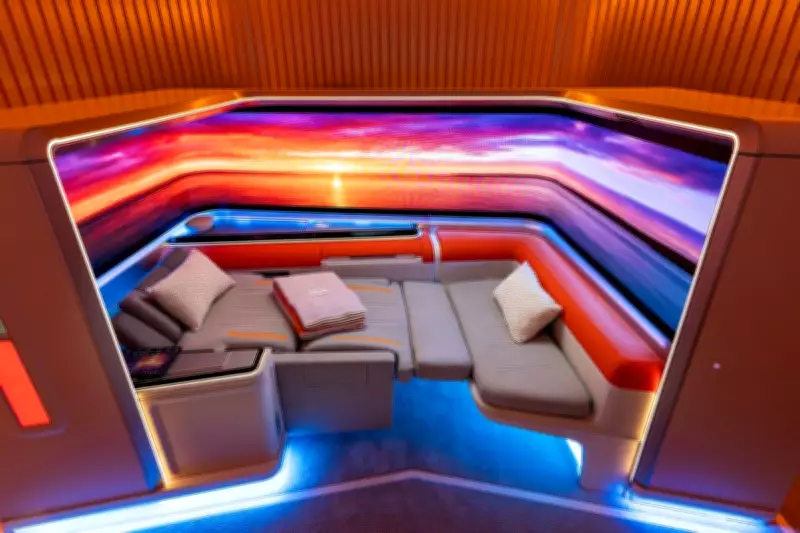
One of the most striking displays was the Origin premium cabin demonstrator from Safran Seats and RAVE Aerospace. This concept offers a hyper-personalised passenger experience with a U-shaped micro-LED screen that creates a fully controllable visual environment. A headset-free audio solution adds to the immersion, while dynamic comfort and temperature management systems allow passengers to adjust cushion pressure and regulate their own micro-climate.
Jean-Christophe Gaudeau, VP Marketing at Safran Seats, said, “Our ambition is to redefine the future of premium travel. With Origin, we bring together seating innovation and future display technologies to create an immersive, adaptive environment that puts comfort, wellbeing and passenger control at the forefront.”

Recaro presented its R7 Horizon technology demonstrator, a business class concept with AI-powered seat control via voice commands in over 90 languages. The Lumina Sync system synchronises cabin lighting with passengers' chronobiological needs to reduce jetlag.
Private Pods for Calls and Social Spaces
Boeing subsidiary EnCore Interiors introduced the E-Lounge concept, featuring pods with doors where passengers can stream video, conduct video conferencing, or game without disturbing others. The Parlor, a social galley concept developed with Sekisui Kydex, offers a premium-class social space for widebody aircraft with self-service beverages and snacks.
Tom Eaton, chief designer at Boeing, said, “The Parlor is designed to evoke a more residential, hospitality-inspired aesthetic to create a destination within the aircraft where passengers feel genuinely welcomed.”
Ready-for-Service Seats
Thompson Aero Seating showcased its VantageXL+ First seat, featuring extended bed level cushioning, a floating outboard armrest, and overhung doors to maximise living space. Unum Aircraft Seating unveiled its Unum Two business class seat after a three-year development program, offering direct aisle access, a fully-flat bed, and a private door.
ZIM Aircraft Seating Group launched The Frame, a premium economy seat that is 15% lighter than competitors at 8kg per passenger. It incorporates wooden features and uses renewable, recyclable materials. A new kinematic system provides smoother motion, and a mesh structure ensures long-term pressure distribution.
Collins Aerospace’s Helix seat for narrow-body economy class, still in development, has already secured orders from three airlines. Designed for longer flights, it offers additional living space and reduced weight, with deliveries expected from late 2027.
In-Flight Entertainment and Comfort Accessories
Thales launched the FlytEDGE Aura IFE system, touted as the lightest, brightest, and most powerful on the market. It features 4K HDR10+ Tandem OLED displays, fast-charging USB-C ports, dual Bluetooth 6.0 connections, and Wi-Fi 7.0, powered by a Qualcomm processor in each display.
Australian company Buzz and UK design firm Tangerine developed four comfort concepts: a cocooning blanket, a sensory eye mask with integrated earbuds, an adjustable neck pillow, and a foldout lumbar cushion. The blanket wraps naturally around the body, while the eye mask includes sound-reducing earbuds. The neck pillow can be shaped into multiple supportive forms, and the lumbar cushion adapts to shifting posture. Designed for premium economy, the products focus on sustainability, with plans to use biomaterial foams and create washable, reusable items.