The profound quiet is the first thing you notice upon arrival at Kem Maris, a field camp nestled deep within the lush, regenerating wilderness of southeastern Sabah. This serene outpost, featuring airy wooden dorms partially open to the enveloping green hills, is the gateway to one of Malaysia's most enduring environmental recovery stories: the INIKEA forest restoration project.
From Scorched Earth to Thriving Canopy: The INIKEA Project's Legacy
The story of this landscape's rebirth began back in 1988, a direct response to catastrophic drought and wildfires that decimated the area between 1982 and 1983. The Yayasan Sabah Group joined forces with the Sow-A-Seed Foundation, established by Swedish furniture giant IKEA, to fund an ambitious rehabilitation of the Kalabakan Forest Reserve near Luasong. Locally dubbed INIKEA—a portmanteau of Innoprise and IKEA—the project has become one of the nation's longest-running reforestation efforts.
Over decades, teams worked across a staggering 14,000 hectares, employing techniques from assisted natural regeneration to the strategic planting of diverse native tree species. The goal was always to mimic the original forest's complex structure and biodiversity. That patient, technical work has yielded a quiet triumph: a revived ecosystem where life has returned to the once-scarred land.

Night Safari: Meeting the Forest's Shy Inhabitants
"I love this place, love the quiet here, and especially, the wildlife you can see," says Shavez Cheema, a leading conservationist and organiser with the Kota Kinabalu and Tawau-based group 1StopBorneo Wildlife. Cheema, who has spent over a decade linking tourism with conservation funding, is pioneering a novel concept for Borneo: using restored forest reserves as safari grounds.
Unlike the plains of Africa, Borneo's wildlife is often smaller, more elusive, and dwells high in the forest canopy. Spotting them requires both a sharp eye and access to the right places—areas like INIKEA where animals find refuge from human encroachment. The project's success is measured in the return of orangutans, elephants, hornbills, and all five of Sabah's wildcat species.
Now, visitors can witness this recovery firsthand. As dusk falls at Kem Maris, the adventure begins on the old logging roads that crisscross the reserve—roads that are no longer for extraction but have become corridors for returning life. In an open-back jeep, with headlights carving through the darkness, the night comes alive.
Encounters Under the Canopy
The first greeting comes from above: a slow loris, its eyes glowing like embers in the beam of a torch. It observes the intruders below with a steady gaze before melting back into the foliage with its characteristically deliberate pace.
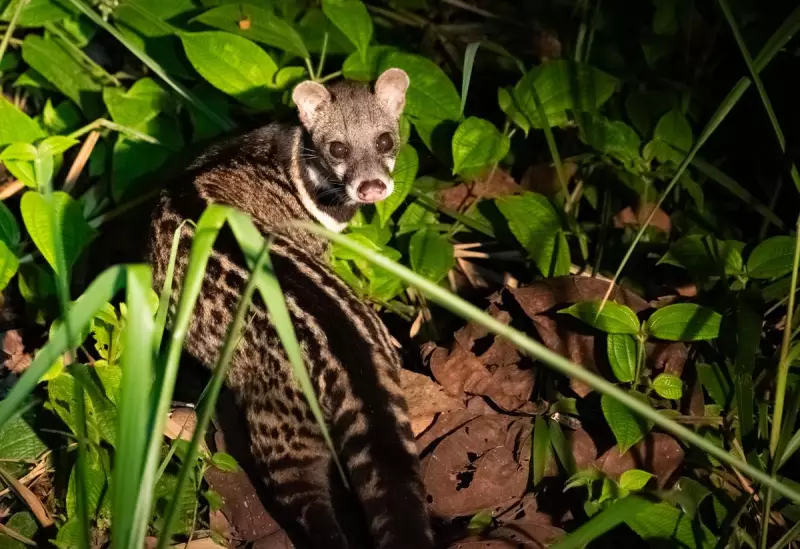
Then, the civets appear. A Malay civet trots confidently along the gravel roadside, its short, dense fur marked with crisp black blotches. Unperturbed by the vehicle, it pauses, glances back, and continues with an air of relaxed ownership before vanishing into the undergrowth. It is the first of four such civets spotted on a single journey.
The surprises continue: a porcupine waddles from the shadows, its quills bristling in the light. After a moment's consideration, it hustles across the road with unexpected speed, disappearing into the opposite thicket. Each sighting is a testament to the forest's renewed vitality.
A New Model for Conservation and Connection
By midnight, returning to the simple comforts of Kem Maris, the lesson of INIKEA becomes clear. What began in 1988 as a vast technical endeavour has matured into a living, breathing ecosystem where wildlife is confident enough to meet humans on its own terms. This project, located approximately a two-hour drive from Tawau, offers more than just habitat restoration; it provides a profound, immersive way for people to connect with and support conservation outcomes.

The initiative championed by Cheema and 1StopBorneo Wildlife demonstrates a sustainable path forward. By carefully opening these restored areas to sensitive tourism, they generate crucial funds for ongoing conservation while fostering a deeper public appreciation for Borneo's unique and fragile ecosystems. The quiet of Kem Maris is no longer the silence of a damaged land, but the peaceful hum of a forest that has been given a second chance—and is thriving once more.