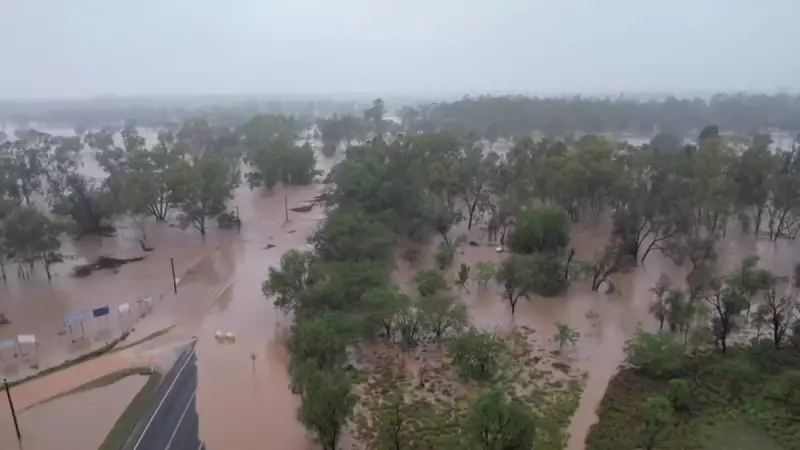
Communities across northern Queensland are bracing for more hardship as the remnants of ex-tropical cyclone Koji continue to unleash torrential rain and destructive floods, isolating towns and leaving thousands without electricity.
Record-Breaking Deluge Hits Mining Heartland
The scale of the downpour has been staggering. Mount William, located west of Mackay, recorded an enormous 600 millimetres of rain in just 48 hours. Meanwhile, the vital mining and agriculture centre of Clermont was swamped by 203mm in a single day, marking its heaviest daily rainfall since records began in 1916.
The town's main creek burst its banks, sending water rushing through streets and into homes. At least 20 properties have been inundated, with dozens more completely cut off from the town centre. Lifelong residents reported seeing unprecedented flooding, prompting many to evacuate.

"When lifelong residents are on edge, they’re telling you they have never seen this before, it makes you take caution," Clermont local Elisha Parker told 7NEWS. Her family made the decision to leave their home before rising waters trapped them. "It only took a couple of minutes before the water was out of its banks," she said.
Widespread Damage and Economic Disruption
The severe weather system, which crossed the coast between Ayr and Bowen over the weekend before weakening inland, has caused chaos across a wide area. Key infrastructure has been hit hard, with damage to rail lines and roads severing critical transport links.
The disruption has forced the closure of at least three mines in the crucial Bowen Basin coal region, with hundreds of workers instructed to stay home as travel became too dangerous. Major supermarkets are now racing to send extra supplies to towns at risk of being isolated by the floodwaters.
Authorities have established a place of refuge at the Clermont State Primary School and are urging residents in low-lying areas to monitor conditions closely and be ready to move to higher ground.
Premier Warns of Threat to Already-Battered West
Queensland Premier David Crisafulli expressed deep concern about the system's movement towards western parts of the state, where communities are still recovering from devastating Christmas rains.
"The prospect of it going west is something that we are really actively keeping an eye on because the last thing those communities need is to cop another battering," Premier Crisafulli said. He noted ongoing efforts to deliver fodder and medical supplies to areas where livestock health issues like pneumonia remain a serious risk.
With a number of weather warnings still current, Queenslanders are being urged to stay alert as the risk of further rain continues in the coming days.