While many across the Hunter sought refuge at beaches or in air-conditioned homes as the mercury soared, countless others had no choice but to labour outdoors under a relentless sun. The region is enduring a multi-day heatwave, with conditions predicted to peak on Saturday, January 10, 2026, pushing thermometers towards a scorching 40 degrees Celsius.
No Reprieve for Essential Workers
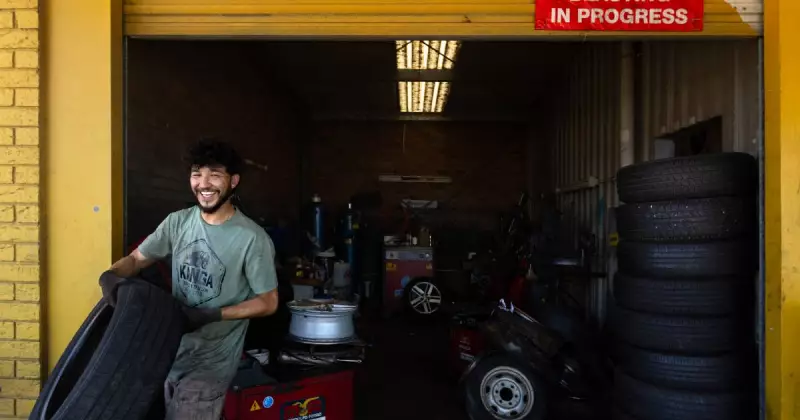
At RG Tyre and Wheels in Broadmeadow, owner Yadi Haidari and his team were flat out on Friday, January 9, despite the oppressive conditions. The small workshop, lacking air conditioning, offered little relief beyond a cold water tap.
"It is terribly hot today, so it is really hard to work in the heat but it is what it is, you have to pay the bills," Mr Haidari stated. Having reopened just days prior after a Christmas break, he explained they couldn't afford to close again despite the forecast peak. Recalling even hotter days in his five years of ownership, he emphasised the necessity of staying hydrated.

His plan for Saturday, when the heat was expected to intensify, was to open for the first half of the day before heading to the beach after work.
Adapting to Protect People and Animals
The extreme conditions prompted adaptive measures across various industries. Further inland, near the Hunter Valley Wildlife Park, temperatures already touched 40 degrees on Friday.
Park curator Daniel Mabbott detailed the creative steps staff took to keep animals cool. Overhead sprinklers cooled enclosure tops, while species-specific treats were deployed. Smaller animals received insects and vegetables frozen into ice blocks, and lions were given "bloodsicles"—ice blocks filled with blood from meat. Koalas, less food-motivated, had frozen water bottles velcro-taped to branches for them to lean against.
On construction sites, planning was key to safety. Dean Riley, Northern Region coordinator for the Construction, Forestry, Maritime, Mining and Energy Union (CFMEU), noted that heat-related injuries often stem from poor planning. Most sites aimed to schedule heavy work like concrete pouring for cooler early mornings or night shifts to mitigate risks.
Some workers, like Lisa Sorbello at the Commercial Fishermen's Co-Operative in Newcastle, found relative comfort. "We've got air-con, and we are working with ice, so it's not too bad," she said.
Peak Heat and Serious Warnings
The Bureau of Meteorology (BOM) confirmed Saturday, January 10, as the anticipated peak of both heat and fire danger for the Hunter. BOM spokesperson Kate Doyle indicated a change was not expected until overnight Saturday into Sunday.
Forecast maximums for Saturday included 40 degrees for Newcastle, Lake Macquarie, and Maitland, with Muswellbrook and Singleton potentially reaching 41 degrees. In response, the NSW Rural Fire Service instituted a total fire ban for the Greater Hunter area.
The ban covers the local government areas of Cessnock, Dungog, Lake Macquarie, Maitland, Muswellbrook, Newcastle, Port Stephens, Singleton, and the Upper Hunter.
As the heatwave finally breaks, cooler and unsettled conditions with potential showers and storms are forecast from Sunday, January 11. Temperatures are expected to drop significantly, with Newcastle falling to around 23 degrees.
The prolonged heat has also raised environmental concerns. WaterNSW issued a red alert warning for high levels of potentially toxic blue-green algae in the Hunter River upstream of Glenbawn Dam. The public is advised to:
- Avoid recreational activities in the affected water.
- Avoid consuming untreated water from the area.
- Not eat mussels or crayfish from the river.
Exposure to the algae can cause gastroenteritis, as well as skin and eye irritation.