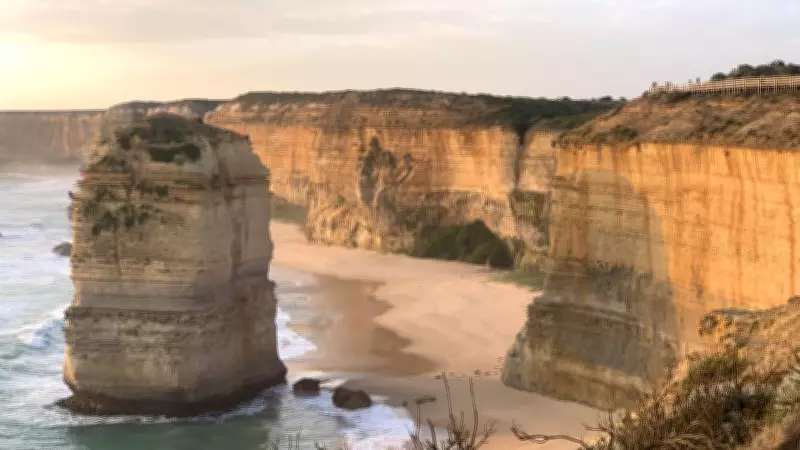
A remarkable new discovery has fundamentally altered the historical understanding of the Twelve Apostles, one of Australia’s most iconic natural landmarks along the Great Ocean Road. Researchers have uncovered evidence that the limestone stacks were formed much earlier than previously believed, challenging long-held assumptions about their age and evolution.
Geological Revelation
Scientists from the University of Melbourne and Geoscience Australia have dated the limestone formations to be over 20 million years old, significantly older than the previous estimate of 10 million years. This finding emerged from advanced radiometric dating techniques applied to core samples taken from the base of the stacks. The study, published in the Journal of Coastal Geology, suggests that the Apostles are remnants of an ancient reef system that existed during the Miocene epoch.
Impact on Coastal Understanding
The new timeline reshapes how geologists understand coastal erosion processes along the Great Ocean Road. Dr. Emily Carter, lead researcher, explained, “This discovery forces us to rethink the rate of limestone erosion in this region. The stacks have survived far longer than expected, indicating a more complex interplay of sea level changes and tectonic activity.” The research also highlights the role of past climate shifts in shaping the coastline.

Cultural and Historical Significance
Beyond geology, the discovery has cultural implications for the local Gadubanud people, whose oral histories may align with these ancient dates. Archaeologists are now collaborating with Indigenous elders to explore connections between the landscape and traditional stories. “This is a reminder that the land holds secrets far older than our written records,” said Elder William Cooper.
Tourism and Conservation
The Twelve Apostles attract over 2 million visitors annually, and the revised history is expected to enhance their global appeal. Parks Victoria has announced plans for updated interpretive signage and educational programs. Conservation efforts will also benefit from the new data, as understanding the stacks’ longevity helps predict future erosion patterns. “We now know these formations are more resilient than we thought, but climate change still poses a threat,” added Dr. Carter.
Future Research Directions
The team plans to expand their study to other limestone stacks along the coast, such as the London Bridge and Loch Ard Gorge. Advances in drone mapping and 3D modeling will allow for more precise monitoring. The findings also open questions about whether other Australian coastal formations share a similar ancient origin.
This groundbreaking research not only rewrites the history of the Twelve Apostles but also underscores the dynamic nature of our planet’s geology. For visitors and scientists alike, the iconic stacks now stand as silent witnesses to a deeper, more ancient story.