The pages of the Newcastle Herald continue to serve as a vital forum for community reflection, capturing a spectrum of deeply personal tributes and pointed public commentary on national issues.
A Father's Environmental Legacy Through Letters
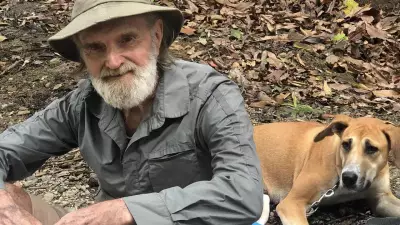
Scott Measday of Somerset Park has paid a moving tribute to his late father, Brian Measday, who passed away recently at the age of 87. Brian was a passionate conservationist deeply concerned about climate change, a topic he frequently addressed in letters to the editor.
Scott writes that his father's motivation was a hope that future generations would inherit a healthier planet. His letters voiced frustration at what he perceived as a global lack of urgency on environmental action. While acknowledging that one person's opinion cannot change the world, Scott believes his father's persistent campaign to raise awareness may inspire others to consider their own carbon footprint.

The tribute calls for collective action, suggesting that small individual contributions—from ethical purchasing and mindful resource consumption to planting native trees—can combine to create significant positive environmental impact.
Community Reflections on Tragedy and Support
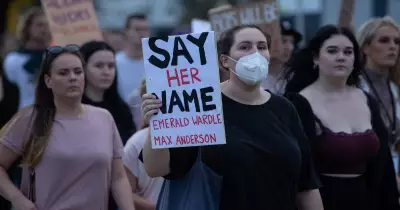
The recent Bondi massacre has prompted several readers to examine broader issues of violence and government support. Frank Ward from Shoal Bay agrees that the victims' families deserve the millions in pledged government funds, as their suffering will persist for years.
However, Ward highlights a stark contrast, noting that many other families across Australia deal with the murder of a loved one, particularly women, without similar support. Citing reports that a woman is murdered every nine days in Australia, with thousands hospitalised from assaults, Ward argues that providing earlier support to these victims could prevent greater long-term costs to the government and society.
In a related vein, John Ure of Mount Hutton argues that Syrian-born Muslim Australian Ahmed al Ahmed, who disarmed a shooter during the Bondi attack, deserves the Cross of Valour, Australia's highest civilian bravery award. Ure also suggests Boris and Sofia Gurman, who were killed while confronting the gunman, should be posthumously honoured.
Debating the Roots of Social Division
The letters section reveals sharp divisions on the geopolitical roots of rising social tensions. Mal Sinclair of Cameron Park directly links increases in anti-Semitic and anti-Russian sentiment globally to the conflicts in Gaza and Ukraine. Sinclair suggests that denying this reality and failing to take appropriate action fosters the environment for terrible incidents like the Bondi attack.
This perspective is challenged by other correspondents. Philip Kelly of Newcastle East offers a pointed comparison, reflecting on the community solidarity shown on Bondi Beach after the attack. He contrasts this with the situation in Gaza, stating that no such public act of remembrance would be permitted on its beaches by the Israeli government.
Colin Fordham from Lambton argues that criticising Israel's government is not inherently anti-Semitic. He contends that the majority of published letters have been pro-Israel and accuses some correspondents of trying to silence legitimate criticism by falsely labelling detractors as bigots or Hamas sympathisers.
Amidst these heated exchanges, some readers yearn for a more civil discourse. Graeme Tychsen of Toronto thanks a fellow letter writer for their "sane words of kindness and gentleness," lamenting the staggering bile surfacing in public debate and fondly remembering a more knockabout Australia.
Warnings on Emerging Security Threats
Looking to future dangers, Harold Scruby, CEO of the Pedestrian Council of Australia, issues a stark warning. He argues that after vehicles, the next potential terrorist weapon could be high-powered, anonymous e-scooters and e-bikes. These micro-mobility devices, capable of high speeds and used on footpaths, often lack registration and visible identification.
Scruby fears they could become the perfect attack and getaway vehicles if governments do not mandate visible number plates, urging pre-emptive regulatory action.

The collection of letters underscores the Newcastle Herald's role in documenting both intimate personal legacies and the fiercely held opinions that shape the national conversation on crime, conflict, and community.