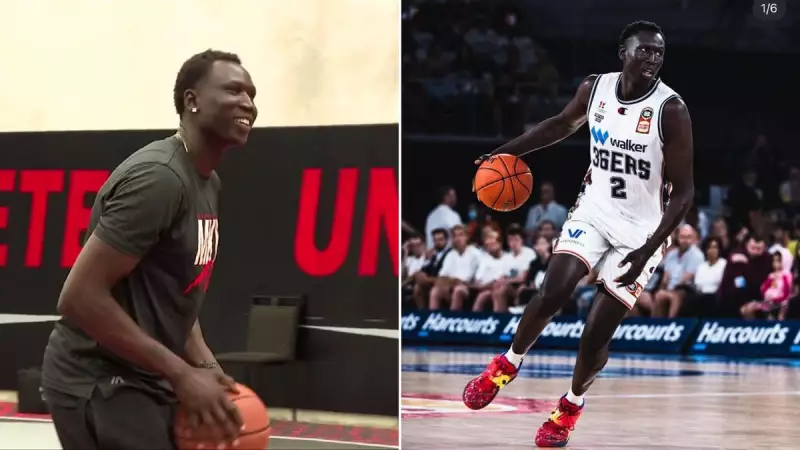
The familiar squeak of sneakers and the energetic shouts of teenagers fill the Braybrook College gymnasium on a Sunday afternoon. Among them moves a towering figure with a sky-blue jersey – Emmanuel ‘Manny’ Malou. For the young players of the Longhorns Basketball Club, it’s just another training session. But having a former National Basketball League (NBL) professional on their court is anything but ordinary.
A Homecoming with a Purpose
This gym in Melbourne’s west is where Malou’s own basketball journey began nearly twenty years ago, coached by the same mentor, Manyang Berberi. After a professional career that spanned the globe, including representing the South Sudanese national team in Kenya, Malou has returned. The catalyst was the pandemic, but his mission became clear upon his return: to offer local youth a positive outlet and a vision for a different future.
His proudest achievement is no longer a personal sporting milestone, but "just seeing the kids wanting to come back, showing up each week," Malou says. "Everyone here is trying to be something better than what they are."

The Stark Reality of Youth Crime and a Glimmer of Hope
Malou’s initiative arrives at a critical time. Victoria Police and the Crime Statistics Agency report that crimes committed by offenders aged 10 to 17 remain at their highest levels since electronic records began in 1993. The tragic ambush murders of 12-year-old Chol Achiek and 15-year-old Dau Akueng in Cobblebank earlier this year underscored a deep community trauma.
"It breaks my heart," Malou says. "Parents should never bury their children, and it’s happening way too often now… if there’s something I can do about it, I will."
Yet, data also offers a path forward. The Department of Justice and Community Safety’s annual report shows that 98.6 per cent of young people successfully completed Children’s Court-ordered diversionary programs. These initiatives, which include counselling and community work, aim to tackle the root causes of offending.
Dr Kathryn Daley, Associate Director of the Social Equity Research Centre at RMIT, explains the logic. "We want to divert young people out of the justice system, not to be soft, but because nobody wants to live in an unsafe community," she said. Entrenching children in the justice system can make communities less safe and is costly for taxpayers.
More Than a Game: Building Discipline and Community
At the Malou Foundation’s free weekly sessions, open to anyone under 21, the focus is on more than layups and three-pointers. The gym becomes a classroom for life skills. "Basketball taught me how to respect the workplace – my teammates, coaches, staff," Malou reflects. "It taught me discipline. Especially as a man, you need discipline to be successful in anything."
Dr Daley identifies this as classic "prosocial" activity – a powerful counter to the "antisocial" behaviours linked to crime. This is why Malou insists the sessions remain free, especially during a cost-of-living crisis. "Free services are the only services that are going to work," Dr Daley affirms.
The impact is visible in the gym’s culture. When a player slips and falls, the game stops instantly. Teammates rush to help, wiping the floor and offering a hand. It’s the sportsmanship Malou hopes to instil.
As the junior Longhorns leave, two younger boys climb into the viewing booth, watching the under-21s team train with awe. "He could go pro," one remarks. "That’s what it’s all about," Manny says later. "We want them to see those guys and think, if they can go pro, I can too."
Dr Daley calls this peer mentorship a potential "fork in the road" for young people. "You can’t be what you can’t see," she says. "Seeing a guy just like them, only a few years further along… That is powerful." For Manny Malou, that powerful vision is now his most important play.