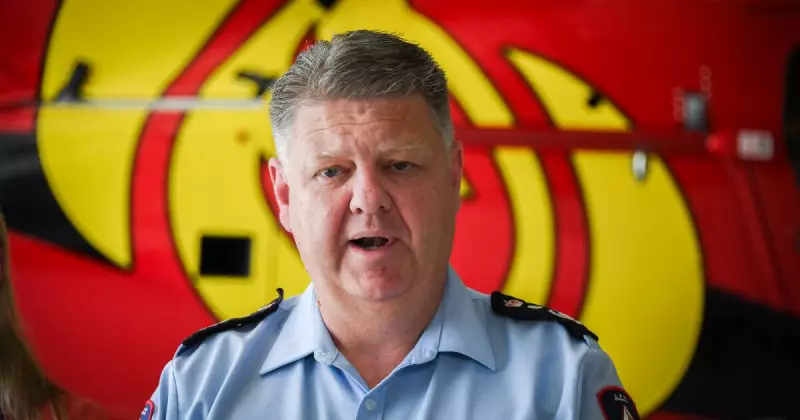
Canberra's top firefighter has issued a stark warning to residents not to become complacent, as the capital braces for a looming heatwave that could elevate the bushfire risk. ACT Rural Fire Service Chief Officer Rohan Scott says while recent wet summers may have lulled some into a false sense of security, the threat is very real and preparation is critical.
Lessons from the 2003 Inferno
Chief Officer Scott carries a vivid personal memory of Canberra's most devastating bushfire event. On January 18, 2003, he was behind the wheel of a fire truck as blazes ripped through the territory, destroying 500 homes and claiming four lives. "For me, it is a very distinct memory - I was on trucks that day," Scott recalled.
He and his team frequently reflect on that catastrophic week to remind themselves and the community how rapidly conditions can deteriorate. Scott personally helped save two people, Ione Kitson and her brother Derek Hamilton, who became trapped in their Stromlo forestry settlement home. "Their names are embedded in my head forever," he said.

A Changed Landscape and Improved Defences
Despite the looming danger, Scott emphasised that Canberra is far better prepared today than it was over two decades ago. Significant improvements have been made across the territory since the 2003 fires.
Key changes include the removal of large pine plantations, better urban planning and building design, increased emergency resources, and more sophisticated use of technology for prediction and detection. The service now works closely with the Bureau of Meteorology to model fire scenarios.
"We're actually running some predictions now, and if we do get an ignition in a certain area of Canberra on the weekend, we know where a potential fire will end up. So we can start resourcing it quite quickly," Scott explained.
A Timely Reminder to Prepare
The recent fires in the remote areas of Namadgi National Park, now largely contained, served as a proximate alert for suburban residents. "It's a real timely reminder that we live in the bush capital," Scott stated. "We love where we live, but we are prone to fire."
He urged every household to take immediate, practical steps to ensure their safety:
- Revise and understand your bushfire survival plan.
- Prepare a grab bag with essential items.
- Learn what the official fire danger ratings mean and monitor alerts.
- Clean gutters and remove combustible materials from around your home.
- Ensure all family members and pets are accounted for in your plan.
- If you plan to stay and defend, have appropriate protective clothing.
Scott also noted that while campgrounds around Canberra remain open, authorities have systems in place to warn campers via ground crews or aerial broadcasts if conditions change.
Vigilance is the Key
A sixth-generation Canberran who now serves as a professional firefighter after a decade as a volunteer, Scott recently visited California to study the aftermath of their catastrophic fires. While he brought back some insights, he believes Canberra's approach—particularly in community messaging, survival planning, and building standards—is advanced.
However, his core message remains one of vigilance. "We've definitely progressed, but there's always that risk, and we shouldn't be complacent as Canberrans," he warned. With a severe heatwave approaching, the time for preparation is now, not when the smoke appears on the horizon.