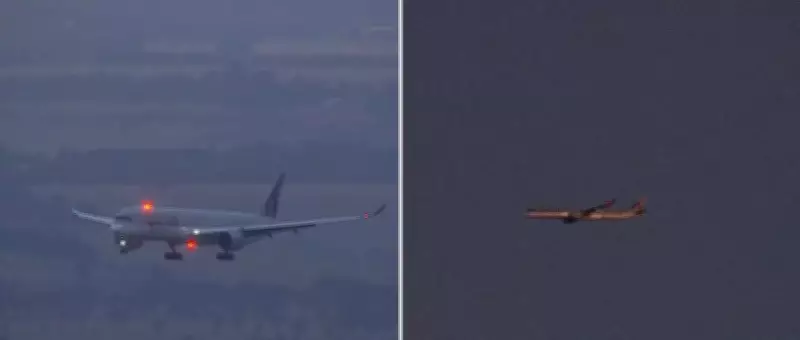
Four Australian women with connections to ISIS fighters, along with nine children, have arrived in Australia, with at least three of the women expected to be arrested by federal police upon arrival. The group landed in Melbourne and Sydney on flights from Doha on Thursday evening, concluding a lengthy journey.
Political criticism over handling
Federal Opposition Leader Angus Taylor criticised the government's management of the situation, stating that "the government should be doing everything it can to prevent them coming back to the country, and they haven't."
Background of the returnees
Most of the extremist husbands of the so-called ISIS brides are either dead or imprisoned in Syria on charges of terrorism and slavery. The women and children have spent years in a Syrian detention centre.

The only arrival in Sydney is 32-year-old Janai Safar, a former health science student who travelled to Syria in 2015. She returns with a nine-year-old son.
In Melbourne, Kawsar Abbas, 54, headed to Syria in 2014 for a family wedding; her husband is suspected of funding ISIS. Her daughter, Zahra Ahmed, 33, claims to be a humanitarian worker, and her husband is notorious ISIS recruiter Muhammad Zahab. Also arriving is Zeinab Ahmed, 31, who has refused to disclose how she reached Syria. Between the sisters, they have eight children.
Government stance and police action
The Australian government asserts it did not assist the group's return beyond providing passports, as it would for any Australian citizen. Federal Education Minister Jason Clare noted, "These women have been under investigation now for, I think, the best part of 10 years. This is not their first rodeo. The federal police have done this before."
Focus on children's welfare
While the ISIS brides are a primary concern for police and the Australian Security Intelligence Organisation, advocates argue the children have been largely overlooked. The nine children arriving in Australia face a future of supervised care, community integration programs, and resettlement at an undisclosed location.
Gamel Kheir from the Lebanese Muslim Association said, "By all means, you want to imprison them, you want to put them in front of the courts, do so. However, I ask your viewers, what sin have the kids committed? When we have murderers, we rehabilitate them. Why can't we rehabilitate young kids?"
Mat Tinkler from Save the Children added, "Some kids may need more targeted de-radicalisation, reintegration or mental health support. I think it's been handled very poorly overall. They deserve our support. They are innocent and they are Aussies at the end of the day."
NSW Premier Chris Minns agreed, stating, "The kids have got nothing to do with this. They didn't make the decision to travel to Syria and the Middle East."
Community safety concerns
The return has raised safety concerns within Australia's Yazidi community. Yazidi Syrians were targeted by ISIS in northern Syria, with thousands fleeing to Australia as refugees. Yazidi community spokesperson Salwa Bashar spoke of the trauma inflicted by ISIS fighters who "killed us and they took girls and kids and they murdered men and separated families from each other."
Minns and Victorian Premier Jacinta Allan both confirmed state police would assist in monitoring the returnees. Allan said, "What I'm focused on is Victoria's community safety and that is the priority of Victoria Police."
Arrival and processing
At Melbourne Airport, federal police were prepared for potential chaos, but the arrivals proceeded quietly with no protesters present. Questions remain over how the women could afford the airfares; tickets were purchased through a Sydney travel agent, though who paid for them remains unclear. The women and children face a long night of processing by federal police before any who are not arrested can be released.
At Sydney Airport, there was a visible police presence, with federal detectives arriving on board the flight. It was not clear whether any family members or supporters attended. Sydney arrival Safar is expected to be questioned by federal police and could face charges for entering or remaining in a designated terrorist area.