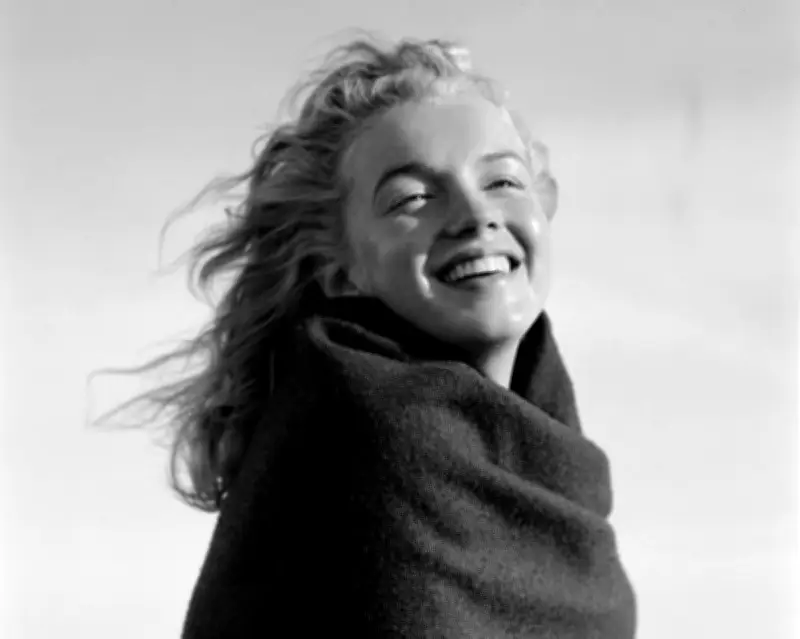
The National Portrait Gallery's new blockbuster exhibition, Marilyn Monroe: A Portrait, initially invites skepticism. Anniversary exhibitions and celebrity portrait showcases often feel like hollow tributes to time and fame. Yet, this show defies expectations, largely due to Monroe herself.
The exhibition traces Monroe's journey from Norma Jeane Baker, a mousey-haired teenager in a 1940 photo booth self-portrait, to the radiant, uncontainable Hollywood star. Throughout, her command of the camera is evident, with an unselfconscious charm that defined a century. Photographic giants like Richard Avedon, Milton Greene, Cecil Beaton, and Eve Arnold attempted to capture her, but Monroe always remained in control, with her signature styling, hair, makeup, and poses. The show emphasizes her agency over the decades, presenting her as she wanted to be seen.
Photographic Experimentation and Artistic Legacy
Beyond Monroe's self-creation, the exhibition explores photographic and artistic innovation. Philippe Halsman's surrealist collages, Weegee's curved lens techniques, and André de Dienes's altered portraits—created after her death at 36—reveal a melancholic adoration of her youth and vitality. These works stand out as some of the show's best.

Paintings by Pauline Boty and Andy Warhol's famous screenprints show Monroe as a symbol of midcentury America. A Nan Goldin photograph even features a Marilyn image in its background. The exhibition also highlights historical moments, such as Magnum's exclusive documentation of The Misfits production, a breakthrough for photographers Eve Arnold and Inge Morath. The infamous nude photograph, taken before Monroe's fame for $50 and later appropriated by Hugh Hefner in Playboy, is also on display.
Critique: Missing Depth and Fragility
Despite its strengths, the exhibition becomes monotonous. The relentless cheeriness and smiles feel increasingly fake, yet the show rarely delves beneath them. The contradictions, sadness, and fragility that defined Monroe's life are only hinted at. Ed Feingersh's description of her deflating "like the air being let out of a balloon" in private moments remains underexplored.
In one of her last portraits by George Barris on Santa Monica beach, she appears less perfect, more ragged and tired. Then, the shock of her death at 36 hits through a reappropriated paparazzi image of her body bag being carried out of her Los Angeles home in August 1962. Peter Blake's 1988 collage Norma Jean Baker uses this image, encapsulating the tension between Monroe's vibrant aliveness and the piercing finality of her death.
Ultimately, the exhibition retells the familiar tragedy of celebrity, fame, and beauty through a shimmer of manufactured smiles. While I wanted to hate it, I couldn't—Monroe's radiance and agency shine through, even if the deeper story remains elusive.
Marilyn Monroe: A Portrait is at the National Portrait Gallery, London, until 6 September.