After a decade of meticulous research, a Newcastle author has unveiled the extraordinary life of one of Christianity's most pivotal yet elusive figures. Cath Chegwidden devoted ten years to tracing the historical footsteps of Saint John the Evangelist, resulting in a comprehensive 602-page book that has already garnered international acclaim.
A monumental decade of discovery
Cath Chegwidden's journey began in 2014 during a Bible study class in Wallsend. What started as a personal exploration evolved into a profound ten-year quest to separate historical fact from centuries of tradition surrounding John, the son of Zebedee. Known as the "disciple whom Jesus loved," John authored the Gospel bearing his name and several other New Testament books, surviving nearly 100 years in a brutal era.
Her lavishly illustrated work, A Journey With John: From Galilee to Patmos Island and beyond, reads like a novel but is underpinned by rigorous scholarship. "You have got to be so pedantic these days," Chegwidden remarked, noting the book includes approximately 50 pages of references. Early readers have reported feeling as though they were walking alongside the apostle on his ancient travels.

Challenging historical misconceptions
Chegwidden's research led her to challenge several long-held beliefs about early Christian persecution. She makes the startling claim that Christians were not martyred in Rome's famous Colosseum, but rather in the Circus Maximus—the massive chariot-racing stadium immortalised in films like Ben Hur.
She also contextualises the violence of the ancient world with modern tragedies, asserting that more Christians have been martyred in recent decades than in the distant past. She points to the Ugandan genocide under Idi Amin in the 1970s, where an estimated 300,000 Christians lost their lives.
The book details John's remarkable survival through poisoning, being boiled in oil for heresy in Asia Minor, and eventual exile to the Greek island of Patmos around AD 95 when he was in his eighties. Chegwidden describes the region as "one of the darkest, nastiest parts of the Roman Empire," rife with temple child prostitution.
Local links and international acclaim
The project has yielded unexpected personal and academic rewards. Chegwidden's detailed analysis helped archaeologists solve a mystery concerning pipes beneath the ancient theatre of Ephesus. Her research indicated the location was where St John baptised 37,000 converts over ten days in about 39 AD, a account supported by the writings of John's fellow apostle, Prochorus.
The book's impact has been recognised globally, winning the Christlit Book Award for the UK's best Christian book. Louise Jane, CEO of the awards, praised Chegwidden's "detailed analysis" as "a literary triumph and an exceptional creation" with "astonishing" depth of research. The work is also shortlisted for Australia's Sparklit Award, with judging set for March 2026.
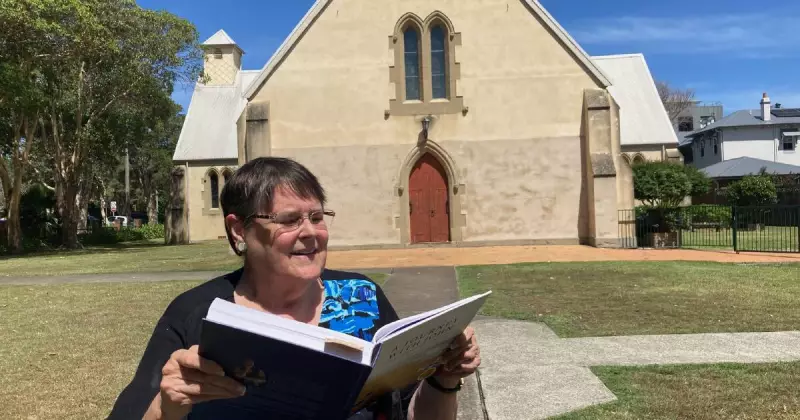
Deeply personal threads connect the author to her subject matter through St John's Anglican Church in Cooks Hill. The Victorian Gothic church, opened in 1859, holds profound family history. Chegwidden revealed that her Aboriginal and convict ancestors were secretly married there at 5am during Lent to avoid laws forbidding interracial marriages.
"If any knowledge of this private ceremony had ever got out, the priest involved would have been defrocked," she said. The union was between convict Edward Bellingham and a 16-year-old Aboriginal woman named Jane Hannell, who later had 14 children, all baptised at the Parry Street church. Chegwidden's own parents were also married there in a hurried wartime ceremony before her father was shipped overseas.
A Journey With John is available from Maclean's Bookshop in Hamilton for $90. For Chegwidden, the decade-long project represents more than historical scholarship; it's a bridge connecting ancient faith, personal heritage, and a relentless pursuit of truth.