The Fascinating World of Bees: From Pollination to Beekeeping
Imagine a world without flowering plants. No apples, no chocolate, no coffee. The flavours of strawberries, peaches, and cherries would be absent, and the scent of jasmine would never grace a single nostril. This was Earth's reality roughly 130 million years ago, before the emergence of flowers and their vital counterparts: bees.
The Evolution of Pollination
Plants, unable to move, once relied on wind to spread pollen for reproduction. Pollen grains, tiny structures containing genetic information wrapped in a nutritious protein layer, attracted ancient wasps. As these insects inadvertently carried pollen from plant to plant, they boosted reproductive rates, leading through evolution to the emergence of flowers and bees.
Today, Earth hosts around 20,000 bee species, ranging from the tiny Perdita minima in US deserts to Australia's beloved teddy bear bee and the European honey bee. In northern New South Wales, where Flow Hive creators Cedar and Stuart Anderson reside, blossoming flora like jacarandas and grevilleas create vibrant displays, signalling to pollinators in nature's dating game.

Bee Senses and Foraging
Bees possess extraordinary senses. With five eyes, they see ultraviolet light and process images five times faster than humans. Their antennae house phenomenal smell receptors, while their sense of touch detects microscopic textures. Flowers advertise nectar stores through colours and scents, with some featuring UV guides invisible to us but vivid to bees.
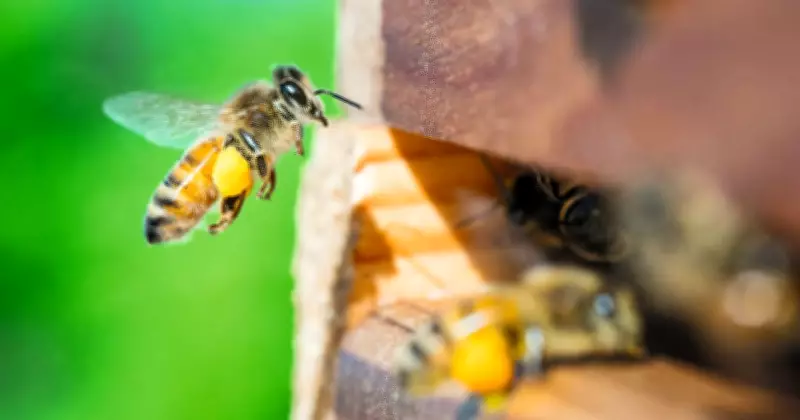
Picture a foraging bee, wooed by sugary rewards. She lands on a flower, tastes nectar through foot receptors, and fills her honey stomach using her feathery tongue. As she drinks, branched hairs collect pollen, which she brushes into baskets on her hind legs. Visiting another flower of the same species, she transfers pollen, enabling plant fertilisation while achieving her food-gathering goal.
Flight and Navigation
Bees beat their wings 230 times per second to stay airborne, creating spiralling air vortices for lift. They can carry nearly their own weight in nectar and pollen back to the colony after visiting up to 100 flowers. Navigation relies on powerful sight: compound eyes with around 6900 facets each, UV and polarised light perception, and wind-direction sensing through tiny hairs.
Bees also use spatial memory from training flights, landmark recognition, and magnetite crystals in their abdomens to sense Earth's magnetic field. These abilities allow some species to navigate up to 14 kilometres from their nest.
Hive Life and Communication
Most bee species are solitary, living in tunnels excavated in mud or wood. Eusocial species like honey bees live in sophisticated communal structures. Honey bees use wax to sculpt hives, where foragers deposit pollen and pass nectar to worker bees for storage.
Communication is key. Scout bees perform waggle dances to indicate food source direction relative to the sun. Pheromones coordinate colony activities, from alarm signals to balancing nurse and forager bee ratios. Vibration through comb tremors also conveys messages, with workers buzzing alarms and queens coordinating behaviour.
Bee Intelligence and Emotion
Despite brains the size of sesame seeds with only a million neurons, bees exhibit remarkable intelligence. They can measure distance, count, understand zero, do basic maths, recognise human faces, and even distinguish between Impressionist painting styles. Studies show bees have preferences, emotion-like states, and can engage in play, like bumblebees rolling on colourful balls without reward.
Professor Lars Chittka notes bees have fluctuating serotonin and dopamine levels, learn from experiences, and may even dream. Their cultural traditions and problem-solving abilities highlight that brain size isn't everything.
The Symbiotic Relationship
Flowers and bees represent perfect integration of pollination, co-evolution, and intelligence. This symbiotic relationship combines nutrition and reproduction, driving Earth's biological diversity. As John Muir said, "When we try to pick out anything by itself, we find it hitched to everything else in the universe."

Beekeeping offers a chance to steward this vital relationship. By understanding and supporting bees, we ensure the continuation of ecosystems that provide everything from apples to jasmine scents.
This is an edited extract from Flow Hive's Book of Bees and Beekeeping by Cedar and Stuart Anderson, offering deeper insights into these fascinating creatures and the art of beekeeping.