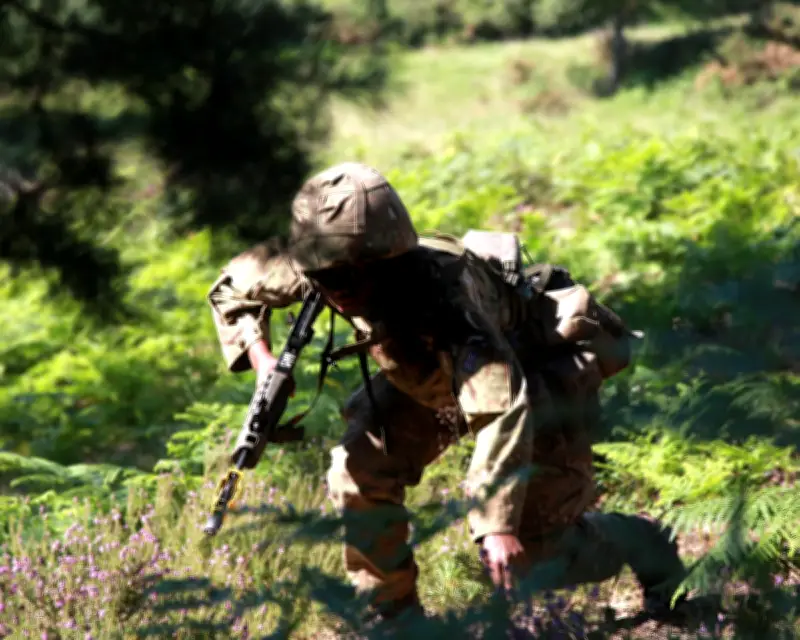
The British military has launched a groundbreaking blueprint for elite servicewomen, leveraging a decade-long £20 million study of 22,000 female personnel to unleash what scientists call the 'oestrogen advantage.' The initiative aims to improve performance, prevent injuries, and boost recruitment amid a 15-year crisis.
Oestrogen Advantage: A New Frontier
Dr. Julie Greeves, the army's principal physiologist and co-author of the guide, stated: 'Historically, physical performance research has been based on male data. Now women in the military can feel that they've been properly taken care of, based on evidence.' The research reveals that women's bodies can draw energy from fat stores rather than muscle during prolonged arduous patrols, similar to ultra-running, offering a unique advantage.
'There's this whole evolutionary element that we are really beginning to tap into,' Greeves said. 'We call it the oestrogen advantage in defence.'

Tailored Training and Nutrition
The new guidance includes tailored training, nutrition, hormone tracking, and kit. With sex-specific programs, women make similar strength gains to men but require more time, along with supplements to address nutrient deficiencies, protein-heavy diets, and extra sleep. Without such support, women face higher risks of stress fractures and menstrual disruption, which should be viewed as the body's 'fifth vital sign.'
Women currently make up about 12% of British armed forces. Veterans and people minister Calvin Bailey emphasized: 'Wars are won by society. Our military has to be representative because otherwise our society won't feel, understand and own it.'
Global Implications and NATO Collaboration
Researchers have shared findings with NATO allies, influencing how female personnel are trained and equipped. 'The influence that we're having with our NATO counterparts is honestly mind blowing,' Greeves said. The guidance could have global implications for military forces.
Addressing Historical Gaps
Women have been allowed in all combat roles since 2018, but sex-specific training is only now being implemented. Women in the military are 50% more likely to get injured than men, with high rates of fractures, menstrual disturbance, and adverse psychological outcomes, according to University of Edinburgh research.
One RAF recruit reported receiving no sex-specific research upon joining and bought her own iron supplements. 'We learned a bit about nutrition in the death by PowerPoint training period, but I used my own knowledge to make sure I was getting enough sleep and eating the right things – otherwise you just end up injured.'
Equipment and Cultural Shifts
A landmark 2021 report by former Conservative MP Sarah Atherton found the military was 'still a man's world,' with servicewomen facing life-threatening injuries due to ill-fitting kit. Armoured plates restricted movement, oversized helmets hampered vision, and some women dehydrated themselves due to lack of urination facilities.
At the launch, period products and high-performance sports bras were displayed, along with 'she pees' devices for use on mission. However, equipment rollout remains slow. 'They do have kit, but it runs out,' one servicewoman said. 'Some of us buy our own, but you shouldn't have to.'
Bailey, a former RAF wing commander, admitted progress has been too slow. 'Over the last 10 years female personnel have not just been fighting our adversaries; they've been fighting the kit and equipment, the training programmes, and their understanding of themselves. Today is a really significant milestone in getting past that.'