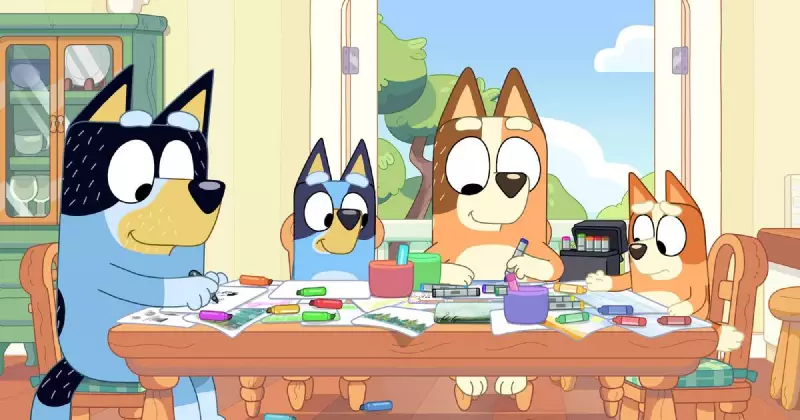
It's more than just a show about a family of heelers. According to newly published academic research, the globally adored Australian cartoon Bluey is a clever series that draws on deep religious inspirations to teach bite-sized, universal lessons. The findings, released on January 17 2026 by researcher Sarah Lawson, examine how the show reflects the diversity of contemporary Australian culture and promotes a 'religion of play'.
Three Episodes, Three Worldviews
The analysis highlights three specific episodes that serve as gentle introductions to major world religions. These stories reward curiosity and encourage parents to engage on a deeper level with their children's favourite entertainment, fostering early media literacy in an approachable way.
The Buddhist Lesson on Suffering
In the episode 'Bumpy and the Wise Old Wolfhound', Bluey and Bandit craft a video story to cheer up a hospitalised Bingo. The tale is a direct, humorous retelling of the ancient Buddhist parable of Kisa Gotami and the Mustard Seeds, which dates back to the 5th century BCE.

Here, a woman named Barnicus seeks help from the Wise Old Wolfhound for her sick puppy, Bumpy. The sage, sitting lotus-style in towels, asks for purple underpants from someone who has never been sick. Barnicus's impossible quest leads her to realise that sickness is a universal part of life. This mirrors the original parable's teaching about the inevitability of death and suffering.
By lowering the stakes and adding humour, the episode delivers a core Buddhist teaching: while sickness is terrible, we can find comfort in shared experience and learn to let go of our attachment to constant wellness.
A Christian Easter Parallel
The 'Easter' episode cleverly parallels themes from the Christian Easter narrative. Bluey and Bingo fear the Easter Bunny has forgotten them, despite his promise to return on Easter Sunday. Their worry mirrors the doubt felt by Jesus's followers after his death.
The girls' journey involves following clues, facing fears (like Dad's toilet), and ultimately rolling away an exercise ball 'stone' from a desk 'tomb'. Their faithful search is rewarded with the discovery that the Bunny did remember them, leaving a gift of chocolate eggs.
This slant retelling encourages children to trust in promises and believe they are loved and significant, even when they feel small or forgettable.
Taoist Serenity in 'The Sign'
Perhaps the most philosophical lesson comes from the episode 'The Sign'. Bluey's teacher, Calypso, reads a fable from the 2nd century BCE Taoist text, the Huainanzi, often known as 'The Old Man Who Lost His Horse' or 'A Blessing in Disguise'.
The story follows an old man who meets every event, good or bad, with the serene response, 'We'll see'. This embodies the Taoist concept of wu wei, or non-action, where events are not judged as purely good or bad fortune. Human judgement creates the suffering, not the event itself.
Bluey initially misunderstands, thinking it means everything will work out her way. By the episode's end, she learns true calm and acceptance, applying the wu wei attitude to the prospect of moving house. The lesson teaches that a gentle, flowing approach to life's changes can prevent unnecessary distress and lead to peace.
Reflecting Australia's Cultural Tapestry
This research posits that through these three episodes, Bluey does more than entertain. It holds up a mirror to the diverse spiritual and philosophical landscape of modern Australia. The show introduces complex ideas about suffering, faith, and acceptance in a format digestible for preschoolers and their parents.
By weaving these ancient parables into the fabric of everyday Heeler family life, the show reinforces the idea that profound wisdom can be found in play, storytelling, and simple moments. It validates the experiences of families from all religious backgrounds—and none—offering shared ethical ground rooted in compassion, trust, and serenity.