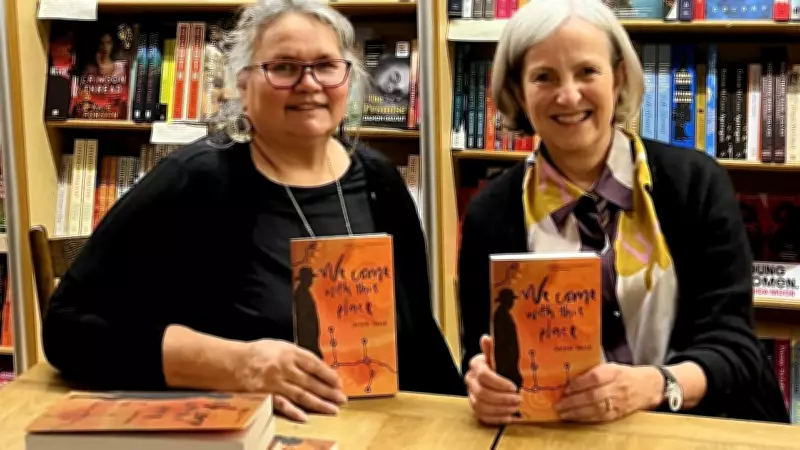
Professor Debra Dank from the University of Adelaide has dedicated over four decades to challenging the misconception that Aboriginal English is "broken," arguing instead that it represents a sophisticated communication system often misunderstood in Australian classrooms.
Language Beyond Words
For all people, language is more than just words—it shapes how we think, express our humanity, and sustain our communities. Dr. Dank learned this early while growing up in remote Australia, where English was not the dominant language. She realized communication extends far beyond vocabulary.
Encouraged by her parents to pursue teaching, Dr. Dank began working with children in urban and remote communities. She noticed a gap between how students communicated and how schools expected them to, sparking her interest in how language, culture, and thinking intertwine. Her PhD focused on narrative practice, examining how culture shapes meaning—a foundation for her work in education, language, and community advocacy.

"Every community has distinct ways of communicating," she explains. "It's not just about words. In Australia, Aboriginal and non-Aboriginal people use the same vocabulary, but how we read situations and make meaning depends on underlying cognition. That is what we must understand."
A Career of Advocacy
This insight shaped Dr. Dank's four-decade career in education, research, and advocacy. She challenges the assumption that vocabulary alone ensures understanding. "People think knowing the words means you understand, but it's the thinking behind them—the frameworks people use to interpret the world—that matters," she says.
Her work with remote Aboriginal communities, including her time at the Fred Hollows Foundation, helped establish the Indigenous Literacy Foundation. Initially focused on supplying books, the effort evolved into creating culturally relevant stories. "If communities don't see themselves in literature, engagement is limited. You can't expect connection from stories that don't reflect people's lives," she notes.
Dr. Dank collaborated with communities to develop stories rooted in local languages and experiences, an approach now central to culturally responsive literacy programs. Instead of imposing mainstream narratives, the focus shifted to supporting communities to tell their own stories.
Challenging Misconceptions
Alongside her academic work, Dr. Dank is a literary voice, blending memoir, history, and cultural reflection to explore identity, Country, and belonging. She challenges the view that Aboriginal English is deficient—a mindset still prevalent in classrooms. "I meet teachers who call Aboriginal children's speech 'broken English,'" she says. "Why describe it that way? These are fully formed, rule-governed ways of speaking that make sense within their own systems."
She advocates for recognizing Aboriginal English and Kriol, an English-based Creole spoken in northern Australia. Progress is uneven and often political, but she believes outcomes improve when teachers engage with communities and build trusting relationships.
"What I hope to achieve is a better, more just world—one where different ways of knowing and being are respected, not dismissed," Dr. Dank concludes.