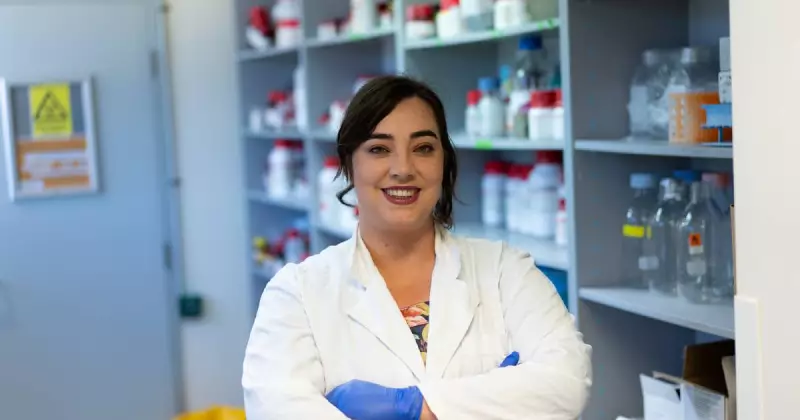
A major new research project based in the Hunter region has received a significant funding boost to tackle the pervasive issue of 'forever chemicals' in the human body. The University of Newcastle-led study will specifically focus on the local Williamtown community and explore a novel dietary intervention using plant proteins.
Major Funding for Groundbreaking PFAS Research
The National Health and Medical Research Council has awarded a substantial $1.8 million grant to a team from the University of Newcastle and the Hunter Medical Research Institute. The research will be spearheaded by Dr Jacinta Martin, alongside colleagues Dr Joseph Pegler and Dr Marcus Crompton.
The team is part of the Institute's Infertility and Reproduction Research Program. Their mission is to understand how exposure to persistent environmental chemicals, specifically per- and polyfluoroalkyl substances (PFAS), impacts the health of parents and their children during the critical perinatal period.

"We've analysed a couple of water samples taken from just outside of the Williamtown RAAF base to see what types of PFAS and concentrations of those were present two years ago," Dr Martin explained. "So it will be centered around having a real world relevance, and Williamtown in particular, because that's our local community."
Understanding the Pervasive Threat of Forever Chemicals
PFAS, often dubbed 'forever chemicals' due to their resistance to breaking down in the environment, are a major public health concern. Dr Martin notes that an estimated 95 per cent of the population has detectable levels of PFAS in their blood.
These chemicals have been widely used for decades in products like waterproof clothing, non-stick cookware (like old Teflon pans), and firefighting foam. Their stability, while useful industrially, makes them a persistent pollutant.
"When it's in waterways, it can travel a very, very long distance because it doesn't break down," said Dr Martin. "The unintended consequence is that it also bioaccumulates. So once we take it into our systems, both humans and animals, it gets trafficked around our bodies and it goes into our fatty tissues, like the liver, and other important organs, and it can stay there for a very, very long period of time."
Growing evidence links PFAS exposure to pregnancy complications, developmental issues in children, and increased long-term disease risk, though the precise biological mechanisms are not fully understood.
Plant Protein: A Potential Dietary Defence
The most innovative aspect of this new study is the investigation of a plant-based dietary intervention designed to reduce PFAS accumulation. Dr Martin is collaborating with a biochemist and a plant biologist to explore how specific plant-derived proteins could be used to 'soak up' or bind to PFAS in the digestive system, potentially aiding their removal from the body.
"This study follows on from a study completed on the affect of PFAS on male reproduction which found a reduction in testosterone, drops in sperm count, and a different gene expression," Dr Martin revealed. "When we looked at the pathways that could affect following fertilisation, it appeared the size of body of the offspring could actually be altered. So our next steps are going to be focusing in on that, seeing what happens to both maternal health and offspring."
The newly secured grant will enable the researchers to move from successful test-tube trials to testing their plant protein hypothesis on animal models. This interdisciplinary project brings together experts in reproductive health, developmental biology, engineering, plant science, and food technology.
The University of Newcastle's funding success was part of a broader NHMRC announcement that also included support for research into early-life iron deficiency in Aboriginal children and studies aiming to improve understanding of schizophrenia origins.