Helping with Maths Homework: A Guide for Parents to Build Confidence
For many parents, assisting with maths homework can seem intimidating, especially if maths was not a favourite subject in their own school days. However, the good news is that supporting your child with maths does not require you to have all the answers. Often, the most powerful role parents can play is in helping children develop confidence and curiosity about maths, which can lead to better learning outcomes.
Emily Grainger, a Professional Learning Consultant at Scitech, works with teachers through the Lighthouse Maths program to enhance their teaching skills. She notes that many of the same principles used in classrooms can be applied by parents at home to support their child's maths education. Delivered by Scitech with support from Chevron Australia, Lighthouse Maths is transforming maths instruction in Western Australian classrooms, with some students achieving the equivalent of two years of maths learning in just one year.
1. Model a Growth Mindset
Have you ever found yourself saying, "I'm not good at maths"? This is a common expression, but research indicates that parental attitudes and beliefs about maths are strongly linked to children's mathematical achievement and identity—essentially, how capable they feel. When children hear adults discuss maths as something they were "never good at," it can convey the message that maths ability is fixed and unchangeable.

Instead, try reframing the conversation to something like, "Maths is something we can get better at with practice." This simple shift encourages a growth mindset, which is the belief that skills can improve through effort, persistence, and learning from mistakes. A growth mindset is a core component of the Lighthouse Maths program. Teachers often report a noticeable increase in student confidence over the course of the program, with students who once avoided maths now collaborating with peers to reason through ideas and tackle challenging problems.
When children view maths as a skill they can enhance, they are more likely to stay engaged even when problems become difficult.
2. Encourage Problem-Solving, Not Just Answers
When a child is stuck on a maths problem, many parents instinctively jump in to show them how to solve it. While this might feel helpful in the moment, it can hinder children from developing confidence in their own thinking abilities. It is okay—and even beneficial—for children to struggle with a problem for a while. This struggle helps them build essential skills such as reasoning, persistence, and resilience.
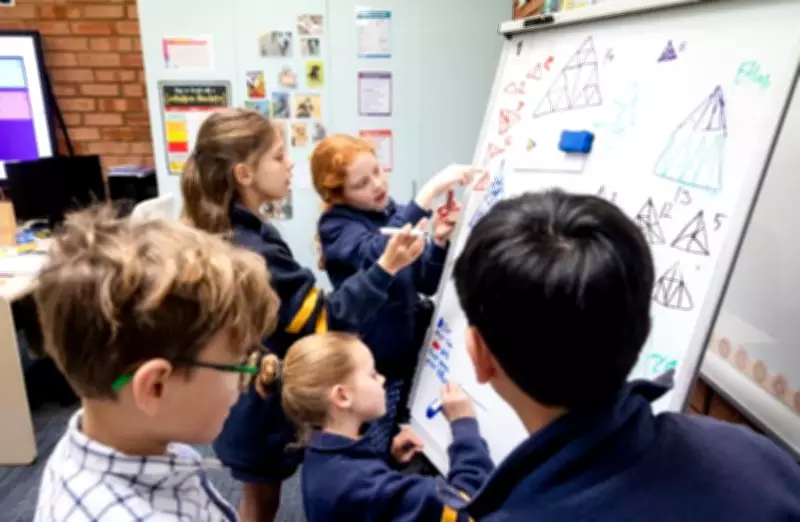
Productive struggle is a key element of the Lighthouse Maths program, where students regularly work together on challenging problems. Navigating through obstacles leads to deeper learning and helps students gain the confidence to face future challenges. Instead of providing the answer, try guiding your child with prompts like:
- What do you notice about the question?
- Is there a smaller step we could start with?
- What strategy have you tried?
Giving children the space to think through problems independently strengthens their mathematical thinking and belief in their own capabilities.
3. Show How Maths Is Part of Everyday Life
A common question children ask is, "When will I ever use this?" Research shows that one of the strongest predictors of girls' persistence in maths is whether they see it as useful in everyday life. Reinforcing the real-world value of maths at home can help all children, particularly girls, feel that maths matters.
Maths appears in numerous daily situations, from budgeting and following recipes to checking the weather or planning travel time. Activities like ballet, music, and sports also rely on patterns, structure, timing, and problem-solving. Some simple ways to incorporate maths into daily life include:

- Calculating discounts during a sale.
- Estimating the total before the dinner bill arrives.
- Reading analogue clocks and considering how long tasks take.
- Measuring or doubling ingredients while cooking.
Lighthouse Maths teaches that maths is a way of thinking. It helps us break problems into steps, recognise patterns, and use logic to find solutions—skills that are valuable across all areas of learning and life. Highlighting the everyday relevance of maths helps children view it as practical and applicable.
4. Make It Fun
Maths learning does not always have to occur at the kitchen table with a worksheet. Games like Maths Scrabble or Numero can reinforce what children are learning while building confidence with numbers. For younger children, activities such as building with blocks help develop spatial and geometric thinking. Counting or addition songs can also aid in committing new ideas to long-term memory.
Lighthouse Maths lessons are dynamic and engaging, with students often out of their seats and working collaboratively. Teachers frequently report that students eagerly ask when they can participate in another problem-solving lesson. When maths is engaging and enjoyable, children's motivation and confidence have the opportunity to flourish.
Building Confidence in Maths
Programs like Lighthouse Maths are assisting teachers across Western Australia in strengthening maths instruction and building confidence in both educators and students. However, parents also play a crucial role. By modelling a positive mindset, encouraging problem-solving, and connecting maths to everyday life, families can help children develop the confidence and curiosity necessary for success in maths and beyond.
Emily Grainger is a former primary school teacher and Scitech Professional Learning Consultant. For more information on Scitech's professional learning programs for educators, visit their website.