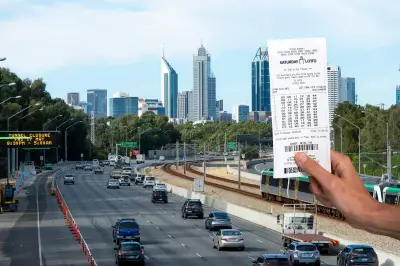
Driving along Canning Highway presents challenges even during optimal conditions, but confronting the relentless peak hour traffic transforms the experience into an entirely different ordeal. This is a reality that countless commuters, compelled to navigate this congested corridor for work, education, appointments, or other obligations, have reluctantly come to accept.
The Inescapable Commute Reality
As I embarked on my Thursday morning drive to work, slumped behind the wheel and gazing at the endless sea of brake lights ahead, any sense of acceptance had completely evaporated. For context, I reside in Perth's southern suburbs and undertake a daily northbound journey along the Kwinana Freeway toward the Mitchell Freeway to reach my workplace. Having performed this drive for years, I have experimented with every conceivable alternative route in a persistent effort to shave precious minutes off my travel time.
From winding back roads to the notoriously stagnant Stirling Highway, no option has proven effective. The traffic converging upon Canning Bridge and the adjoining freeway remains utterly inescapable, a constant in the daily lives of southern suburbs residents.

The Futility of Alternative Routes
Commuters may attempt various detours to circumvent the gridlock, but personal experience confirms that every supposed rat run delivers an identical, frustrating outcome. During the initial three days of this week, I accessed the freeway via Farrington Road, enduring stop-and-start jolting all the way to the Narrows Bridge.
By Thursday, my patience had expired, prompting a decisive route change. I exited the stationary queue on Kwinana Freeway by taking the South Street off-ramp, accelerating away with a fleeting sense of smug satisfaction. This decision, unfortunately, proved to be a significant error.
My strategy involved proceeding down Murdoch Drive to re-enter the freeway from Leach Highway. However, the school drop-off traffic along Murdoch Drive was nearly as severe as the freeway congestion. Attempting a right turn onto Leach Highway introduced its own battle, as the traffic lights permit only a brief green phase, allowing a mere handful of vehicles to pass through.
A Cascade of Commuting Mistakes
This led directly to my second miscalculation. I turned left onto Leach Highway, cutting down Riseley Street in an attempt to reach Canning Highway and re-enter the freeway via Canning Bridge instead. The traffic along Riseley Street crawled just as slowly as everywhere else, diminishing any hope that Canning Highway would offer relief upon arrival.
In a further mitigation attempt, I navigated back roads and entered the highway near the bridge, turning right off Reynolds Road. This tactic proved equally unhelpful, as other drivers clearly harbored the same idea, resulting in back roads that were just as gridlocked as the main thoroughfares.
After several long, exasperated sighs, I finally merged onto Canning Highway and began inching toward the bridge to rejoin my original traffic congestion. The freeway entry lanes off the bridge were heavily backed up, yet by that stage, I felt merely relieved to glimpse the freeway once more.
The Unavoidable Morning Peak
This experience clearly demonstrates that weaving around main roads, attempting to avoid sections of the freeway, or even traversing supposedly quiet back streets cannot thwart the reality of morning peak-hour traffic. The peak typically persists from approximately 6:30 AM to 9:00 AM, with the most severe congestion occurring between 7:30 AM and 8:30 AM.
Practical Solutions for Commuters
The only genuine solution I can propose is allocating more time than you anticipate needing by departing earlier. If the journey requires thirty minutes outside the morning peak, allow yourself a full hour. Preparation is paramount: organize everything the night before to prevent morning delays, set multiple alarms to ensure timely awakening, and plan your outfit in advance.
While these measures may seem redundant, the time you leave home is the sole element within your control regarding traffic conditions. Furthermore, there exists a certain solidarity in remembering that the surrounding traffic comprises equally frustrated individuals, all simply striving to reach their destinations.