The market for two of history's safest investments, gold and silver, has been thrown into chaos due to geopolitical and economic instability. Over the past year, the cost per ounce of these precious metals surged to unprecedented record highs by January 29, only to plummet dramatically shortly thereafter.
A Trading Bloodbath Wipes Trillions
In a mere two days, a severe trading downturn erased more than $AU10 trillion from the market. Gold prices dropped by just over 10 percent, while silver experienced a staggering 34 percent decline. Despite this volatility, investors have not been frightened away from the markets.
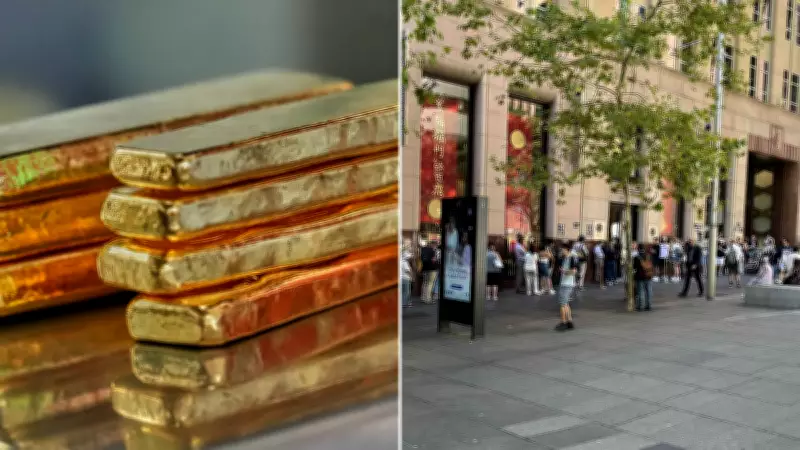
Long queues have formed outside a bullion exchange in Sydney's central business district, even as prices continue to swing wildly, with silver fluctuating by as much as 10 percent daily.

Expert Insights on Market Volatility
Stephen Walters, Principal and Chief Economist at Optimal Economics, informed 7NEWS.com.au that the precious metals market has not witnessed such extreme volatility for decades. He explained that prices tend to rise when fears of international conflict or economic distress emerge, as individuals convert cash into tangible assets they can physically hold.
Gold bullion remains a highly sought-after commodity, with its value initially climbing after the outbreak of the Russia-Ukraine war. It continued to increase throughout 2024 amid global economic inflation and then skyrocketed during US President Donald Trump's unpredictable tariff policies.
Factors Driving the Price Surge and Collapse
Walters noted that geopolitical events inject significant uncertainty into investment markets. Additional concerns include renewed worries about inflation and recent interest rate hikes by the Reserve Bank. There are broader global fears that inflation might resurge, prompting investors to shift into alternative assets like gold and silver.
However, the sharp decline from all-time highs is more challenging to explain. Walters suggested initial drops could be linked to Trump's appointment of Kevin Warsh as the new chair of the US Federal Reserve, as Warsh is expected to curb inflation fears by restoring market stability.
He also believes that both the rapid ascent and descent of these metals may be attributed to social media influence and fear of missing out, drawing parallels to the cryptocurrency hype. Walters remarked that widespread access to real-time information via smartphones and the internet amplifies market movements, encouraging more people to buy or sell based on trending news.
Long-Term Stability Amid Short-Term Chaos
Despite the current uncertainty, Walters views the precious metals market as a stable and manageable investment opportunity. He emphasized that gold has been a popular asset for thousands of years, from 4000 BC to the present day, often serving as a safe haven during economic crises.
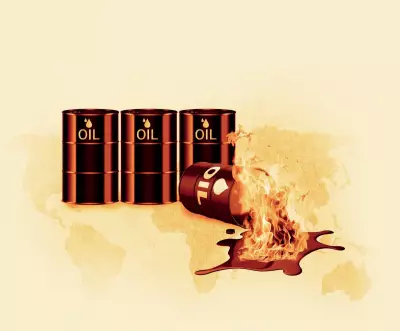
Unlike other tangible assets such as property, which can be illiquid, gold and silver offer simplicity in buying and selling coins or bars, making them easier to trade. Walters highlighted that throughout history, during events like oil shocks, the global financial crisis, and the COVID pandemic, people have consistently turned to gold as a perceived safe haven in times of extreme uncertainty.
All information in this article is general in nature and does not consider personal circumstances. Always seek independent, professional financial advice from a licensed expert before making any financial decisions. Past performance is not indicative of future results.