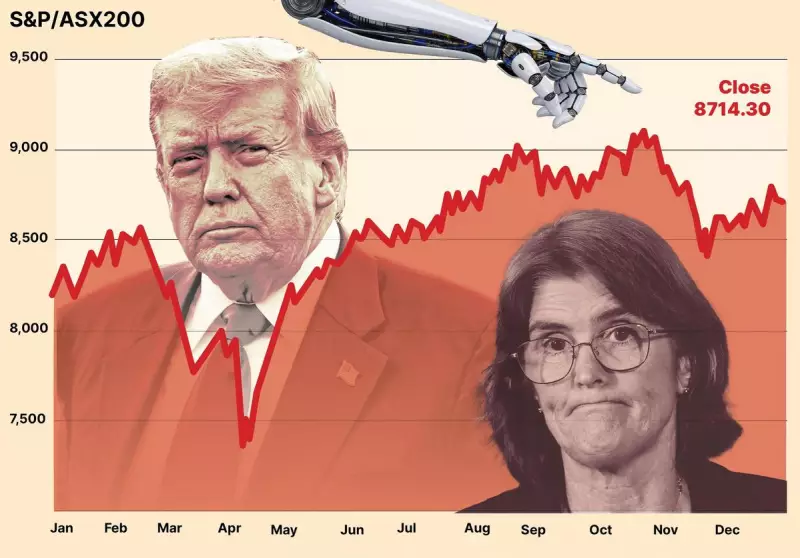
The Australian share market emerged from a year of global economic punches and precious metals mania to post a modest annual gain, closing 2025 with a resilience that belied the turmoil. The benchmark S&P/ASX200 index finished the year at 8,714.3 points, delivering a rise of 6.8 per cent.
Gold Glitters as Local Market Lags Global Peers
While the local bourse advanced, its growth was slower than the previous two years and paled against major international indices. The US S&P500 was set for a gain exceeding 16 per cent, while Britain's FTSE100 surged almost 22 per cent. According to Capital.com analyst Kyle Rodda, the ASX's relatively light exposure to the high-flying technology sector and less supportive interest rate settings were key factors. "Investment conditions in the ASX weren't as robust as the rest of the world, so we've under performed," Mr Rodda explained.
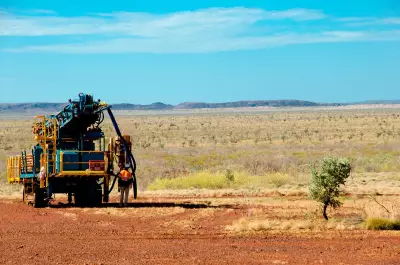
The undeniable stars of the local market were precious metals. Gold and silver were on track for their best annual performances since 1979. Gold crept above $US4,500 an ounce in December for the first time, and silver hit a record $US83.62. This rally powered extraordinary returns for listed gold miners, which dominated the year's top performers. Based on Bloomberg data to New Year's Eve, eight of the ten biggest gainers on the ASX200 were gold companies, including Regis Resources, Genesis Minerals, and Evolution Mining.

However, the single best-performing stock was lithium developer Liontown Resources, which crowned a remarkable revival story with a staggering 205.2 per cent annual gain.
The April Trump Dump and Lasting Protectionist Scars
The year's trajectory was violently interrupted in April by what markets dubbed the "Trump dump." Local shares plunged 8 per cent after US President Donald Trump threatened major trade taxes, unsettling decades of established economic policy. Although the heaviest tariffs were quickly abandoned, easing immediate panic, the event triggered significant market whiplash.
The S&P/ASX200 has surged 18 per cent since hitting that April bottom. Yet, analysts warn the longer-term damage from a shift towards protectionism will linger through slower wages growth and higher consumer prices. As investors turn to 2026, they face renewed inflation concerns and the spectre of an artificial intelligence bubble.
Markets are pricing in a one in three chance of a Reserve Bank interest rate hike in February. "When interest rates are high, the relative appeal of riskier assets is lower," Mr Rodda noted, suggesting tighter policy could limit liquidity and share market appeal.
AI Hype, Super Returns, and the 2026 Outlook
A major question looming over the economy is whether artificial intelligence will deliver a productivity boom or a painful bubble. Investment in data centres was a star driver of Australia's economic growth in the September quarter, and top AI-focused ETFs grew more than 20 per cent in 2025.
"2026 has to be the year when the rubber hits the road," cautioned Mr Rodda. "AI has to deliver the growth in productivity gains investors are pricing in. If [the companies] don't, that has to come out of asset prices." He drew parallels to the dot-com bubble, warning valuations are at similar vulnerable levels.
Amid the market tumult, Australian retirement savers enjoyed solid returns. Research house SuperRatings estimated the median balanced pension fund was on track to return 9.1 per cent for 2025, comfortably above the long-term average. "As the strong performance of equity markets continues to drive superannuation returns, funds with higher than average exposure to international equity have benefited," said SuperRatings director Kirby Rappell.
Looking ahead, AMP's chief economist Shane Oliver said a slowdown after three strong years was "inevitable," citing stretched US valuations and AI bubble worries as key drags. However, he predicted returns should stay positive, aided by anticipated US Federal Reserve rate cuts and solid profit growth. For the ASX, the challenge of 2026 will be navigating global exuberance and local economic constraints.